Sprinkle It On and Suddenly, 100 Orchid Roots Will Sprout and Bloom Beautifully
Sprinkle It On and Suddenly, 100 Orchid Roots Will Sprout and Bloom Beautifully
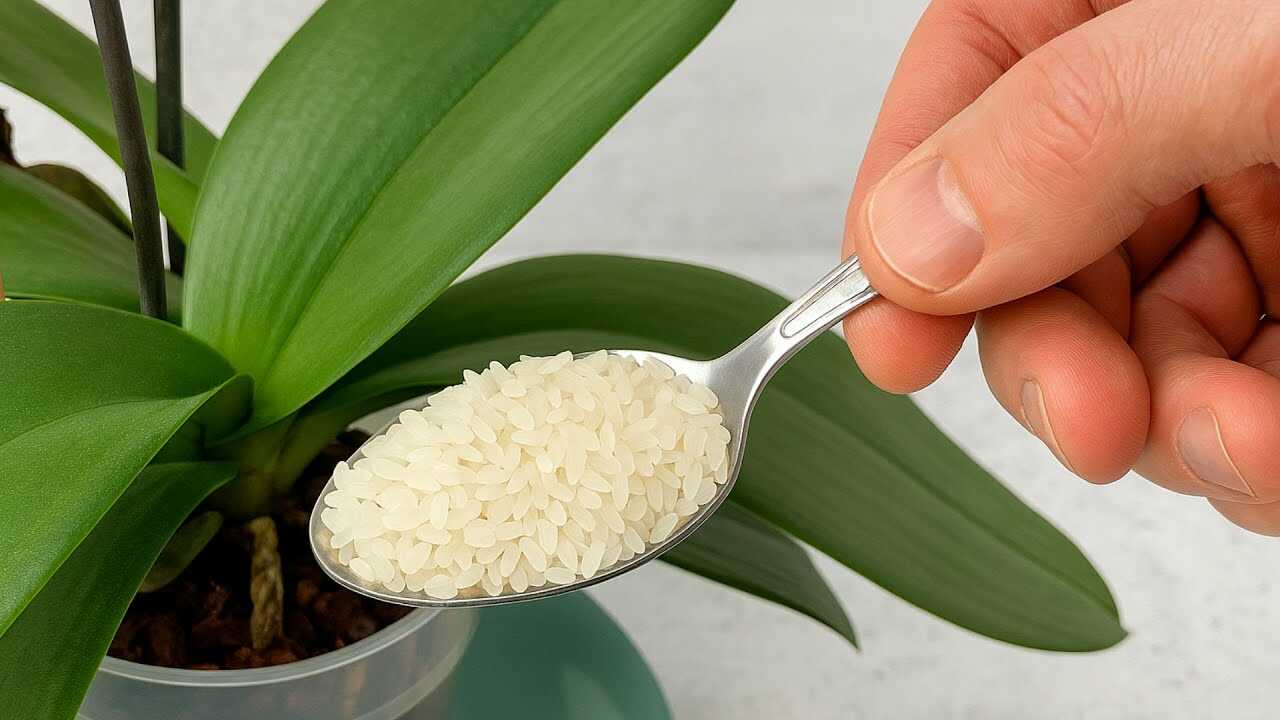
In the photo you can see a spoonful of uncooked white rice grains held above a potted Phalaenopsis. That simple handful can be turned into a gentle, budget-friendly tonic for orchids: rice water — the cloudy rinse made from uncooked rice. Used correctly, it supplies easily available carbohydrates that feed beneficial microbes in the potting mix and provides trace nutrients, making it a useful supplement alongside proper light, watering and fertilizer.
Why rice water helps (real botanical basis)
Uncooked rice releases soluble starch and tiny amounts of minerals and B‑vitamins into its rinse water. The starch acts as a short-term carbon source for soil microbes in the rhizosphere; when microbial activity increases, nutrient mineralization and availability to roots can improve. This is a biological, not a chemical, benefit — rice water is a mild microbial stimulant and not a replacement for balanced N‑P‑K feeding.
Step-by-step: how to prepare and apply rice water for orchids
- Measure: Use 1 tablespoon (≈15 g) of uncooked white rice.
- Rinse/soak: Place rice in a clean jar, add 500 ml (2 cups) of room-temperature water, swirl and let sit 30 minutes. Stir once, then strain off the cloudy water into a clean container. Discard the rice or use it for cooking.
- Dilute: Mix the collected rice water with fresh water at a ratio of 1:4 (one part rice water to four parts plain water). This dilution minimizes microbial spikes and reduces risk of rot or fungal growth.
- Apply as a root drench: With the orchid in its pot and good drainage, pour 100–200 ml (about ¼–½ cup) of the diluted rice water directly into the potting medium so it reaches the root zone. Avoid pouring directly on the crown or leaves.
- Frequency & season: Use every 3 weeks during the active growing season (spring–early autumn). Reduce to once every 6–8 weeks in cooler, slower-growing months or stop during full dormancy.
- Duration of trial: Expect to observe changes over several weeks to a few months — track root vigor and new growth rather than expecting overnight results.
Practical tips from experience
– Always use a clean container and fresh rice for each batch; discard any rice water that smells strongly sour or rotten. Light cloudiness and a faint starch odor are normal.
– Test on one plant first for 6–8 weeks to make sure your particular potting mix and household conditions respond well.
– Continue standard orchid care: consistent bright, indirect light, correct watering intervals, good aeration of the potting mix (bark or chunky mix for Phalaenopsis), and periodic balanced fertilization. Rice water is a complement, not a substitute.
Common mistakes to avoid
- Undiluted application: Never pour concentrated rice water straight into the pot — that can promote algal or fungal growth and root rot.
- Leaving grains on the surface: Sprinkling uncooked rice grains into the potting mix (as shown in the photo) and leaving them to sit invites pests, attracts mold, or allows grains to swell and rot. Always strain the liquid and discard solids.
- Applying to a soggy medium: If the mix is already waterlogged, skip the rice water until the medium dries appropriately; adding organics to wet mix increases rot risk.
- Using stale or fermented batches: If rice water has been stored more than 24 hours at room temperature and smells sharp, do not use it. Either refrigerate for short-term storage and use within 24 hours, or discard.
When to stop and what to watch
If you see black, soft roots, a sudden increase in crown rot, slimy film on the potting medium, or persistent foul odors, discontinue rice water use and flush the potting medium thoroughly with plain water. Resume only after the medium has dried and the plant shows recovery.
Conclusion — try a careful, seasonal trial
Turn that spoonful of uncooked white rice into a diluted rice water root drench and use it as a low-cost microbial stimulant for orchids during the growing season. Expect subtle improvements over several weeks to months, and always pair this tip with proper light, drainage, and balanced fertiliser. Try it on one plant first, observe, and adjust frequency to your results — then share what you learn!