Sprinkle onto the roots! Orchids grow more roots and new flowers immediately
Sprinkle onto the roots! Orchids grow more roots and new flowers immediately
Introduction — What you see in the picture
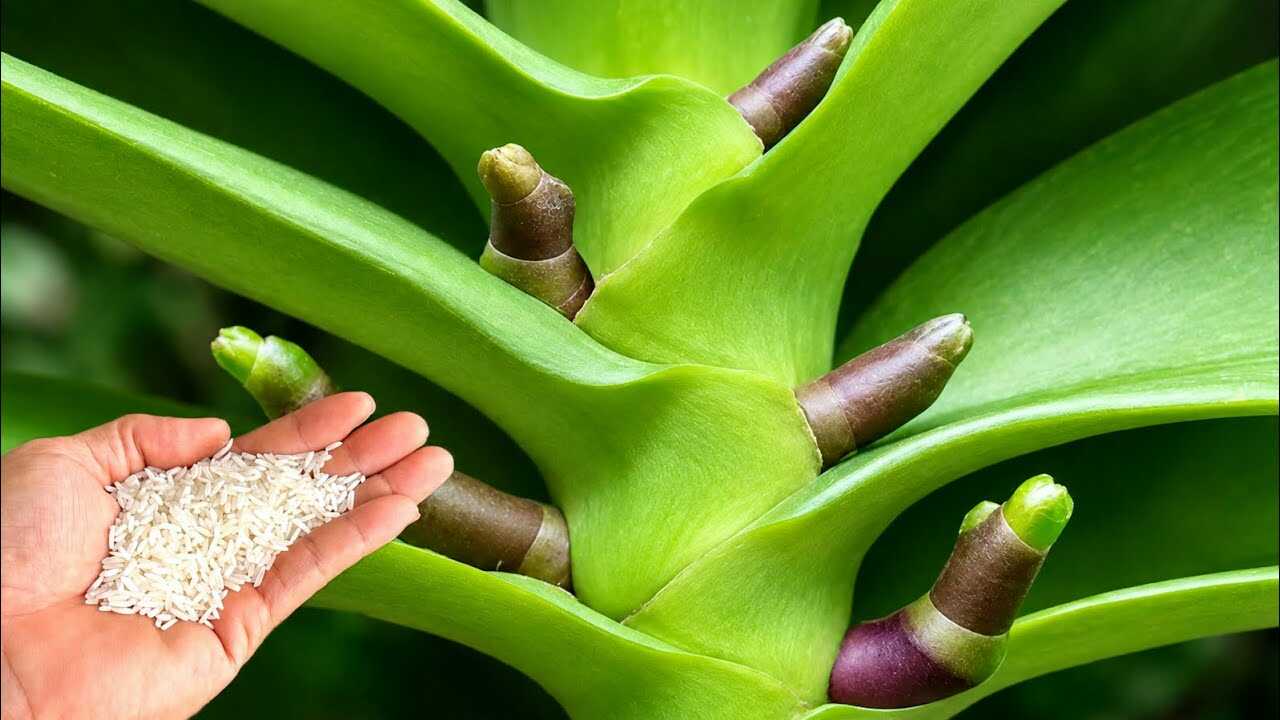
In the photo you can clearly see a handful of **uncooked white rice grains** held beside an orchid stem and new root buds. This article explains a simple, evidence-based way to use that exact ingredient — **rice water** made from uncooked white rice — as a supplement for orchids. The technique supports root activity and can encourage stronger root growth and improved flowering over time when used correctly alongside proper light, watering, drainage and fertilization.
Why rice water can help orchids (the botanical basis)
When you rinse or ferment rice, the liquid contains **soluble starches and trace minerals**. Fermentation of rice water increases microbial activity and produces organic acids and beneficial microbes that can improve nutrient availability in the potting medium. In practice, a diluted rice-water root drench can act as a mild organic supplement that feeds beneficial microbes around orchid roots and can indirectly support root regeneration and nutrient uptake—but it is not a replacement for balanced fertilizers or correct cultural care.
Step-by-step: How to make and use fermented rice water for orchids
- Prepare rice water (basic rinse): Put 1 cup (200 g) uncooked white rice in a bowl with 3 cups (750 ml) of cool water. Swirl for 30–60 seconds, then strain the cloudy water into a clean jar. This is fresh rice rinse water.
- Optional fermentation (recommended for more benefit): Leave the strained rice water in a loosely covered jar at room temperature for 24–48 hours until it smells slightly sour (not rotten). This mild fermentation increases beneficial microbes. If it smells strongly putrid or shows fuzzy mold, discard and start again.
- Storage: Once fermented, refrigerate and use within 5–7 days, or freeze into ice-cube trays for longer storage. Fresh (non-fermented) rice rinse water can be used immediately but has milder effects.
- Dilution: Always dilute before applying. Mix 1 part fermented rice water to 10 parts clean water (a 1:10 dilution). Example: 100 ml fermented rice water + 1 L clean water.
- Application dose per pot: For small pots (6–8 cm) use 30–50 ml diluted solution; medium pots (10–12 cm) 80–120 ml; larger orchid pots 150–250 ml. Pour slowly so substrate becomes evenly moist but not waterlogged.
- How often and when: During active growth (spring–summer) apply the diluted rice water as a root drench every 2–4 weeks. In autumn–winter reduce to once every 6–8 weeks. Continue at least several months to observe improved root tone and flowering—do not expect overnight results.
- Application method tips: Avoid letting liquid sit in the crown of the plant. Best practice: remove pot from saucer, pour diluted solution through the pot so it drains freely, then allow to dry to normal moisture between waterings.
Practical tips from experience
– Use the fermented rice-water technique as a **supplement** to a balanced orchid fertilizer—not a replacement. Alternate your regular weak fertilizer feed and rice-water drench every other application.
– If your orchid is in bark mix, a short 5–10 minute soak with diluted solution (then drain thoroughly) helps distribute the microbes. For sphagnum or moss, use smaller doses to avoid over-saturation.
– If you dislike the smell, make fresh (non-fermented) rinse water and use it immediately; it’s milder but still gives starch and trace minerals.
Common mistakes to avoid (real botanical errors)
- Undiluted use: Never pour undiluted fermented rice water onto orchid roots. High starch concentration can promote harmful fungal growth and clog the medium.
- Frequent application in cool seasons: Applying organic drenches during winter dormancy can keep the medium too wet and increase rot risk. Reduce frequency in cooler months.
- Letting solution pool in the crown: Water sitting in the crown causes crown rot in phalaenopsis and similar orchids. Always direct rice water through the potting medium and let it drain.
- Using moldy mixture: If the fermentation produces visible mold or a putrid smell, discard. Use only slightly sour, clean-smelling fermented water.
Safety, monitoring and expected timeline
Monitor roots and new growth over several weeks to a few months. You may notice firmer, greener roots and better vigor over that period; flower spike initiation and increased blooming generally follow improved plant health and adequate light, not a single treatment. If you see increased fungal spots or a foul odor from the medium, stop applications and flush the pot with clear water.
Conclusion — Try it as a low-cost supplement
That handful of **white rice** in the photo can become a practical, low-cost supplement for your orchids when converted into diluted or mildly fermented rice water. Used correctly—diluted, dosed precisely, and as a complement to good **light, drainage and balanced feeding**—it can help support root activity and healthier plants over several weeks to months. Give it a careful trial on one plant first, observe results, and adjust frequency and dose to your potting mix and climate.
Ready to try? Make one jar of fermented rice water this week, start with a 1:10 dilution, and apply one controlled drench to a single orchid pot. Track root and flower changes over the next 6–12 weeks and share what you observe.