
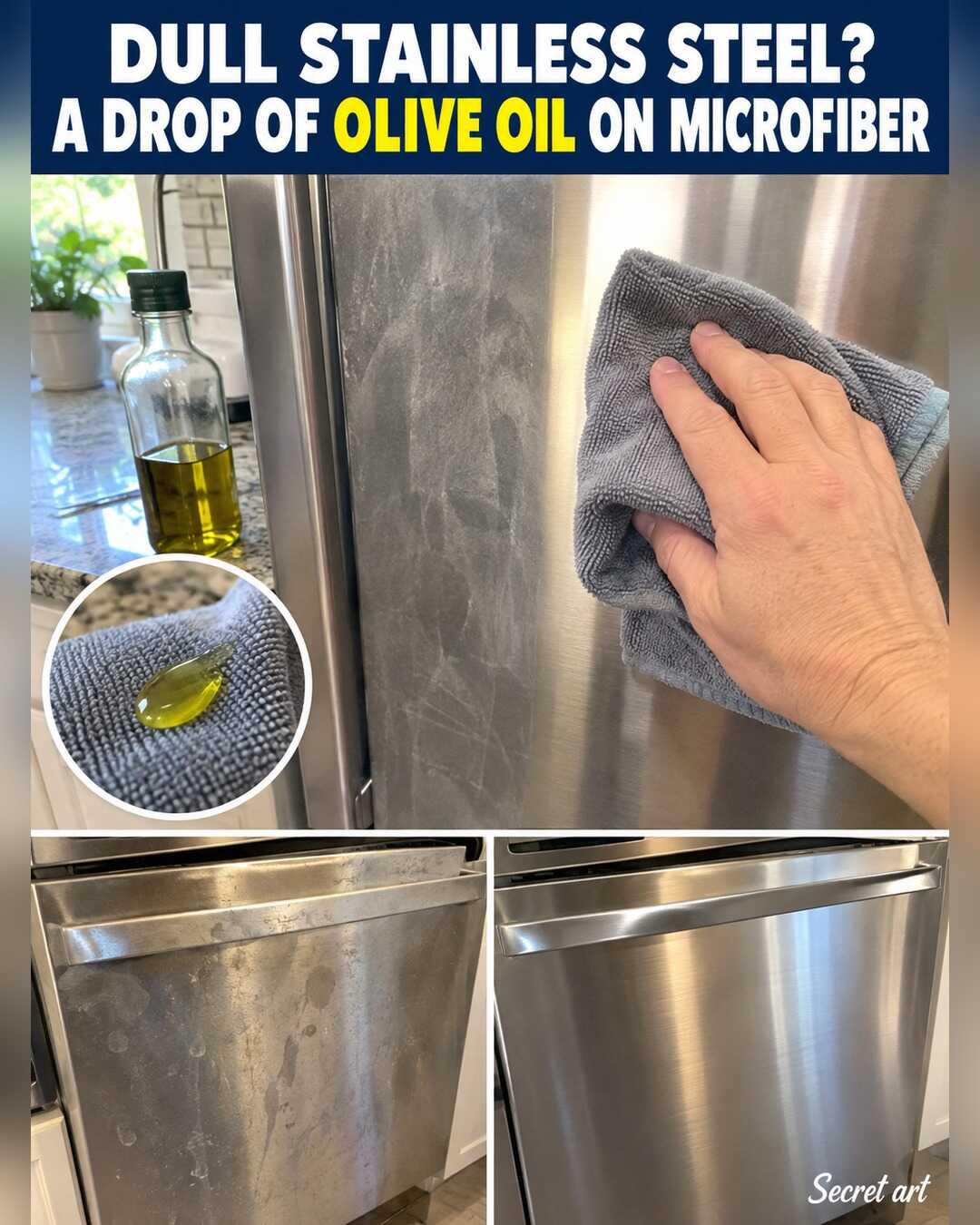
Dull Stainless Steel Appliances? One Drop of Olive Oil on Microfiber Brings Back a Streak-Free Shine
Stainless steel appliances look sleek when they are new. Give them a few months of fingerprints, water spots and kitchen splatters, and they turn dull and cloudy. You wipe them down, and the streaks only get worse.
Before you buy another expensive cleaner, try this simple trick. One small drop of olive oil on a microfiber cloth buffs stainless steel to a soft, even shine with no streaks.
What You Need
- A clean microfiber cloth (or two)
- Olive oil (any kind you have in the kitchen)
- Warm water and a drop of dish soap
- A second dry microfiber cloth for the final buff
- Optional: a little white vinegar for stubborn water spots
The Method, Step by Step
- Clean the surface first. Dampen a microfiber cloth with warm soapy water and wipe the appliance to remove grease, crumbs and fingerprints. Oil on top of dirt just spreads it around.
- Dry it completely. Use a dry cloth and wipe in the direction of the grain, which are those faint lines in the steel. Water left behind causes spots.
- Add one drop of oil. Put a single small drop of olive oil, about the size of a pea, onto a clean dry microfiber cloth. Less is truly more here.
- Wipe with the grain. Use long, smooth strokes that follow the lines in the steel. Work in sections, such as one door at a time.
- Buff with a dry cloth. Take the second dry cloth and buff the surface using light pressure. This removes any extra oil and leaves a clean, even finish.
- Check the light. Look at the surface from the side. If you see streaks or oily patches, buff a little more. If it still looks greasy, you used too much, so wipe again with a dry corner.
Why It Works
Stainless steel has a very fine texture, and tiny scratches and residue scatter light so it looks dull. A very thin film of oil fills those tiny gaps and makes the surface reflect light more evenly. That is what brings back the soft glow.
The oil also helps repel fingerprints and water for a little while. It is the same principle used in many commercial stainless steel polishes, which are often just oil with a pleasant scent.
Mistakes to Avoid
- Using too much oil. One drop covers a surprising amount of surface. A heavy coat looks greasy and picks up dust.
- Wiping across the grain. Going against the grain can leave visible streaks. Follow the lines.
- Skipping the cleaning step. If you polish over dirty steel, you trap grime under the oil.
- Using a rough sponge. Scouring pads and steel wool scratch the surface permanently. Stick to soft microfiber.
- Leaving puddles of water. Always dry first, because water spots show up even more after polishing.
- Spraying cleaners everywhere. Spray on the cloth, not on the appliance, to avoid drips into seams and controls.
Bonus Tips and Variations
- Use baby oil or mineral oil. If you do not like the smell of olive oil, mineral oil is odorless and works the same way.
- Remove water spots with vinegar. Wipe stubborn spots with a cloth dampened with white vinegar, dry well, then polish with oil.
- Keep a polishing cloth. Store one microfiber cloth just for polishing so it always stays clean and slightly oily.
- Do small areas often. A quick buff of the handle and door once a week keeps fingerprints under control.
- Try it on your sink and faucet. A tiny amount of oil can make a dull stainless sink look brighter.
- Test first on a hidden corner. If you are not sure how your finish will react, check a small, hidden spot first.
What to Expect From the Results
You will notice the change right away. Fingerprints disappear, the cloudy look fades, and the surface takes on a soft, even gleam. The shine typically lasts a week or two, depending on how much your family touches the fridge. Light, regular touch-ups work better than one big cleaning every few months.
Keep in mind that deep scratches and dents will not disappear, since the oil only improves the surface look. Also check your appliance manual if you are unsure, since a few finishes, such as black stainless, may have special care instructions.
A Simple Weekly Routine
Stainless steel stays nicest when you treat it a little bit often rather than a lot once in a while. Keep a small basket under the sink with two microfiber cloths and a tiny bottle of olive oil. On cleaning day, wipe the appliances with a damp soapy cloth, dry them with the grain, then add that one drop of oil and buff.
The whole routine takes under five minutes for a fridge, dishwasher and microwave. It also helps with the common problem of fingerprints on the fridge door, since a thin oil film makes them easier to wipe away next time. Wash your microfiber cloths now and then without fabric softener, because softener leaves a film that causes streaks of its own.
If your kitchen gets a lot of steam or greasy cooking, wipe the range hood and nearby cabinet fronts too. Dirt that builds up in these spots eventually spreads to the rest of the kitchen.
Frequently Asked Questions
How much olive oil should I use on stainless steel?
Just one small drop, about the size of a pea, on a microfiber cloth is enough for a whole door. If the surface looks greasy afterward, you used too much. Buff with a clean, dry cloth until it looks even.
Will olive oil go rancid on my appliance?
In a very thin layer and buffed well, it will not be noticeable. Heavy coats can turn sticky over time. If you worry about that, use mineral oil, which does not go rancid. Cleaning every few weeks also keeps things fresh.
Can I use this on every stainless steel surface?
It works well on fridges, dishwashers, microwaves and ovens with a standard finish. Do not use it on cooking surfaces or inside ovens where heat is a factor. Check your manual for special finishes.
Why do I need to follow the grain?
Stainless steel has fine lines from how it is made. Wiping along those lines blends the oil into the texture, while wiping across them can leave streaks that catch the light and look uneven.
How often should I polish stainless steel appliances?
Once every one to two weeks keeps most kitchens looking good. Busy kitchens with lots of little hands may need a quick buff on the door handles more often. A fresh cleaning with soap and water comes first each time.
What if I still see streaks after polishing?
Streaks usually mean too much oil or a dirty surface. Wipe the area with a clean cloth dampened with a little warm soapy water, dry it fully, then try again with an even smaller drop of oil.
Final Thoughts
You do not need a special spray to bring back that showroom look. A drop of olive oil, a microfiber cloth and a few smooth strokes can turn a dull, fingerprint-covered fridge into a bright, streak-free centerpiece.