
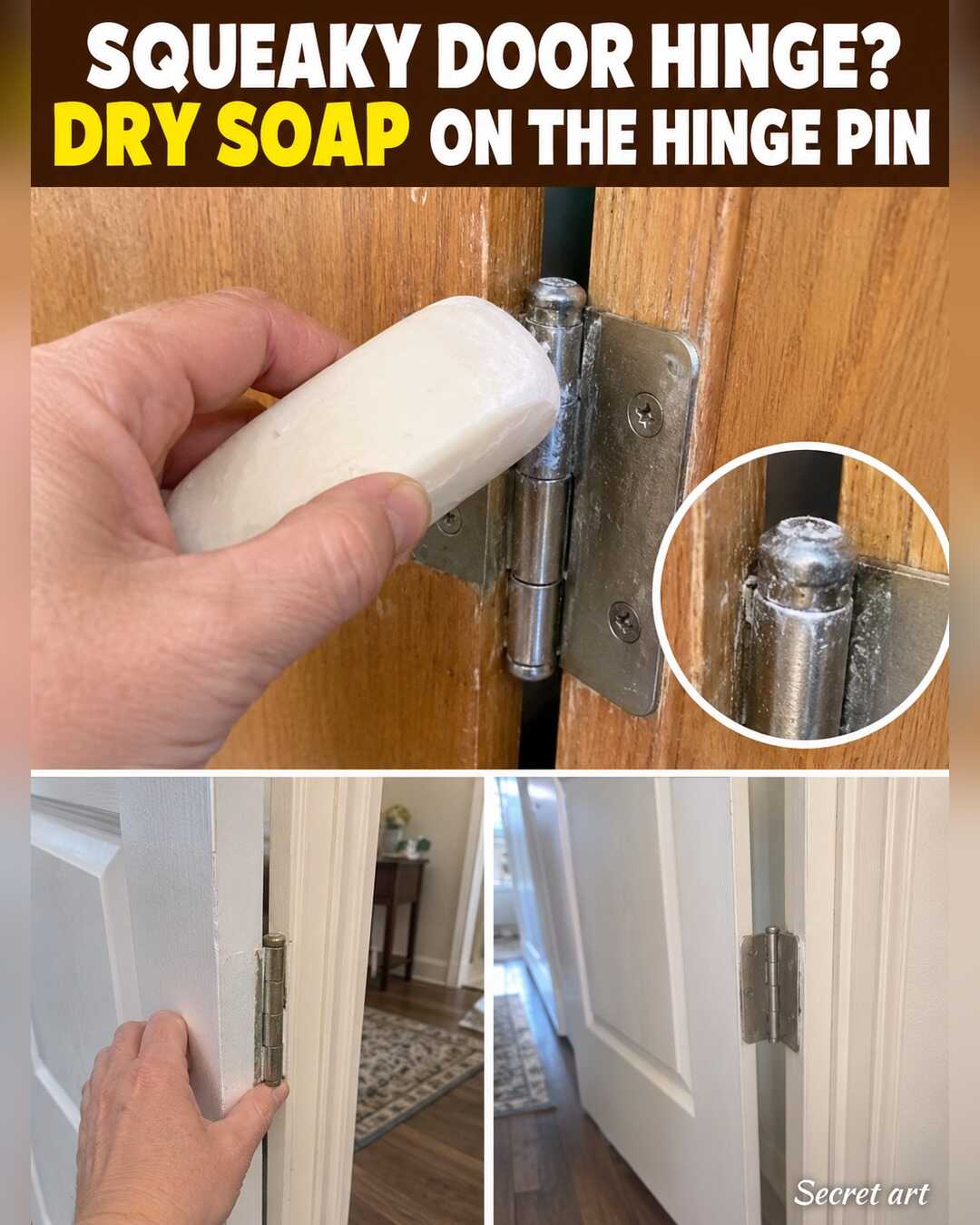
Squeaky Door Hinge? Rub a Dry Bar of Soap on the Hinge Pin for a Quiet Door in a Minute
That high, nagging squeak every time you open a bedroom door is hard to ignore. It wakes the baby, announces every late-night snack run, and makes an otherwise quiet house feel noisy. Most people think they need to buy a special spray or call someone to fix it.
You do not. A plain, dry bar of soap is enough to quiet a squeaky hinge in about a minute. It is cheap, clean and works with whatever bar is sitting by your sink.
What You Need
- A dry bar of regular soap (the plainer, the better)
- A small flat screwdriver or a nail, to help lift the hinge pin
- A paper towel or old rag
- A hammer, only if the pin is stuck
- Optional: a folded towel or door wedge to hold the door steady
The Method, Step by Step
- Find the noisy hinge. Open and close the door slowly and listen. Often only one hinge is squeaking. Put your hand near each one to feel which is vibrating.
- Hold the door steady. Place a wedge or a folded towel under the door’s edge so it does not drop or swing while you work.
- Lift the hinge pin a little. Slide the screwdriver under the head of the pin and gently tap or pry it up about an inch. You do not need to take it all the way out unless it is very dirty.
- Wipe the pin clean. Use the paper towel to wipe off dust, old grease and any dark gunk. A clean pin takes soap much better.
- Rub the soap on the pin. Take the dry bar and rub it firmly along the pin until you see a thin white coating. Press hard enough to leave a visible layer.
- Put the pin back. Slide or tap the pin back down into the hinge so it sits fully in place.
- Work the door. Swing the door open and shut five or six times. This spreads the soap film through the joint. Wipe off any extra soap that squeezes out.
Why It Works
A squeak is the sound of two metal parts rubbing against each other with nothing between them. Over time the original grease wears off or collects dust, and the metal drags and chirps.
Dry soap leaves a thin, slick layer that lets the parts glide. It acts like a very light lubricant. Because it is dry, it does not drip down the door or collect as much dirt as an oily spray, so it stays clean.
Mistakes to Avoid
- Using wet or soft soap. Liquid soap can run and leave a sticky residue. Use a firm, dry bar.
- Skipping the cleaning step. Rubbing soap over old grime only mixes it in. Wipe the pin first.
- Oiling the wrong spot. The squeak comes from the pin and the knuckles of the hinge, not the screws or the door edge.
- Forcing a stuck pin. If the pin will not move, tap gently with a hammer from underneath. Do not bend it.
- Forgetting the rest of the hinges. If you fix one and the door still squeaks, check the others.
Bonus Tips and Variations
- Use a candle or crayon. If you do not have soap, a plain white candle works in a similar way. Rub it on the pin and reapply later.
- Try it on drawers. Rub soap on the wooden runners of a sticky drawer and it will slide much better.
- Quiet a sliding window. A little soap on the track helps windows and closet doors glide.
- Tighten loose screws. Sometimes a squeak comes from loose hinge screws. Give them a small turn with a screwdriver.
- Repeat once or twice a year. Soap wears off with use, so a quick touch-up keeps the door quiet.
- Check humidity. In damp weather, wood swells and doors can rub. If a door drags, soap helps but you may need to adjust the hinges.
When to Call It Fixed (and When Not To)
After the soap treatment, a door that works smoothly and silently is done. If you still hear a groan, listen closely to where it comes from. A deep rubbing sound at the top of the door usually means the door frame is catching, not the hinge. In that case, tightening the top hinge screws or lightly sanding the sticking spot is a better fix.
If the hinge is rusty or bent, soap will only help for a short time. Clean off the rust with a rag and a little white vinegar, dry it fully, then use the soap again. A badly damaged hinge may be worth replacing, and that is an inexpensive part at any hardware store.
A Quick Troubleshooting Guide
Sometimes the squeak does not go away on the first try, and that is normal. Start by checking whether the sound changes when you lift the door slightly by the handle. If the noise stops, the hinge pin is probably worn and needs more coating. If it stays the same, the culprit may be a dry hinge knuckle, so work a little soap into the gap between the hinge leaves with a thin strip of paper.
Another useful test is to close the door slowly and watch the gap along the frame. An uneven gap means the door has sagged, and a loose hinge screw is often the cause. Tighten each screw a little at a time. If a screw hole is stripped, push a wooden toothpick coated with glue into the hole, let it dry, trim it flat and drive the screw back in. This gives the screw fresh wood to grip.
Finally, remember that every house settles with the seasons. A door that was silent in summer may complain in winter. A quick soap touch-up costs nothing and takes a minute.
Frequently Asked Questions
What kind of soap works best on a squeaky hinge?
A plain, dry bar of soap works best. Avoid soaps with lots of moisturizer or oils, because they can feel greasy. A basic white or unscented bar leaves a thin, clean film and is easy to wipe off if you use too much.
Do I have to remove the hinge pin completely?
No. Lifting the pin about an inch is usually enough to reach the part that squeaks. Take it fully out only when the pin is dirty or rusty and you want to clean and coat the whole length.
How long does the quiet last?
For many doors it lasts several months. Doors used often, such as a bathroom or front door, may squeak again sooner. A quick rub every few months keeps things quiet and takes less than a minute.
Can I use this on outdoor or garage doors?
It works for a short time, but rain and dirt wash soap away fast. For outside doors, a silicone spray or a heavier grease lasts longer. Soap is best for dry indoor doors.
Is soap better than cooking oil for hinges?
Soap is cleaner because it stays dry. Cooking oil can quiet a hinge too, but it tends to drip, attract dust and turn sticky over time. For a quick household fix, soap is the tidier choice.
Why does my door still squeak after using soap?
You may have treated the wrong hinge, or the sound may come from loose screws or a frame that is rubbing. Test each hinge one at a time and tighten the screws, then add soap to any hinge that still chirps.
Final Thoughts
A bar of soap, a quick wipe and a minute of your time can end that squeak for good. Try it on the noisiest door in your house tonight and enjoy the quiet.