
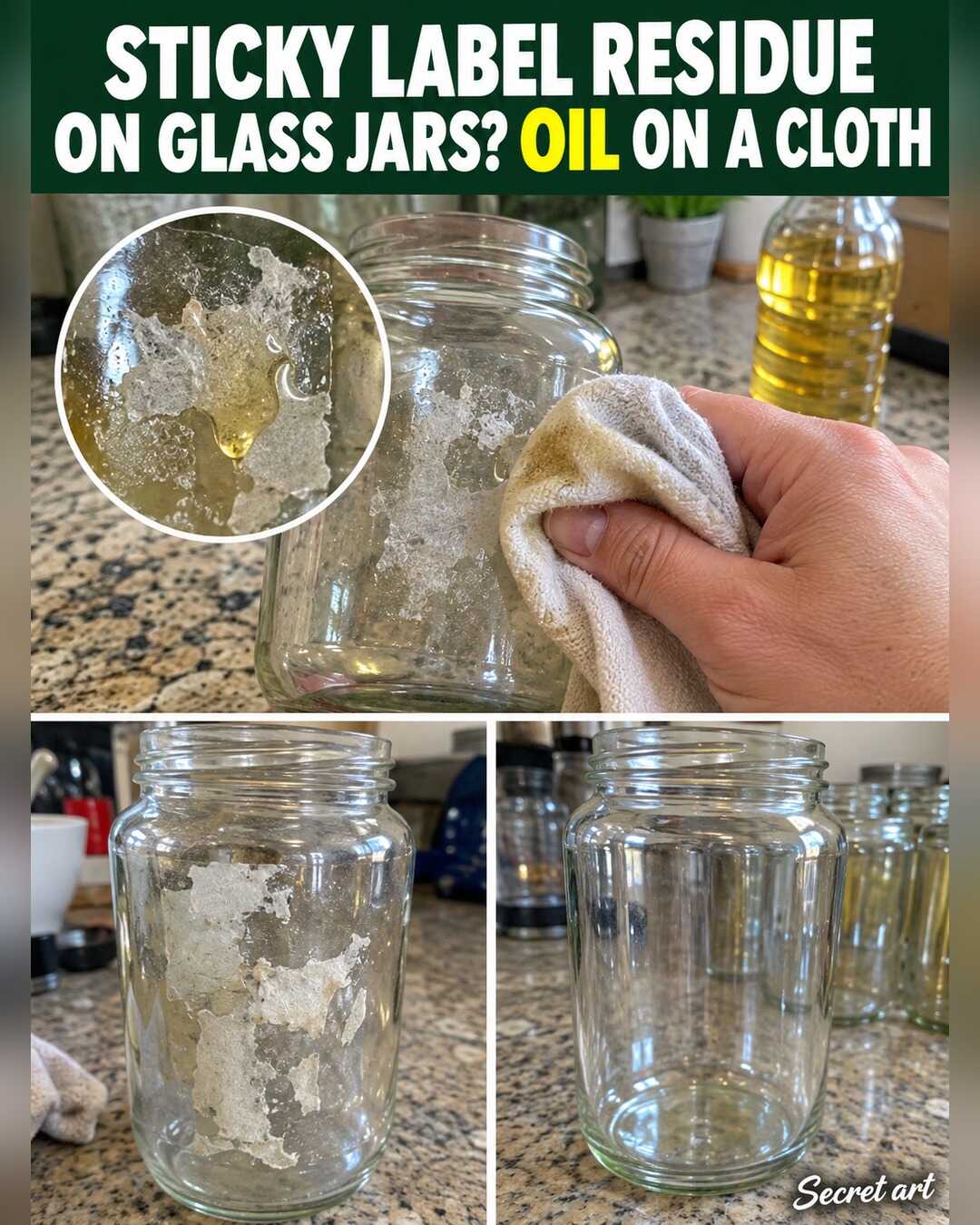
Sticky Label Residue on Glass Jars? Rub Cooking Oil on a Cloth and It Wipes Away
Peeling a price sticker or an old label off a glass jar is easy. Getting rid of the sticky film it leaves behind is not. You rub with your nail, the gunk rolls into little gray crumbs, and the jar still feels tacky. Dust sticks to it, and it looks worse than before.
Here is the good news: you probably already have the fix in your kitchen. A little cooking oil on a cloth softens that old adhesive so it wipes away. No scraping, no harsh chemicals, and no scratched glass.
What You Need
- A glass jar or bottle with sticky label residue
- Any everyday cooking oil (vegetable, canola, sunflower or olive oil all work)
- A soft cotton cloth or a thick paper towel
- Warm water and dish soap
- A second dry cloth for buffing
- Optional: an old credit card or plastic scraper
The Method, Step by Step
- Peel off what you can. Remove the paper part of the label first. If it will not budge, soak the jar in warm soapy water for ten minutes and then peel. What stays behind is the sticky film we are after.
- Put a little oil on the cloth. Add about half a teaspoon of cooking oil to a corner of your cloth. You want it damp with oil, not dripping.
- Press and hold. Lay the oily cloth over the sticky patch and press for about a minute. This gives the oil time to soak in and loosen the adhesive.
- Rub in small circles. Use firm, steady pressure. You will feel the sticky layer start to ball up and slide. Keep going until the glass feels smooth under the cloth.
- Wipe away the loosened glue. Use a clean part of the cloth to pick up the crumbs. If a stubborn corner remains, add a few more drops of oil and repeat.
- Wash off the oil. Wash the jar with hot water and a squirt of dish soap. Dish soap cuts the oil right off, leaving clear glass.
- Dry and buff. Dry the jar with a clean cloth and give it a quick polish so it sparkles.
Why It Works
Most label glue is made from oily, sticky compounds that dissolve in other oils. When you rub cooking oil into the residue, the oil works its way into the adhesive and makes it soft and slippery. That is why it lets go of the glass instead of smearing around.
Water alone cannot do this, because water and glue do not mix well. Oil and glue do. This is the same idea behind many commercial label removers, except you are using something you already cook with.
Mistakes to Avoid
- Skipping the soak time. If you rub right away, you only push the glue around. Give the oil a full minute to work.
- Using too much oil. A lot of oil just makes a mess. A small amount on the cloth is plenty.
- Scraping with a knife. Metal can leave tiny scratches on glass. If you need a scraper, use plastic.
- Forgetting to wash afterward. Oil left on the jar will feel greasy and attract dust. Always finish with warm soapy water.
- Using it on unsealed surfaces. Oil can stain raw wood, paper and some plastics, so keep it on glass, glazed ceramic and metal.
Bonus Tips and Variations
- Peanut butter works too. It is full of oil, so a thin smear left for two minutes does the same job in a pinch.
- Add baking soda for stubborn spots. Mix a little oil with a pinch of baking soda to make a gentle paste. Rub it on with a cloth. The mild grit helps lift thick glue without scratching.
- Warm the jar first. Running the jar under warm tap water for a minute before you start softens old glue even more.
- Try it on plastic containers. It usually works on hard plastic food containers as well. Test a small hidden spot first.
- Save your jars. Clean jars are great for storing dry goods, leftovers, buttons, screws or homemade gifts. A smooth, label-free jar looks far nicer on a shelf.
- Plan ahead. The next time you buy a jar, soak and peel the label the same day. Fresh glue is much easier to remove than glue that has been sitting for months.
Where This Trick Helps Around the House
Once you know how well oil handles sticky glue, you will start spotting uses everywhere. Price stickers on new dishes, tape marks on a window, and the tacky patch left by a name tag on a water bottle all respond to the same treatment. Always start with a small amount, give it a minute and wipe. If the surface is delicate, test a hidden corner before you go all in.
It also makes recycling jars and bottles far less of a chore. Instead of tossing a perfectly good jar because of one stubborn label, you can reuse it in minutes. Over a year, that adds up to a stack of free storage containers.
Frequently Asked Questions
Which cooking oil works best for removing label residue?
Any common kitchen oil works well. Vegetable, canola, sunflower and olive oil all soften label glue in about the same way. Use whatever is already in your pantry. Avoid anything scented or flavored, since it can leave a smell on the jar.
Will cooking oil scratch or damage the glass?
No. Oil is gentle and does not scratch glass. The only risk comes from rubbing with something rough, like a metal blade or a scouring pad. Stick to a soft cloth or a plastic scraper and your jar will stay perfectly clear.
How long should I let the oil sit on the sticky spot?
About one to two minutes is usually enough for a normal label. Very old or thick glue may need five minutes. If the residue is still tacky, press the oily cloth on again and wait a little longer before rubbing.
How do I get the oily feeling off the jar afterward?
Wash it in hot water with a little dish soap, then rinse and dry. Dish soap is made to break down grease, so the oil rinses away completely. If the jar will hold food, give it one more rinse to be safe.
Can I use this trick on plastic or painted jars?
It often works on hard, smooth plastic, but test a small hidden spot first. Avoid it on painted or printed surfaces, because rubbing can lift the paint. For those, try a gentler approach and check often.
What if some glue is still left after the first try?
Repeat the steps with a few more drops of oil and a little more time. For thick patches, make a paste of oil and baking soda and rub gently. Two rounds almost always clear even stubborn glue.
Final Thoughts
A cloth, a few drops of cooking oil and a minute of patience are all it takes to turn sticky, gray-streaked jars into clear glass again. Next time a label leaves its mark, skip the scraping and reach for the oil bottle instead.