This Heat-Loving Plant Can Transform a Dry, Sunny Garden
This Heat-Loving Plant Can Transform a Dry, Sunny Garden
If your garden is dry, exposed to full sun, and you do not want to spend every evening watering, this plant could make a real difference.
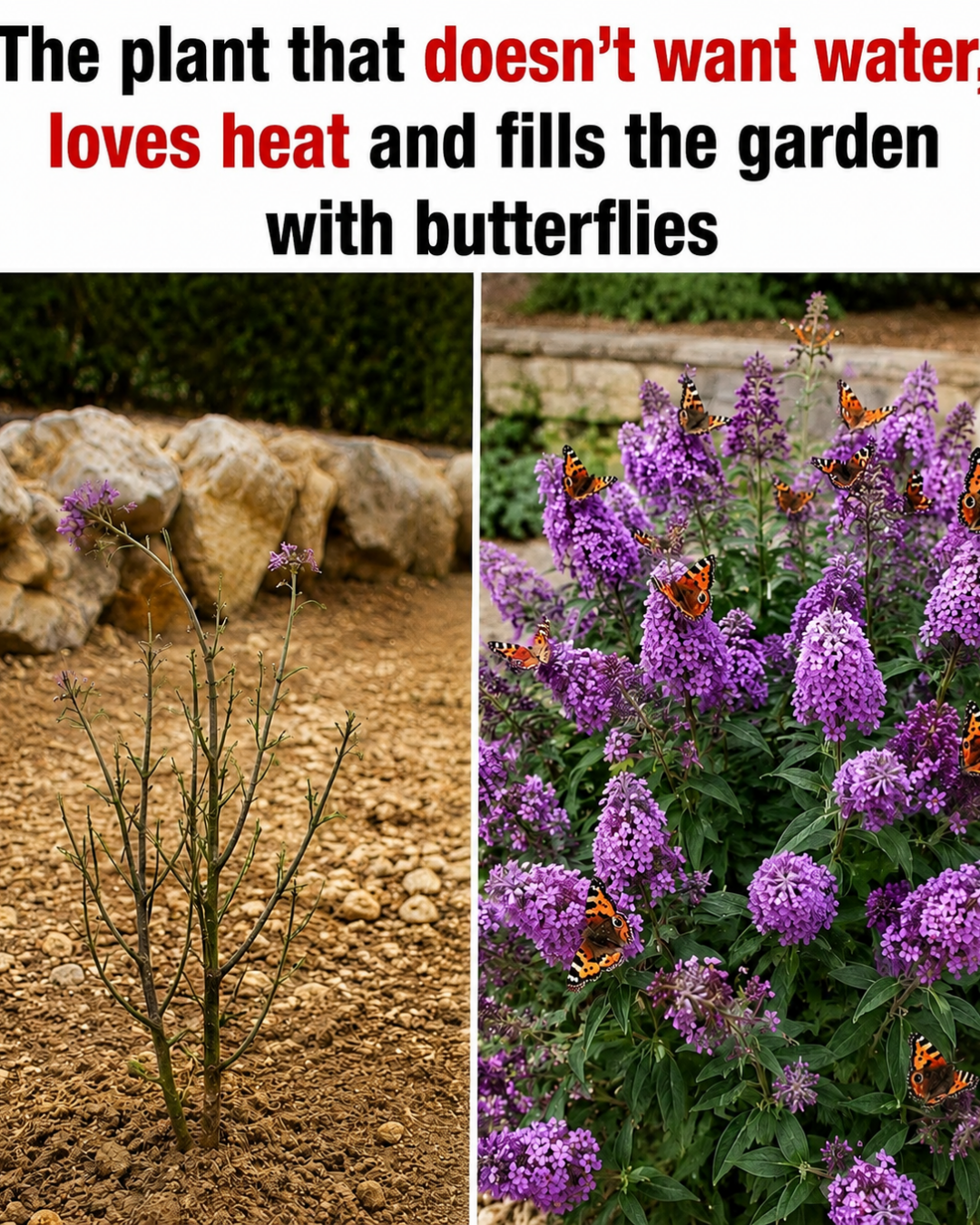
It is called Buddleja, although many people know it as the butterfly bush because, once it begins flowering, it attracts butterflies throughout the summer.
One of its biggest advantages is its tolerance to heat. It can cope well with temperatures above 35°C, and after its first year, it usually requires very little watering.
To help it grow successfully, you only need to follow three important steps.
Choose a Sunny Location
Plant your Buddleja in a spot that receives at least six hours of direct sunlight each day.
If it is placed in too much shade, it may produce fewer leaves and very few flowers.
Make Sure the Soil Drains Well
Dig a hole approximately 40 centimeters wide.
Add about 5 centimeters of gravel or small stones at the bottom to improve drainage. Buddleja does not like soil that remains constantly wet, so avoiding waterlogged conditions is essential.
Water It Carefully During the First Month
After planting, the shrub needs regular watering for the first 30 days.
During this period, give it approximately 5 liters of water every three days. Once it is established, you can reduce watering considerably.
Even during the hottest periods, watering once a week may be enough, depending on the soil and local weather conditions.
The Pruning Trick That Encourages More Flowers
The most important step is pruning at the end of winter.
In February, cut the branches back to approximately 30 centimeters above the ground.
This encourages the plant to produce strong new growth in spring and can result in a much larger number of flowers during summer.
Months of Color with Very Little Maintenance
From June until September, Buddleja produces long flower clusters that can reach around 25 centimeters.
Depending on the variety, the flowers may be purple, pink, or white. They attract bees and butterflies continuously while requiring very little maintenance.
With the right location and simple care, this plant can transform even the driest and dullest garden into a lively, colorful space.