
Zucchini and Cheese Fritters: Golden Edges with About 15 Minutes of Prep
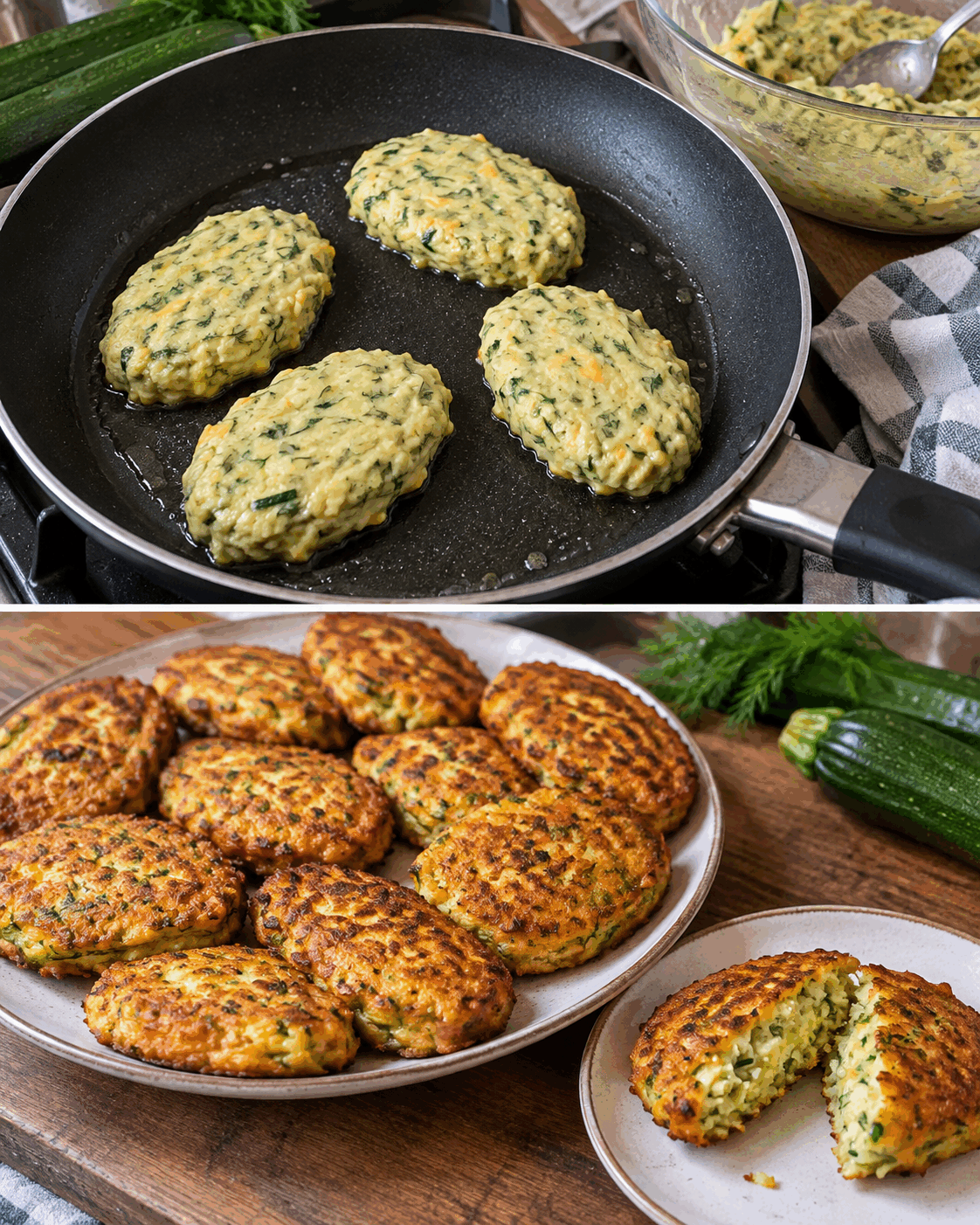
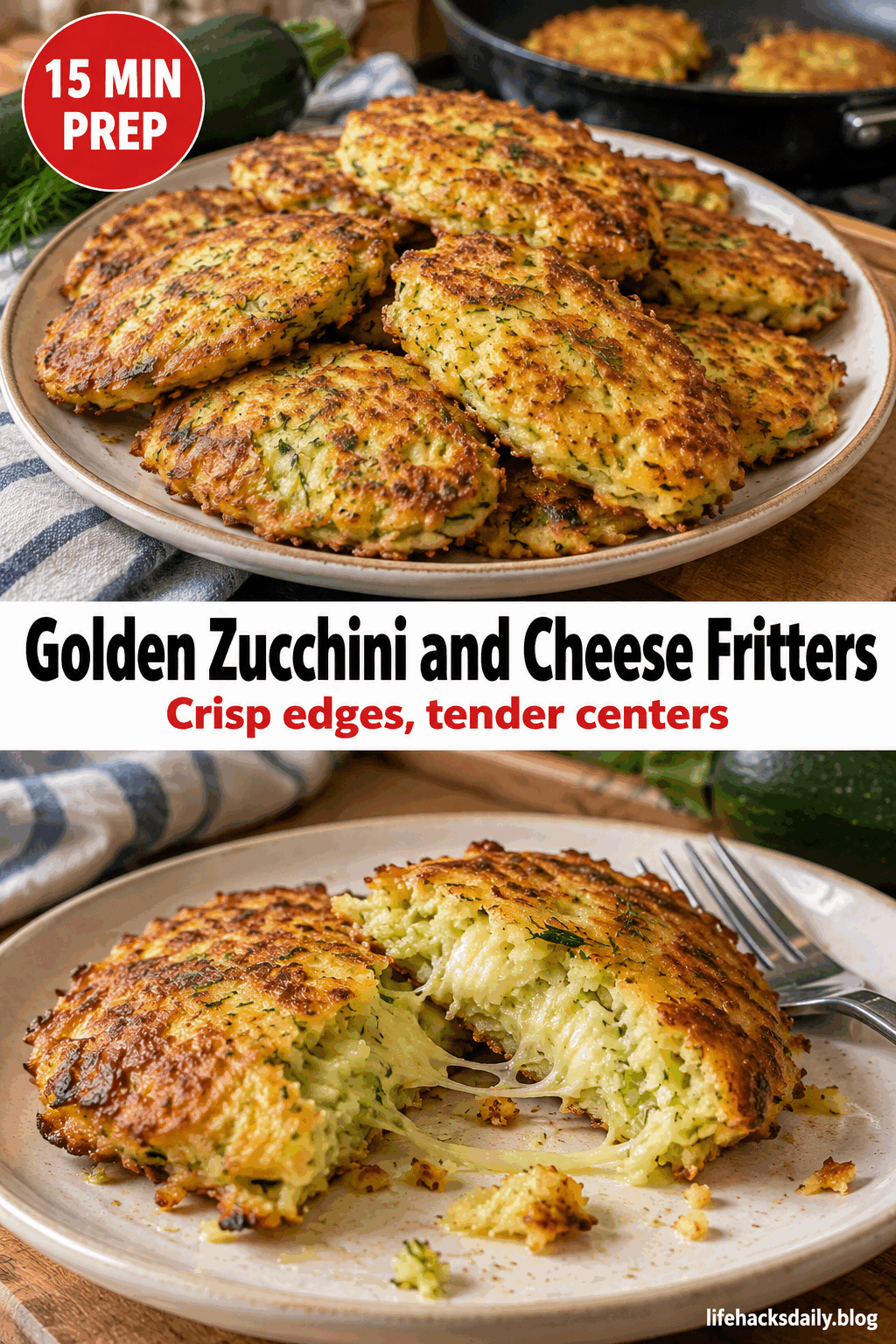
Zucchini and cheese make a reliable skillet combination when the vegetables are squeezed well before mixing. These small oval fritters have golden edges, a tender green-flecked center and enough cheddar to bring the batter together. They are a simple savory option for lunch, or a vegetable side to share at dinner.
The preparation takes about fifteen minutes, including a short rest for the grated zucchini. Cooking happens afterward, in batches, so do not expect the whole plate to be ready in fifteen minutes. Keeping the fritters fairly thin is the easiest way to brown the outside without leaving a wet center.
Time, yield and equipment
This recipe makes about twelve small oval fritters, enough for three light servings or four side portions. Allow roughly fifteen minutes to prepare and another fifteen to twenty minutes to cook, depending on the size of your pan. Have a box grater, clean kitchen towel, mixing bowl and wide spatula ready.
A large nonstick skillet helps the fritters release without needing much oil. A well-seasoned skillet can also work, but the surface must be reliable before you add a delicate mixture containing cheese. Keep a plate nearby for the cooked batches and resist crowding every fritter into the pan at once.
Ingredients
- 500 g zucchini, weighed before trimming
- 1/2 teaspoon fine salt for draining
- 2 large eggs
- 80 g freshly grated cheddar cheese
- 50 g all-purpose flour
- 1 tablespoon chopped fresh dill
- 1 small garlic clove, finely grated
- Black pepper to taste
- 2 tablespoons neutral oil, divided between batches
Use a block of cheddar and grate it yourself if possible. Finely grated cheese distributes evenly through the mixture, whereas large chunks can leave gaps as they melt. The flour in this recipe is ordinary wheat flour; these fritters are not described as flour-free, and no special dietary claim is needed.
Step-by-step preparation
- Grate the zucchini on the coarse side of a box grater. Toss with the half teaspoon of salt in a bowl and let stand for about five minutes. While it rests, grate the cheese, chop the dill and prepare the garlic. Keep the zucchini strands rather than turning them into a puree.
- Transfer the zucchini to a clean towel, fold the edges together and squeeze firmly over the sink. Work in two smaller portions if that is easier. The drained zucchini should feel moist but should not drip when pressed. This step matters more than adding extra flour later to rescue a watery batter.
- Beat the eggs in the mixing bowl, then add the squeezed zucchini, cheddar, garlic, dill and pepper. Stir in the flour until no dry pockets remain. The mixture will be soft and spoonable rather than a dough. If a little liquid appears at the bottom, stir briefly before each batch.
- Heat a large skillet over medium heat and add enough of the measured oil to leave a thin film. Spoon in four portions, leaving room around each one. Gently flatten into small ovals about one centimeter thick. The first surface should sizzle lightly; an aggressive crackle suggests the pan is too hot.
- Cook for three to four minutes on the first side, until the edges look set and a spatula can slide underneath. Turn carefully and cook another three to four minutes. The second side should be golden, and the middle should feel set rather than loose when gently pressed with the spatula.
- Transfer to a plate and repeat with the remaining mixture, adding a little of the reserved oil as needed. Adjust the heat between batches if the cheese browns too quickly. Open one fritter from the first batch to check that the center is cooked before settling into the same timing for the rest.
Getting the texture right
The finished center stays tender because zucchini naturally contains moisture. That is different from a runny egg mixture or a pasty band of uncooked flour. Aim for a thin, lightly crisp crust with visible green strands inside. Large, thick mounds are harder to cook evenly, even when their outside already looks beautifully browned.
If the mixture seems unusually wet, first check whether the zucchini was squeezed enough. A small additional spoonful of flour may help a particularly juicy batch, but repeatedly adding flour can make the fritters heavy. For the next batch, use smaller portions and allow a little more time over moderate heat.
Serving and simple variations
Serve warm while the edges are at their best. A little plain yogurt can be offered separately, although it is not part of the fritter mixture. A crisp salad or sliced tomatoes makes a straightforward accompaniment. Let the fritters rest a minute before eating, because melted cheese can remain hotter than the surface suggests.
Chopped parsley can replace the dill if that is what you have. Keep the amount modest so the zucchini remains the main ingredient. A different firm melting cheese may change the salt level, so taste the cheese before adding more seasoning. Do not introduce watery vegetables without accounting for their moisture.
Storing and reheating
Let leftovers cool, then refrigerate promptly in a covered container for up to three days. Separate layers with baking paper if they are likely to stick. Reheat in a lightly oiled skillet over medium-low heat until hot throughout; a microwave is convenient but softens the crust more noticeably.
For freezing, arrange the cooled fritters in one layer first, then pack once firm. Reheat from thawed in the refrigerator, rather than leaving them on the counter for hours. A moderate oven can warm several at once, but that is a reheating option, not the cooking method used for the original batter.
Frequently asked questions
Can I skip squeezing the zucchini?
Squeezing is strongly recommended. Without it, the mixture can spread in the pan and release water while the outside is already browning. That makes the center harder to set. A clean towel gives better control than simply pressing the strands with a spoon, especially when the zucchini is particularly juicy.
Are these fritters ready in fifteen minutes total?
The fifteen-minute figure refers to preparation, not the complete cooking time. You still need several minutes on each side and enough space to work in batches. A large skillet may reduce the number of batches, but increasing the heat will not safely replace the time needed for the centers to cook.
Can I use pre-shredded cheddar?
Yes, although freshly grated cheese usually mixes more evenly. Some packaged shredded cheeses include coatings that change how they melt. Use the same weight and keep the shreds fairly fine. The fritters may look slightly different, but the important checks are still a set center and a lightly browned surface.
Why did my fritters fall apart when turning?
They may have been turned before the first side set, or the zucchini may have retained too much water. Use a wide spatula and make smaller ovals rather than thick mounds. Let the first side form a crust, then lift gently. A dependable nonstick surface also helps with this delicate mixture.
Can I prepare the mixture the night before?
It is better to cook soon after mixing, because the zucchini continues to release liquid. You can grate the cheese and prepare the herbs ahead, then squeeze and mix the zucchini closer to cooking. If the batter has waited briefly, stir it and check its consistency before adding the next portions to the skillet.