Tips to revive withered anthuriums | How to grow red anthurium
Tips to revive withered anthuriums | How to grow red anthurium
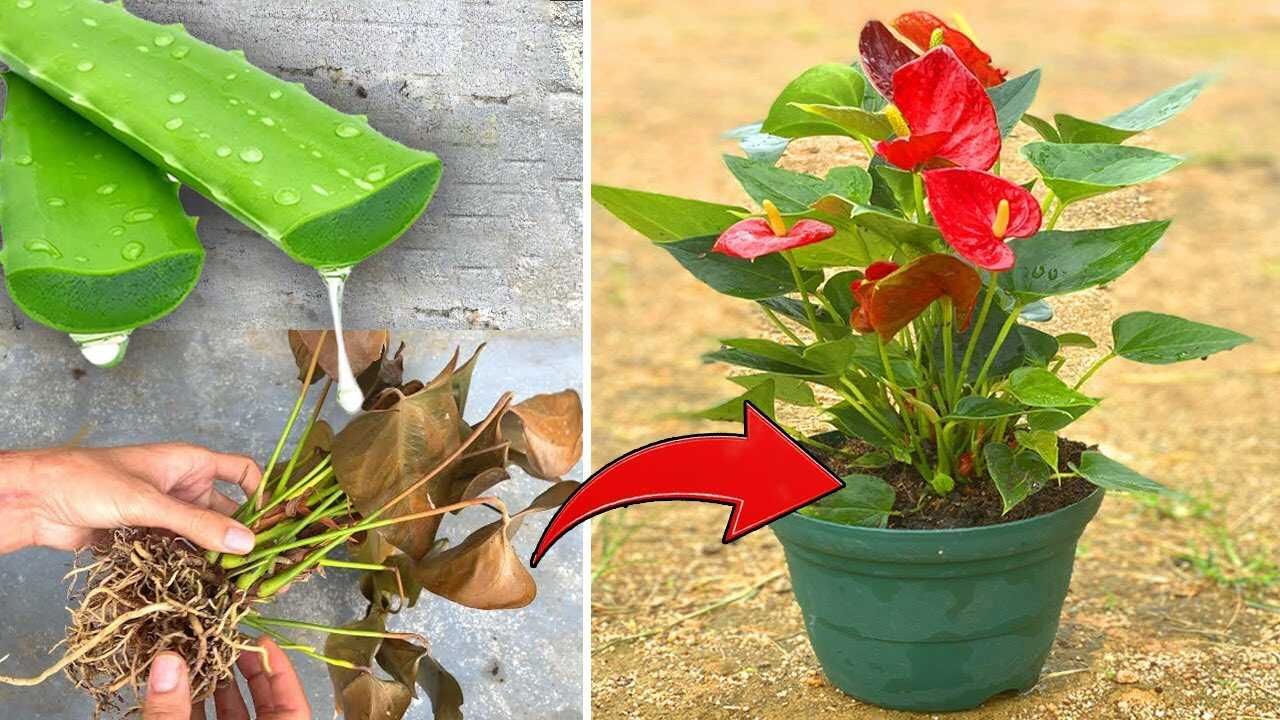
The image shows a fresh Aloe vera leaf being opened and its clear gel dripping — and beside it a withered anthurium being revived into a healthy red-flowered plant. In this guide I’ll show you how to use aloe vera gel as a natural biostimulant to help revive a stressed or withered anthurium, alongside the essential care steps every anthurium needs.
Why aloe vera helps anthuriums (short, botanical justification)
Aloe vera gel contains polysaccharides (notably acemannan), enzymes and small amounts of hormone-like compounds that can act as a mild biostimulant. These compounds can support wound healing on cut roots or stems, encourage rooting in weakened cuttings, and provide modest antimicrobial activity that reduces surface pathogens. Use it as a complement to proper light, drainage, watering and fertilization — not as a standalone cure.
Step-by-step: revive a withered anthurium using aloe vera
- Assess and trim: Remove the plant from its pot and gently shake soil away. Trim clearly dead leaves and any soft, blackened roots with sterilized scissors. Healthy roots are firm and pale; rotten roots are brown/black and mushy.
- Prepare fresh aloe gel: Slice a healthy aloe leaf, stand it upright 10–15 minutes to drain the yellow latex (aloin), then rinse. Cut the leaf and scoop out the clear gel. Rinse the gel briefly to remove residual latex, then blend or mash to a smooth consistency.
- Root soak before repotting: For bare-rooted rescue, mix 50 ml fresh aloe gel into 950 ml water (5% v/v). Soak the roots for 10–30 minutes to coat and calm tissue, then allow excess to drain before repotting.
- Repot into well-draining mix: Use an airy mix (orchid bark, peat or coco coir, perlite) with good drainage. Plant at the same depth, firm lightly, and water once to settle the mix.
- Soil drench for established but weak plants: Mix 25 ml aloe gel per 1 liter water (2.5% v/v). Apply 200–300 ml of this solution around each small potted anthurium (adjust volume for larger pots) as a drench after repotting or when you see stress.
- Foliar spray for stress relief: Blend 5 ml aloe gel in 1 liter water, strain well and mist the leaves lightly every 2 weeks during the growing season. Do not saturate foliage; spray in the morning so leaves dry quickly.
- Topical care for cut stems: Apply undiluted fresh gel to green cuts or trimmed stems to help seal and reduce pathogen entry before repotting.
Dosage & frequency (seasonal)
- Spring–Summer (active growth): Root soak once at repotting; soil drench every 3–4 weeks; foliar spray every 2 weeks.
- Autumn–Winter (slower growth): Reduce to a single soil drench every 6–8 weeks and foliar spray no more than once a month.
- Storage and freshness: Use fresh gel when possible. Prepared gel solutions are best used within 24–48 hours refrigerated; discard if they smell off. Avoid store-bought gels with alcohol or preservatives for root/soil use.
Practical tips from experience
- Light: Provide bright, indirect light — anthuriums kept too dark will not recover quickly even with aloe treatments.
- Watering: Water only when the top 2–3 cm of mix is dry. Overwatering is the most common reason for decline.
- Humidity: Aim for 50–70% humidity; a pebble tray or regular misting helps, but avoid waterlogged leaf bases.
- Fertilizer: After 4–6 weeks from repotting, feed with a balanced, dilute houseplant fertilizer at half strength during the growing season.
- Hygiene: Sterilize tools and avoid replanting into contaminated soil — aloe helps, but it won’t cure severe root rot without removing the rotten tissue.
Common mistakes to avoid
- Applying store-bought aloe gel with alcohol or preservatives to roots — this can stress roots. Use fresh gel only for root/soil applications.
- Expecting instant recovery. Improvements take time; full visual recovery usually occurs over 6–12 weeks with consistent care.
- Overusing aloe gel. Too frequent drenches can encourage surface microbial growth; stick to the schedule above.
- Ignoring drainage and light. Aloe is an aid, not a substitute for well-draining media, correct light levels, and proper watering.
- Not removing dead roots first. Applying aloe to severely rotten roots without trimming will not save the plant.
Using aloe vera gel as a gentle biostimulant can support anthurium recovery by soothing trimmed tissues, helping root formation and offering mild antimicrobial support. Remember: it is a helpful supplement — combine it with correct light, watering, drainage and occasional feeding to see steady improvement.
Ready to try it? Harvest a leaf, prepare a fresh gel batch, and start with a careful root soak and repotting. Track progress over the next 6–12 weeks and adjust care as new roots and leaves appear — your red anthurium can bounce back with patient, consistent care.