Tomatoes are delicious and very fruity, easy to grow and fast to harvest
Tomatoes are delicious and very fruity, easy to grow and fast to harvest
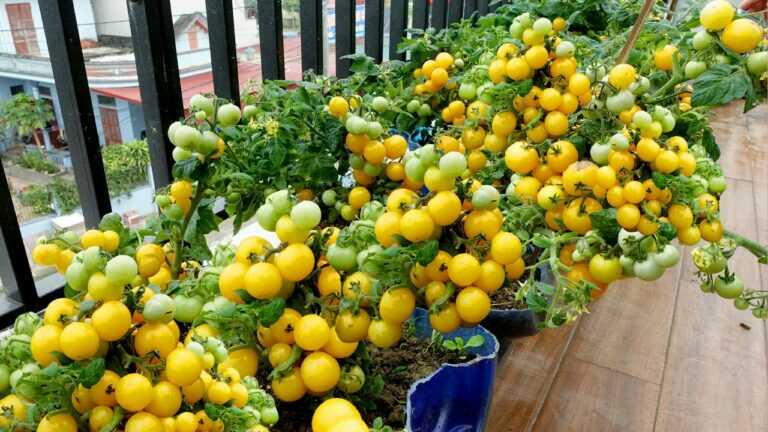
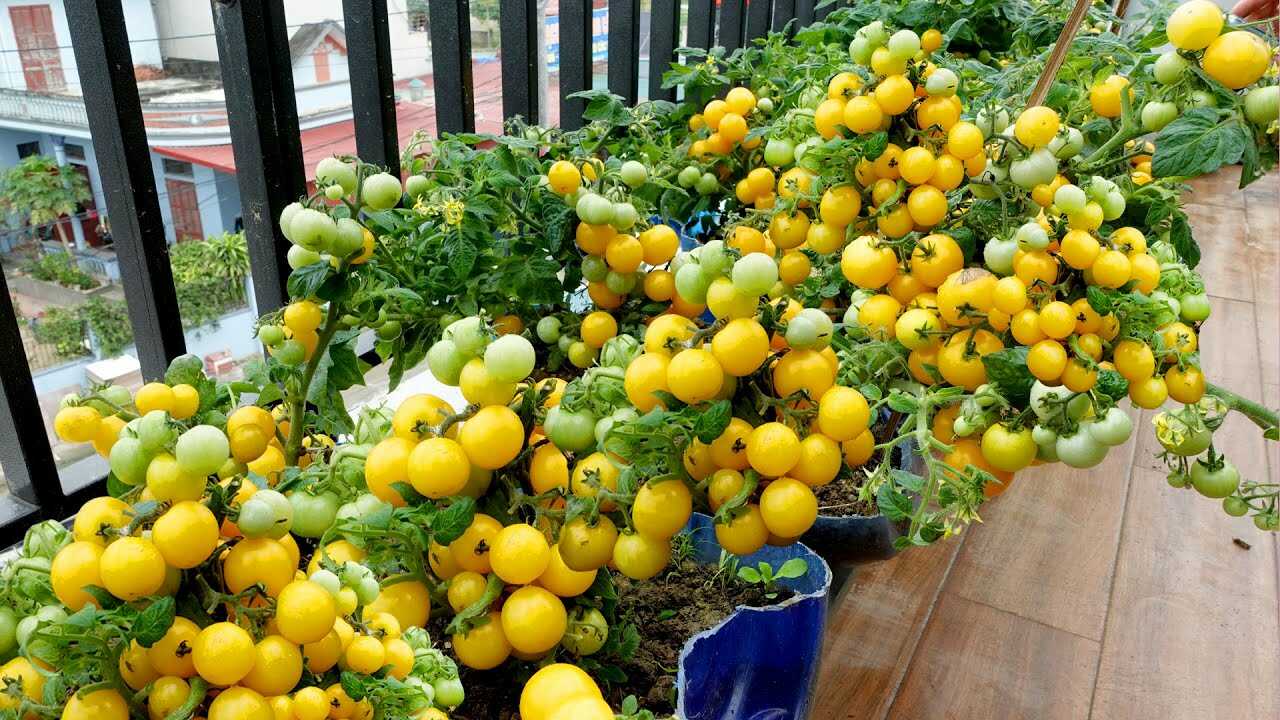
The photo shows a cascade of ripe, golden-yellow cherry tomatoes spilling over balcony containers — dozens of small, round fruits clustered on green vines. This article focuses on getting the best results specifically with these **yellow cherry tomatoes** in containers: how to feed, water, prune and harvest them for steady, flavorful production while protecting fruit quality.
Why focus on yellow cherry tomatoes?
Yellow cherry varieties are visually distinct and often richer in specific **carotenoids** (like beta‑carotene and zeaxanthin) than red types, which influences color and flavor. From a horticultural standpoint, the same essentials apply: fruit quality depends on balanced nutrition (especially **potassium** and **calcium**), steady water, good drainage and adequate light. The tips below use those real, verifiable plant needs as the basis for practice — they are complements to basic care, not miracle fixes.
Step‑by‑step: container setup and planting
- Choose a container: Use at least a 5‑gallon (19 L) pot per plant for productive clusters; multiple plants can share a long trough if roots have 10–15 L each.
- Potting mix recipe: Mix 60% premium potting mix, 25% well‑rotted compost, 15% perlite for drainage. For a 5‑gallon pot, that is ~12 L potting mix, 5 L compost, 3 L perlite.
- Fertilizer at planting: Work in a slow‑release granular fertilizer (e.g., 14‑14‑14) at the rate of 1 tablespoon per gallon of potting mix. For one 5‑gallon pot, use 5 tablespoons, mixed evenly into the top 5–8 cm of soil.
- Planting depth: Bury seedlings up to the first true leaves so secondary roots form along the stem; this strengthens container plants and encourages more fruiting later.
- Light: Place where they get at least 6–8 hours of direct sun; more sun improves sugar accumulation and color in fruit.
Feeding, watering and calcium management (precise doses and frequency)
Balanced nutrition and calcium are critical for quality fruit and to avoid disorders like blossom end rot.
- Ongoing liquid feed: From the first fruit set, apply a balanced soluble fertilizer (for example 20‑20‑20) at half the label concentration: mix 1/2 teaspoon (≈2.5 g) per liter of water. Apply as a soil drench once every 10–14 days during the main growing season (spring–summer). This frequency supports steady fruit development over several weeks.
- Potassium boost for flavor and fruit size: Every 4 weeks during fruiting, give a potassium‑rich feed (e.g., a tomato fertilizer labeled for “bloom & fruit” or a soluble potash) at the product’s recommended rate for container use — if using potassium sulfate powder, follow manufacturer directions; if unfamiliar, substitute the 20‑20‑20 feed above and add a single application of a potash feed once monthly.
- Calcium to prevent blossom end rot: Apply calcium nitrate as a soil drench at 1/2 teaspoon (≈2.5 g) per gallon (3.8 L) of water every 2 weeks if you notice small brown sunken spots on developing fruit or if you have soft, misshapen fruit. Stop if leaves show tip‑burn; calcium nitrate is a supplement, not a substitute for even watering.
- Watering method and frequency: Water deeply until you see light runoff. Check the top 2–3 cm (0.8–1.2 inches) of soil: water when that layer feels dry. In warm weather this often means more frequent checks; in cooler conditions less frequent. Consistent moisture over the course of several weeks prevents splitting and blossom end rot.
Pruning, support and canopy care
Proper vine management keeps light on the fruit and reduces disease pressure.
- Support: Use stakes, cages or trellis so trusses don’t drag on the potting mix or floor.
- Pruning suckers: For indeterminate yellow cherry tomatoes, pinch off suckers when they are 2–3 cm long to maintain 2–3 main stems; this channels energy into fruiting trusses. For determinate/bushy cherries, minimal pruning is best — remove only damaged foliage.
- Leaf hygiene: Remove yellowing lower leaves and any leaves touching the soil every 1–2 weeks to reduce fungal risk and keep airflow through the canopy.
Harvesting and encouraging continuous crops
Harvest at full golden color for best flavor. Frequent picking encourages new flowers and fruit set.
- When to harvest: Pick when fruit is uniformly bright yellow and slightly yielding to a gentle squeeze. For these cherry clusters, that typically means waiting until full color — the carotenoid content and sugar peak at that stage over several weeks of ripening on the vine.
- Frequency: Harvest clusters or individual fruits every 3–5 days once ripening begins to maintain steady production over several weeks.
- After‑harvest: Remove any overripe fruit from pots promptly to prevent attracting pests.
Practical tips from experience
- Mulch the surface: A 2–3 cm layer of coarse mulch (straw or bark) on the container reduces surface evaporation and keeps roots cooler over weeks of hot weather.
- Rotate and refresh soil annually: Replace or refresh the top third of the potting mix each season and add 20–30% new compost to maintain fertility across months and years.
- Monitor for pests weekly: Check underside of leaves and fruit clusters for aphids or whiteflies. Early removal of infested leaves prevents rapid population growth.
- Varietal note: Yellow cherries can be slightly less acidic than red types; fuller flavor comes from steady sunlight, regular potassium and consistent watering over multiple weeks.
Errors to avoid (real botanical pitfalls)
- Over‑feeding nitrogen: Too much nitrogen makes lush foliage but weakens fruit set and flavor — if leaves are dark green and viney with few fruits, reduce nitrogen feed and increase phosphorus/potassium.
- Irregular watering: Alternating drought and heavy soakings cause cracking, uneven sugars and increase blossom end rot risk — aim for even moisture.
- Poor drainage: Do not use garden soil alone in containers; compacted or poorly drained media suffocate roots and reduce fruiting over the season.
- Ignoring calcium needs: Treating blossom end rot only after symptoms appear can salvage some fruit but prevention with even water and periodic calcium applications is more effective across weeks of fruiting.
Conclusion — grow that balcony bounty
Those glowing clusters of **yellow cherry tomatoes** in the photo are the reward of regular, targeted care: right container mix, consistent moisture, balanced feeding with attention to potassium and calcium, and sensible pruning. Follow the precise doses and schedules above through the growing weeks, and you’ll sustain high yields and great flavor. Try one plant per 5‑gallon pot, keep notes on fertilizer timing, and enjoy picking bright yellow fruits every few days — then share a photo of your harvest!