
A Sticky Laundry Detergent Cap? Clean the Grooves with Warm Water and a Soft Brush
A laundry detergent measuring cap can collect a sticky ring around its rim and a thicker film inside the grooves. Warm water and a soft brush are usually enough to loosen ordinary liquid detergent residue. Cleaning that film also makes it easier to see the molded measuring marks before the next load.
The method is deliberately simple: detach the cap, soften the residue, brush gently, rinse and dry completely. No extra cleaner is needed for a cap already coated in detergent. Work beside a sink with a small cleaning basin and keep the detergent bottle closed and safely out of the way.
Check the cap before washing it
This guide is for a removable plastic measuring cap used with ordinary liquid laundry detergent. Check the product packaging for any specific handling instructions. A cap with an electronic component, a dispenser mechanism or a material that should not be soaked needs its own care directions rather than this general cleaning routine.
Look for cracks, sharp damage or a measuring line that has become unreadable. Washing removes residue, but it cannot restore missing markings or repair damaged plastic. If the cap no longer gives a reliable measurement, use the manufacturer’s recommended replacement or another appropriate measuring device, rather than estimating from a worn container.
Keep the cap and cleaning tools away from food, children and pets. A detergent cap is not a drinking cup, even after it looks clean. Use a basin and brush reserved for cleaning tasks, and wash your hands afterward. If handling the product irritates your skin, follow the label’s protective advice.
What you need
- The removable measuring cap from a liquid laundry detergent bottle
- A small basin reserved for cleaning, not food preparation
- Warm water, not boiling water
- A dedicated soft cleaning brush
- A clean cloth or small drying rack
Choose a brush with soft bristles that can reach the visible ridges without scratching the plastic. A small dedicated utility brush works well. Do not reuse a toothbrush that someone still uses for their mouth, and do not take a food brush from the kitchen and return it to cooking afterward.
The water should feel comfortably warm rather than hot enough to soften or distort the cap. A modest amount in a small basin is sufficient to cover the sticky area. There is no need to fill a whole sink or add dish soap, bleach, vinegar, baking soda or another laundry product.
Step-by-step method
- Remove the cap from the detergent bottle and put the bottle away with its opening secured as the packaging allows. Set the cap in the cleaning basin with the sticky interior accessible. Avoid balancing an open bottle at the edge of the sink while you work; a small spill can make the surrounding surface slippery.
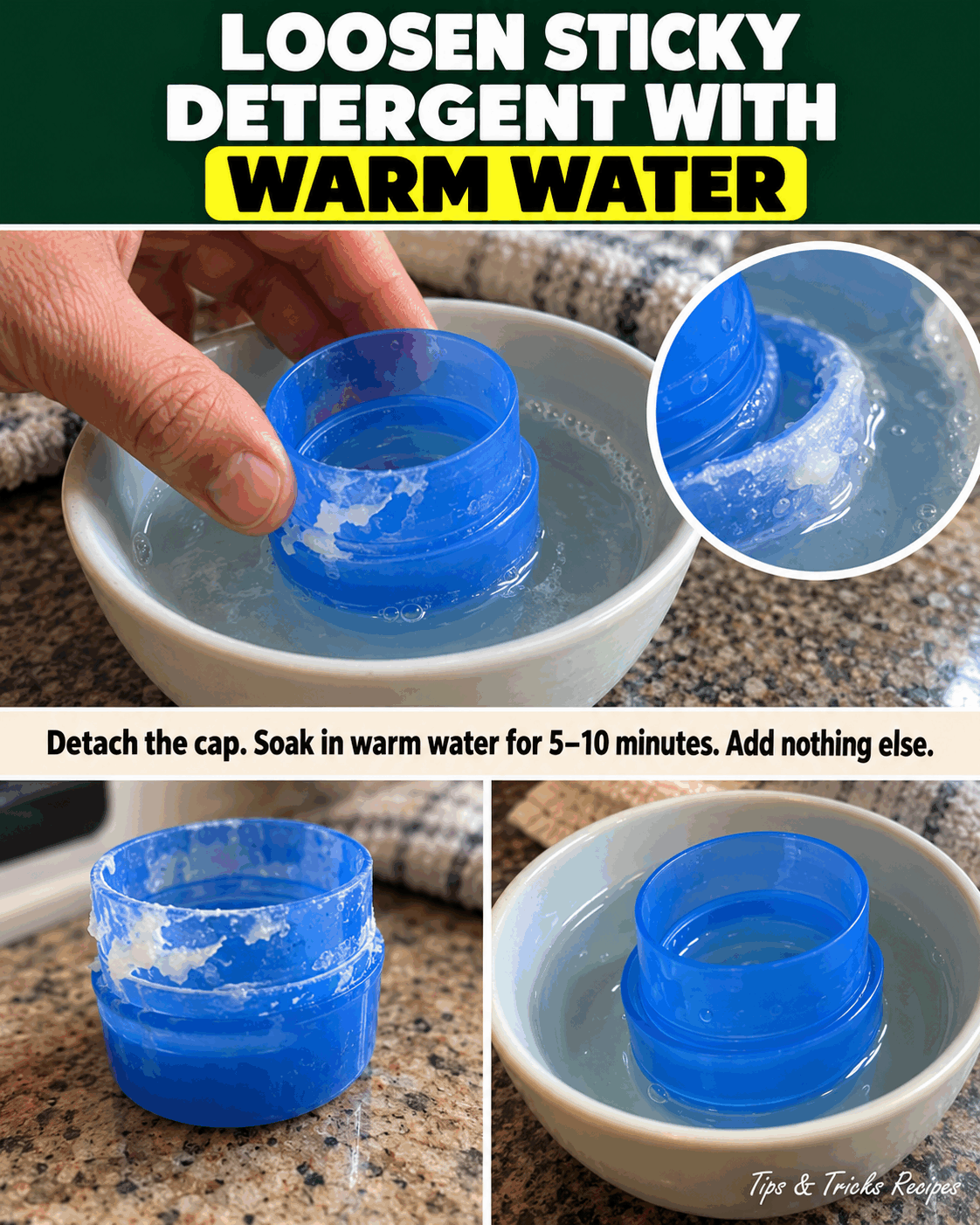
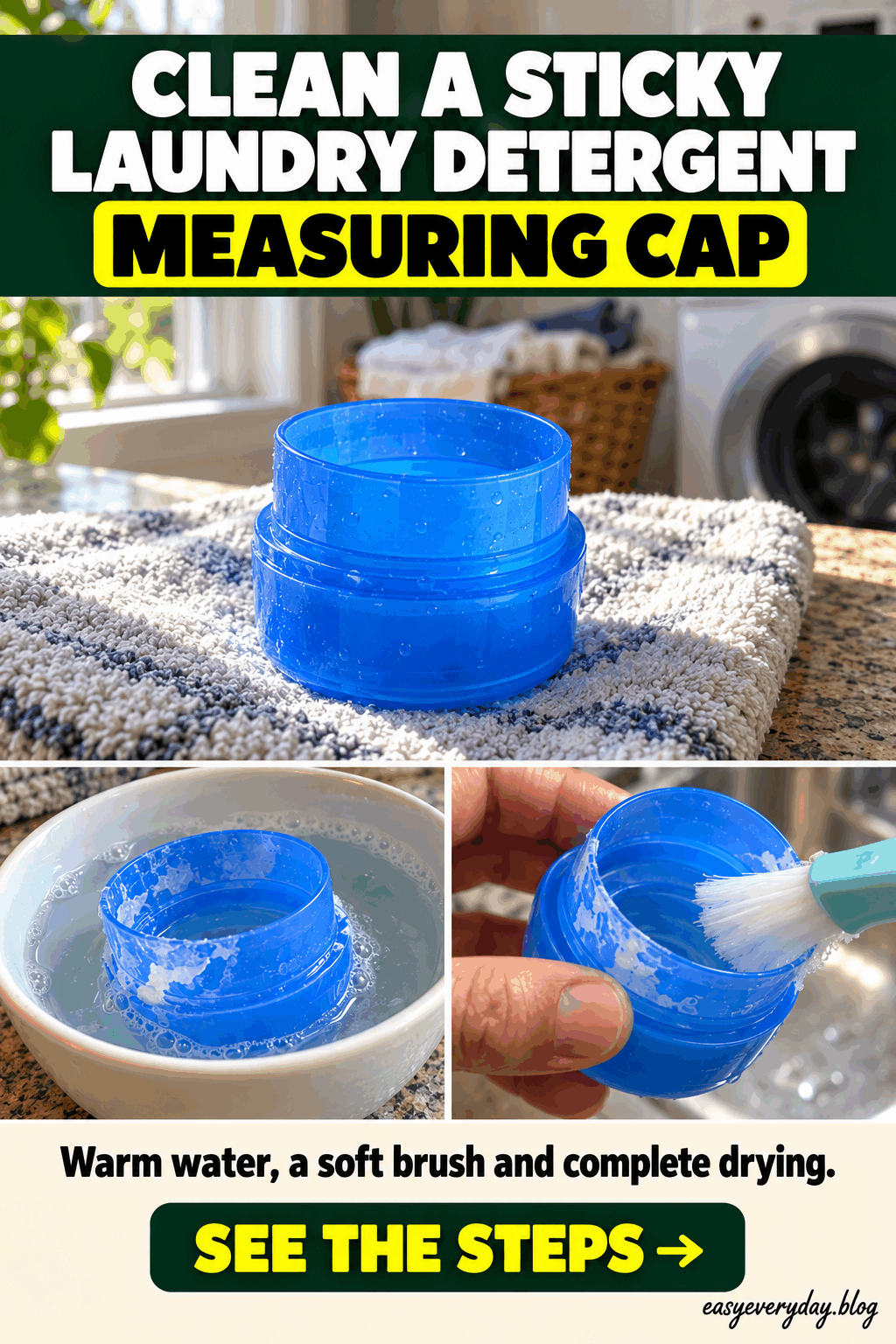
- Add warm water to the basin and let the affected area soak for about five to ten minutes. The time is a practical starting point for ordinary residue, not a rule that requires leaving every cap unattended. If the film softens sooner, move on. Do not use boiling water to speed the process.
- Lift the cap over the basin and brush the interior gently, working around the rim, grooves and molded measuring marks. Turn it as you go so you can see the surfaces being cleaned. Light repeated strokes are more useful than forcing a hard bristle into a narrow corner or scraping with a metal tool.
- Rinse the loosened film away with a small flow of clean water, or change the basin water and rinse thoroughly. Check the inside as well as the outer threads. A cap that still feels slick may have detergent left on it, so inspect and rinse again rather than assuming a shiny surface is automatically clean.
- Shake off the excess water carefully and set the cap open on a clean cloth or rack. Leave the opening positioned so water can drain and air can circulate. Do not immediately seal the damp cap in a cupboard or put it back into a storage container where water will remain trapped.
- Once the cap is fully dry, check that the measuring marks are readable and return it to its normal place following the product’s storage instructions. Clean and dry the brush and basin too. Wipe any drips around the sink so the laundry area is not left with a slippery detergent film.
Why warm water and gentle brushing help
Liquid detergent is made to disperse into water, but residue left around a cap can thicken as water evaporates. A short warm soak gives that film time to loosen. The brush then reaches the ridges where a quick rinse may pass over the surface without lifting material from the corners.
This is a cleaning method, not a disinfection claim. A clear-looking cap does not need a promise about removing every microorganism to be useful. The aim is to remove sticky detergent, keep the measuring marks visible and leave the cap dry enough to store without a puddle underneath it.
Read the measuring marks without guessing
After drying, hold the cap where you can see the molded lines clearly. The correct detergent amount still comes from the product instructions, the load size, soil level and water conditions. Cleaning the cap does not create a universal dose, and a full cap is not automatically the right amount for every wash.
If the detergent packaging uses a different measuring system, follow that system. Do not transfer a dose from another brand simply because the two caps look similar. Their capacities and product concentrations can differ. An easy-to-read cap helps only when it is paired with the instructions for the detergent actually being used.
Mistakes that make the job harder
Do not scratch away a stubborn patch with a knife or abrasive pad. Roughened plastic can become harder to clean, and a sharp edge can damage the molded markings. Repeat a short warm soak if needed. If the material remains damaged or the residue does not behave like ordinary detergent, pause and check the product directions.
Do not run the cap through the dishwasher unless the manufacturer explicitly permits it. Heat, cleaning products and contact with food utensils make that an unnecessary assumption. Hand cleaning with warm water keeps the task focused and avoids introducing the cap into a cycle it may not have been designed to withstand.
Keep the routine small and practical
A quick inspection after measuring can prevent a thick crust from building up. If the label allows a routine rinse, follow it and leave the cap to dry appropriately. When you notice a sticky ring, clean it before the marks disappear beneath another layer. There is no need for a complicated weekly treatment.
Keep the cleaning brush in the laundry area, clearly separate from personal and kitchen tools. Store the detergent itself according to its packaging and keep the measuring cap with the correct product. A tidy setup makes it easier to measure accurately without turning a simple laundry task into a guessing game.
Frequently asked questions
Can I add vinegar or another cleaner to the soaking water?
It is not needed for this method. The cap already contains laundry detergent residue, and warm water is the first step for dispersing it. Do not mix household products in the basin. If the label specifies a different cleaning procedure, follow that direction rather than adding an extra ingredient on your own.
Does the cap need boiling water?
No. Use comfortably warm water. Boiling water can distort some plastics and makes handling the cap unnecessarily risky. A short soak followed by light brushing gives the residue time to loosen. If it remains sticky, repeat gently rather than increasing the temperature until the cap becomes difficult to touch.
Can I put the wet cap straight back on the bottle?
Let it dry completely before storage unless the manufacturer gives a specific alternative instruction. Trapped water can collect around the cap or drip into a storage area. Position the opening so air can circulate, and check the ridges and threads as well as the broad visible surface before putting it away.
Will cleaning restore faded measuring marks?
Cleaning can uncover marks hidden by a film, but it cannot replace worn or missing markings. If you still cannot read the lines after drying, do not guess from memory. Use a suitable manufacturer-recommended replacement or measuring method that matches the product and its dosing instructions.
Is a full cap the correct dose for a normal load?
Not necessarily. The appropriate amount depends on the detergent concentration, load, soil and water conditions described on the packaging. Caps vary in size and can contain several measuring lines. Cleaning helps you see those lines, but the detergent label remains the guide for choosing which one to use.