
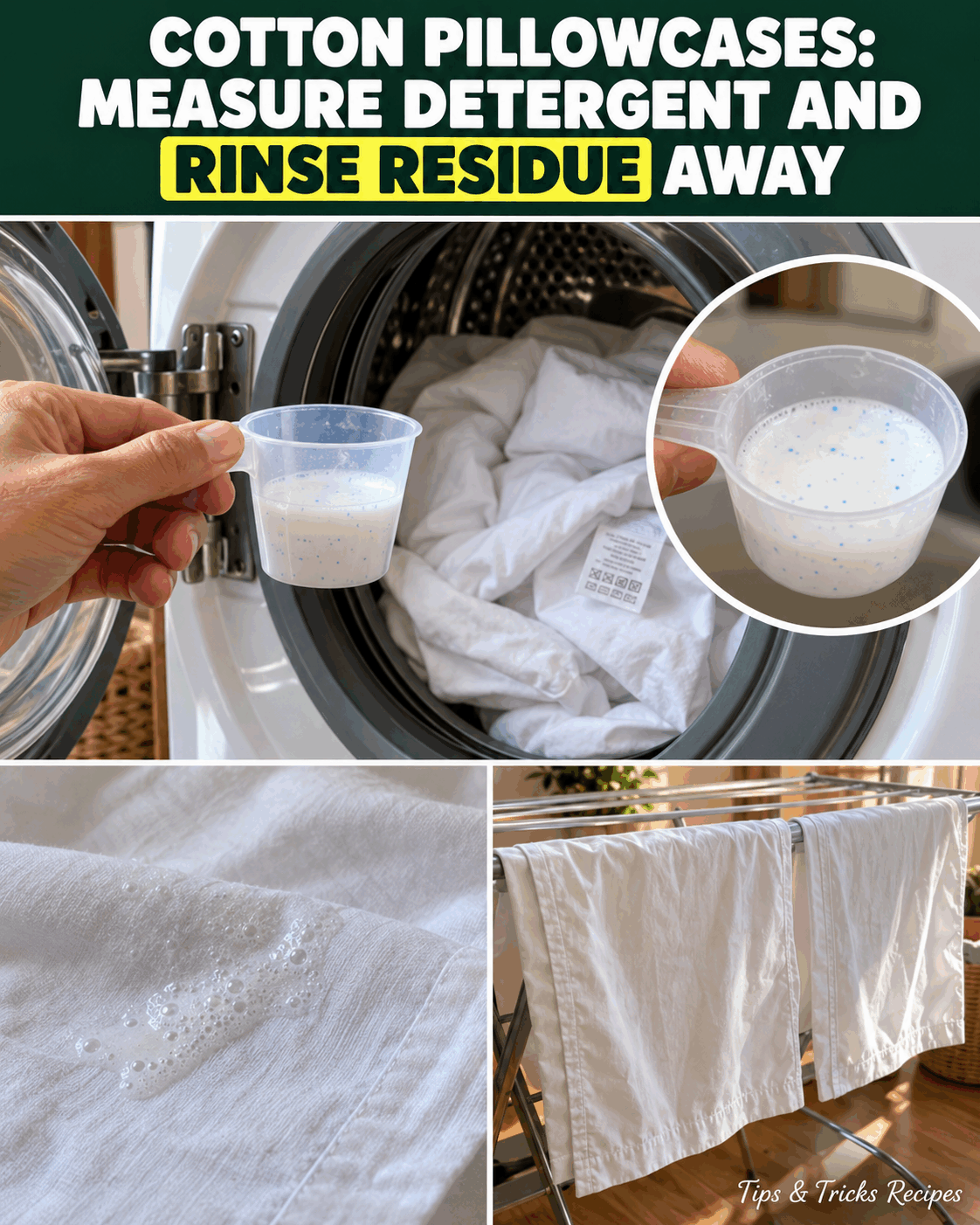
Cotton Pillowcases with Detergent Residue? Measure Carefully and Add a Rinse When Needed
Cotton pillowcases can sometimes feel coated after washing, especially when too much detergent has been used or the machine was crowded. A measured dose and an additional rinse, when needed, can help remove ordinary detergent residue. The aim is clean, well-rinsed fabric that dries completely, not a promise to whiten every mark.
Start with the care label and the detergent directions rather than adding another cleaning ingredient. The fabric, machine, load size and water conditions all influence the routine. If the pillowcases are already washed and the issue is leftover detergent, adding more detergent to another full wash may simply repeat the problem.
Identify the fabric and the actual problem
Check that the pillowcases are cotton and read their washing and drying symbols. Cotton blends, decorative trims and special finishes can require different handling. The word cotton alone does not set a universal temperature. Use the care label to choose a permitted program and do not assume every white case tolerates the hottest wash.
Look at what remains on the fabric. A slippery feel, visible sudsy water during another rinse or a coated texture can suggest product residue, but marks also have other causes. This method is not a treatment for every stain, dye change or worn fiber. Separate those issues before changing the whole laundry routine.
Check the washing machine’s loading guidance too. A drum packed tightly with bedding leaves less room for water and movement. The pillowcases need space to unfold and rinse, rather than staying bunched inside a heavy load. Sorting similar items helps the cycle work as intended without making one small garment carry the whole problem.
What you need
- Cotton pillowcases with readable care labels
- Laundry detergent suitable for the fabric and washing machine
- The product’s measuring cap or recommended dosing device
- Access to the machine’s rinse settings
- A drying rack or dryer permitted by the care label
Use a detergent appropriate for the machine and textile. Measure with the recommended device, keeping the markings readable. If the packaging gives different quantities for water hardness or soil levels, choose the relevant one instead of filling a cap by habit. There is no single spoonful or capful that fits all products.
You do not need vinegar, baking soda, bleach, fabric softener or a fragranced booster to carry out this guide. Adding several products makes it harder to understand which one is leaving a film. Keep the first attempt simple, and reserve any separate stain treatment for a product and method compatible with the label.
Step-by-step method
- Separate the pillowcases from unsuitable items and inspect their labels and seams. Empty the machine of any objects left in the drum and make sure the load will not be compressed tightly. If the pillowcases have already been washed and only need residue rinsed out, begin with a rinse rather than automatically measuring more detergent.
- For pillowcases that need a normal wash, read the detergent dosing chart. Match the amount to the product, load size, soil and water conditions as instructed. Use the marked measuring device on a stable surface and avoid topping it up simply because the fabric has a stain; more detergent does not guarantee better removal.
- Choose a program and temperature allowed by the fabric label and suitable for the machine. Place the pillowcases loosely in the drum with compatible items. Do not force a large bundle into a small load space. Start the cycle using only the products actually needed for that wash, keeping unnecessary additives out of this first assessment.
- When a washed load still shows detergent residue, select an additional rinse if the machine and care instructions allow it. Do not add another dose of detergent for that rinse. Let the machine complete the water exchange and spin normally; repeatedly interrupting the program can make it harder to judge whether rinsing has finished.
- Remove the pillowcases promptly and shake them open. Check the fabric after the rinse without adding a spray or conditioner to disguise the feel. If residue persists, review the original dose, loading and machine guidance rather than repeating rinse after rinse indefinitely. A persistent problem may need a separate machine or product assessment.
- Dry according to the care label, either on a rack with the fabric opened out or in a permitted dryer setting. Leave enough room for air to reach the folded edges and seams. Before storing, feel along those thicker areas as well as the center, because the broad surface can dry while the seam remains damp.
- Once fully dry, fold and store in a dry place. Make a note of the detergent amount and load arrangement that worked, so the next wash is more consistent. Do not return a slightly damp case to the linen cupboard or put it straight on a pillow where the remaining moisture cannot escape easily.
Why the dose matters
Detergent is intended to work at the amounts described for its concentration and conditions. Extra product can leave more material for the rinse to carry away without improving the outcome. A visible measuring mark is useful because it makes the choice repeatable; pouring freely from the bottle makes comparisons much less reliable.
Water conditions also matter, which is why some dosing charts distinguish hard and soft water. If you do not know your supply, check local information or the detergent guidance rather than guessing that the largest amount must be safer. The right response to uncertainty is a clearer measurement, not an automatic increase.
Rinsing and drying are separate steps
An extra rinse is a targeted option for a load that needs it, not a requirement to add to every wash forever. If a suitable dose and a sensible load consistently rinse well, preserve that routine. Using additional water without a reason is less useful than correcting the original cause of the residue.
Drying does not remove detergent that was left behind, and rinsing does not replace proper drying. Treat both steps as part of the finished result. A pillowcase should be well rinsed before drying, then completely dry before storage. Fragrance, a hot surface or a bright photograph does not establish either condition on its own.
Common mistakes to avoid
Do not promise that another rinse will whiten yellowed fabric or erase old cosmetic stains. It may remove leftover detergent, but discoloration and residue are not the same thing. Avoid aggressive experiments with household mixtures when the real task is to measure a compatible detergent and let clean water rinse it away.
Do not use fabric softener as a way to hide a coated feel while troubleshooting. It introduces another product to the fabric and can make the comparison confusing. Keep a simple record of what went into the wash, and use the same care-label limits when deciding whether to run another cycle.
A practical routine for the next load
Keep the detergent chart and measuring device accessible in the laundry area. Measure before starting the program, load loosely and check that the pillowcases are not trapped inside another large item. Small habits like these make it easier to repeat a satisfactory wash without adding an extra stage every time.
If the same issue appears across different loads, consult the machine instructions for appropriate maintenance and dispenser checks. That is a separate task from cleaning the pillowcases themselves. Do not dismantle equipment or add a machine-cleaning product to a textile rinse unless its instructions specifically describe that use.

Frequently asked questions
Should I add detergent to the extra rinse?
No. When the purpose is to remove detergent left from a completed wash, the additional rinse uses clean water without another dose. Adding more product works against that goal. Follow the machine instructions for choosing the rinse setting and keep the pillowcases within the conditions permitted by their care labels.
Is the hottest wash best for cotton pillowcases?
Not automatically. Cotton items can have different finishes, colors and trims, and their labels may specify different limits. Choose a permitted temperature and suitable program rather than treating the fiber name as a complete instruction. A hotter wash is not a substitute for correct dosing, sensible loading and adequate rinsing.
Will the rinse make yellow pillowcases white again?
That is not the promise of this method. An extra rinse can help carry away detergent residue, while yellowing may come from other causes or be permanent. Assess any remaining stain separately and use only a treatment compatible with the fabric. Do not confuse a cleaner feel with guaranteed whitening.
Can I store them when the middle feels dry?
Check the seams and folded edges too. Those thicker areas can hold moisture after the central fabric feels dry. Open the pillowcase out and allow enough drying time or use an appropriate dryer setting if permitted. Store only when the whole item is dry, not when the most visible part is ready.
Why does residue return after every wash?
Review the detergent concentration and dose, water conditions, load size and the machine’s guidance. A crowded drum or a habitual oversized dose can keep recreating the issue. If several types of laundry are affected, a separate dispenser or maintenance check may be needed. Avoid simply adding endless extra rinses without investigating the pattern.