Why do sweet potatoes grown in soil bags have so many large tubers?
Why do sweet potatoes grown in soil bags have so many large tubers?
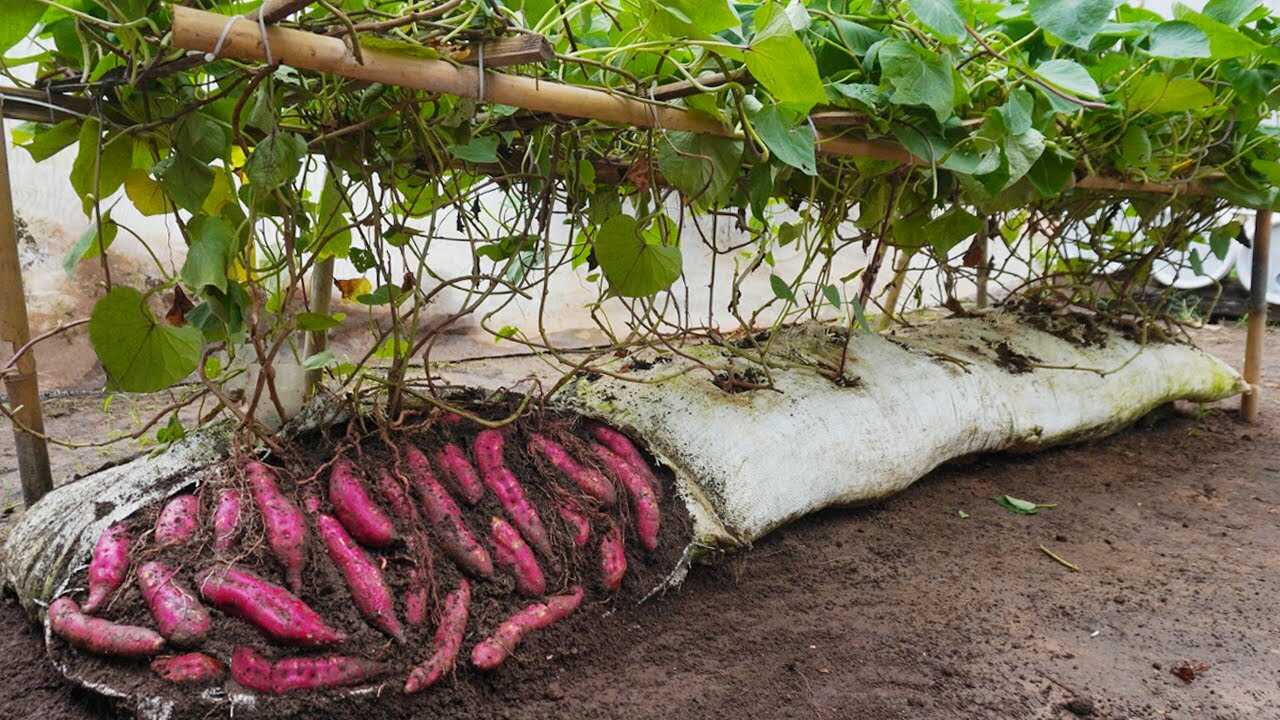
The photo shows a white fabric soil/grow bag stuffed with loose media and a row of pink sweet potato tubers clustered along the bag’s inner wall. That visual—a narrow, aerated, warm root zone inside a long bag—is the central clue. In short: the bag’s shape, media and microclimate concentrate roots and resources in a shallow band, encouraging many large storage roots to form along the bag surface.
What’s happening botanically (simple, verifiable reasons)
- Concentrated root zone: The long, shallow bag confines roots laterally rather than allowing them to dive deep. Sweet potatoes form storage roots wherever fine roots receive steady carbohydrates and favorable conditions.
- Improved aeration (fabric bags): Fabric or porous bags air‑prune root tips and produce more lateral branching and short fibrous roots near the bag wall—ideal sites for conversion into tuberous roots.
- Stable moisture and warmth: Bags warm quickly in sun and dry predictably. Warm, evenly moist soil favors storage‑root initiation and steady enlargement (sweet potatoes prefer soil temps ~21–26 °C for bulking).
- Low nitrogen / higher potassium balance: When vegetative growth is limited (not too much N) and potassium/phosphorus are available, plants partition more carbohydrates into storage roots. This nutrient balance is a documented factor in storage‑root development.
- Planting density and cultivar: More slips per bag or varieties that produce many elongated roots will naturally produce many tubers clustered together.
Step-by-step: how to replicate (or avoid) the clustered, large tuber effect
- Choose the bag and media: Use a long fabric grow bag (30–40 cm wide) filled with a loose mix: 60% composted topsoil or mature compost, 30% coconut coir or peat, 10% coarse sand or perlite for drainage. For a 1 m long bag aim to fill ~30–50 liters of mix (adjust to bag volume).
- Prepare nutrients at planting: Incorporate 1 cup (≈240 ml) of well‑rotted compost per 30 liters of mix and add 2 tablespoons (≈25 g) of a potassium‑rich amendment (e.g., potassium sulfate) distributed evenly. Avoid high fresh nitrogen inputs.
- Plant slips and spacing: Plant healthy slips 30–40 cm apart for larger individual tubers. If you want many tubers clustered as in the photo, plant closer (20–25 cm), but expect smaller individual roots if overcrowded.
- Watering: Keep media evenly moist but not waterlogged. In warm weather water a 1 m bag with about 2–4 liters every 1–3 days depending on temperature and drainage; in cooler weather every 3–7 days. Allow the top 2–3 cm to dry slightly between waterings.
- Fertilizer schedule: After planting, side‑dress every 4 weeks during the growing season: 1/4 cup (≈60 ml) of compost per slip plus 1 tablespoon (≈15 g) of a low‑nitrogen, potassium‑biased granular fertilizer (e.g., NPK roughly 5-10-20) per plant. In summer increase to every 3–4 weeks; reduce in late season.
- Vine management: Train vines on a low trellis or allow them to spread; heavy vine removal reduces photosynthesis so prune minimally. A healthy vine canopy provides the carbohydrates needed to bulk tubers.
- Timing and harvest: Tubers typically initiate several weeks after planting; expect meaningful bulking after 8–12 weeks and harvest between 12–20 weeks depending on variety and climate. Cure harvested roots 7–14 days at warm temps (~29–32 °C and high humidity) to improve storage and sweetness.
Practical tips from experience
- Use fabric bags for air pruning: They promote lateral root density and more evenly spaced tuber formation along the bag wall.
- Match spacing to your goal: Wider spacing (30–40 cm) in a bag produces fewer but larger tubers; close spacing yields many tubers but smaller individually.
- Maintain even moisture: Fluctuating wet/dry cycles or waterlogging both reduce tuber quality. Consistent moisture promotes uniform bulking over several weeks.
- Favor potassium, not nitrogen: Excess nitrogen keeps plants in vine mode and reduces storage‑root formation. Use compost plus a potassium supplement instead of high‑N fertilizer midseason.
Common mistakes to avoid (real botanical consequences)
- Overfeeding with nitrogen: Leads to lush vines and few storage roots.
- Poor drainage or heavy, compacted media: Causes root rot and deformed, rotting tubers.
- Planting too many slips per bag without adjusting resources: Produces many small tubers because carbs and nutrients are divided among too many roots.
- Ignoring temperature: Cold soil (<16 °C) suppresses tuber initiation; very hot surface temperatures can desiccate roots.
- Harvesting too early: Tubers will be small and poorly cured; wait until 12+ weeks (varietal dependent) and follow a curing period for best size and storage life.
Quick troubleshooting
- If tubers are numerous but thin: reduce planting density, ensure adequate potassium, and maintain steady moisture for several weeks to encourage thickening.
- If tubers are misshapen or rotted: improve drainage, avoid waterlogging, and use a loose, coarse mix.
- If vines are enormous and few tubers form: cut back on nitrogen and apply a potassium side‑dress; keep vines intact but avoid nitrogenous feeds.
Growing sweet potatoes in a fabric soil bag creates a unique root environment—warm, aerated, and confined—which explains the visual of many large tubers pressed along the bag wall. Use the bag’s advantages intentionally: pick the right spacing, feed for bulking (low N, higher K), and keep moisture steady. Follow the steps above for reliable bulking over several weeks and you’ll be harvesting abundant, well‑formed tubers.
Ready to try it? Plant one bag this season with the spacing and feed schedule above, observe tuber initiation after 6–8 weeks, and compare results. Share your photos and timing—garden experiments teach fastest, and I’d love to hear how your bags perform.