
A little yeast for your peace lily: a measured routine for fresh leaves
Plain baker’s yeast is the everyday ingredient in this peace lily routine. The aim is to follow the emergence of fresh leaves while keeping the root zone comfortable. Treat the small preparation as an optional observation trial, with a measured amount and a clear stopping point, rather than an automatic weekly feed.
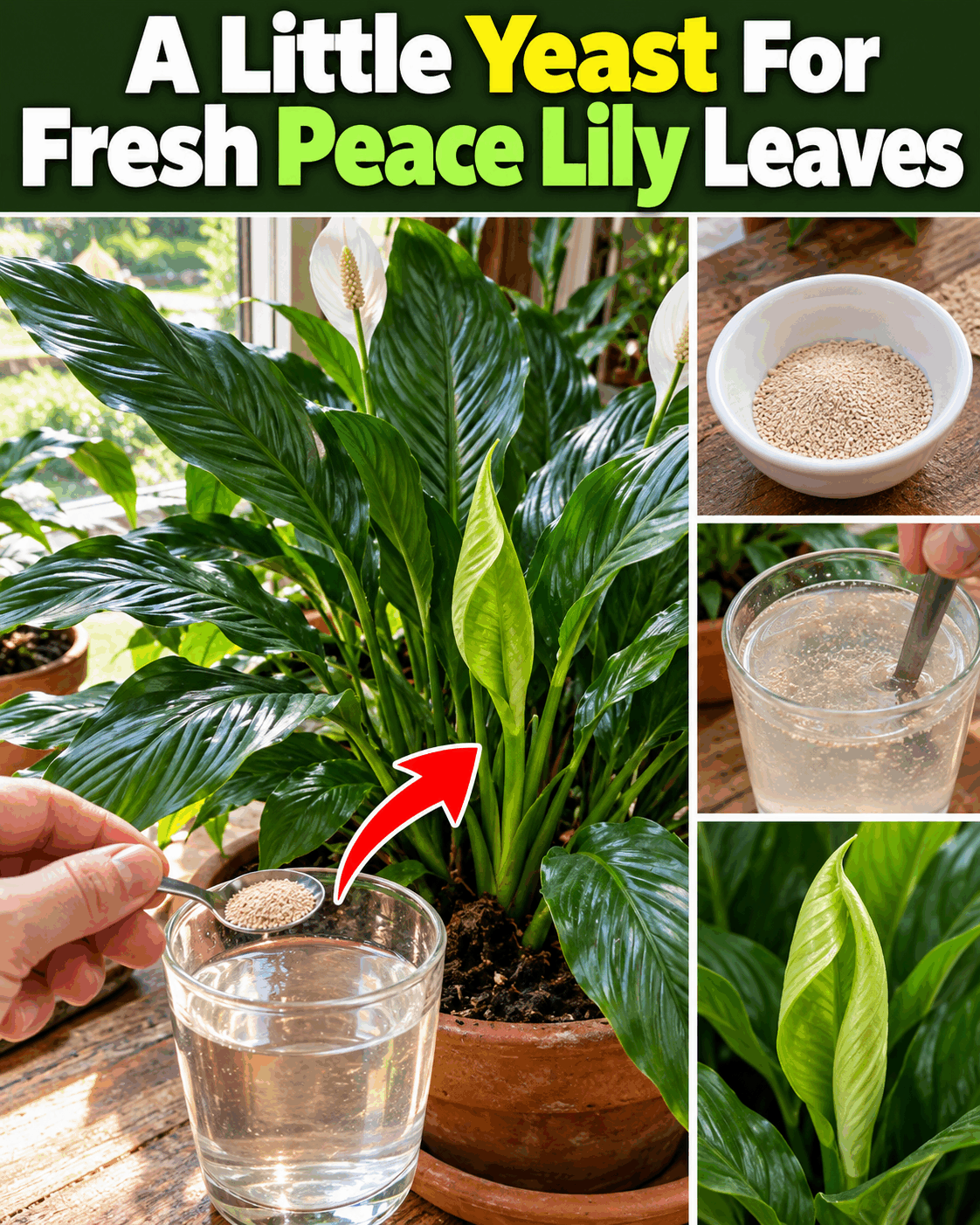
A peace lily already carrying a tightly rolled leaf is a useful plant to observe. You can photograph that leaf, record its position and compare the same view later. This gives you a concrete sign to follow, without confusing a temporary lift after watering with genuinely new growth from the crown.
What you need
- Plain dry baker’s yeast, without flavourings or sweeteners.
- A clean teaspoon, a one-litre measuring jug and a small measuring cup.
- Room-temperature water and a clean stirring spoon.
- A healthy peace lily in a draining pot.
- A notebook or phone for a dated photograph.
Choose a plant whose leaves are firm and whose pot drains freely. Put a struggling plant, a recently repotted specimen or one with persistently wet soil outside this trial. Those situations need their own diagnosis; adding another material makes it harder to understand what the roots actually need.
Prepare the small yeast trial
1. Record the starting point
Before mixing anything, take a photograph from the side and one from above. Count only clearly visible new rolled leaves, and note the date of the last watering. Keep the plant in its usual position. Moving it into much brighter light at the same time would change two things together.
2. Mix a fresh, weak preparation
If you choose to try it, stir one eighth of a level teaspoon of plain dry yeast into one litre of room-temperature water. This is a deliberately small experimental preparation, not a researched feeding rate for peace lilies. Use a proper measure instead of an overflowing spoon or an unlabelled packet.
Stir, leave it for about ten minutes and stir again. Do not add sugar, honey, milk, flour or fruit juice. The purpose is a small, controlled preparation, not a foaming fermentation. Make it immediately before use and discard the remainder afterwards instead of keeping an organic mixture beside the plant.
3. Keep the application limited
At a normal watering point, apply only twenty millilitres of the weak mixture to one small area of already slightly moist medium in a pot about fifteen centimetres across. Keep it away from the crown and leaf bases. Do not increase the total watering volume just to use up the jug.
The quantity above describes the limits of this optional trial, not a universal dose for every plant or pot. Do not repeat it automatically. If the pot is much smaller, the plant is inactive or you cannot measure accurately, keep the preparation off the plant and follow its established care instead.
4. Let the pot drain and observe
Empty the outer cover pot after drainage and return the plant to its normal position. For the following two to four weeks, keep watering decisions tied to the moisture of the medium. Check for a sour smell, a surface film or persistent dampness, and stop the trial if any appears.
How fresh leaves actually develop
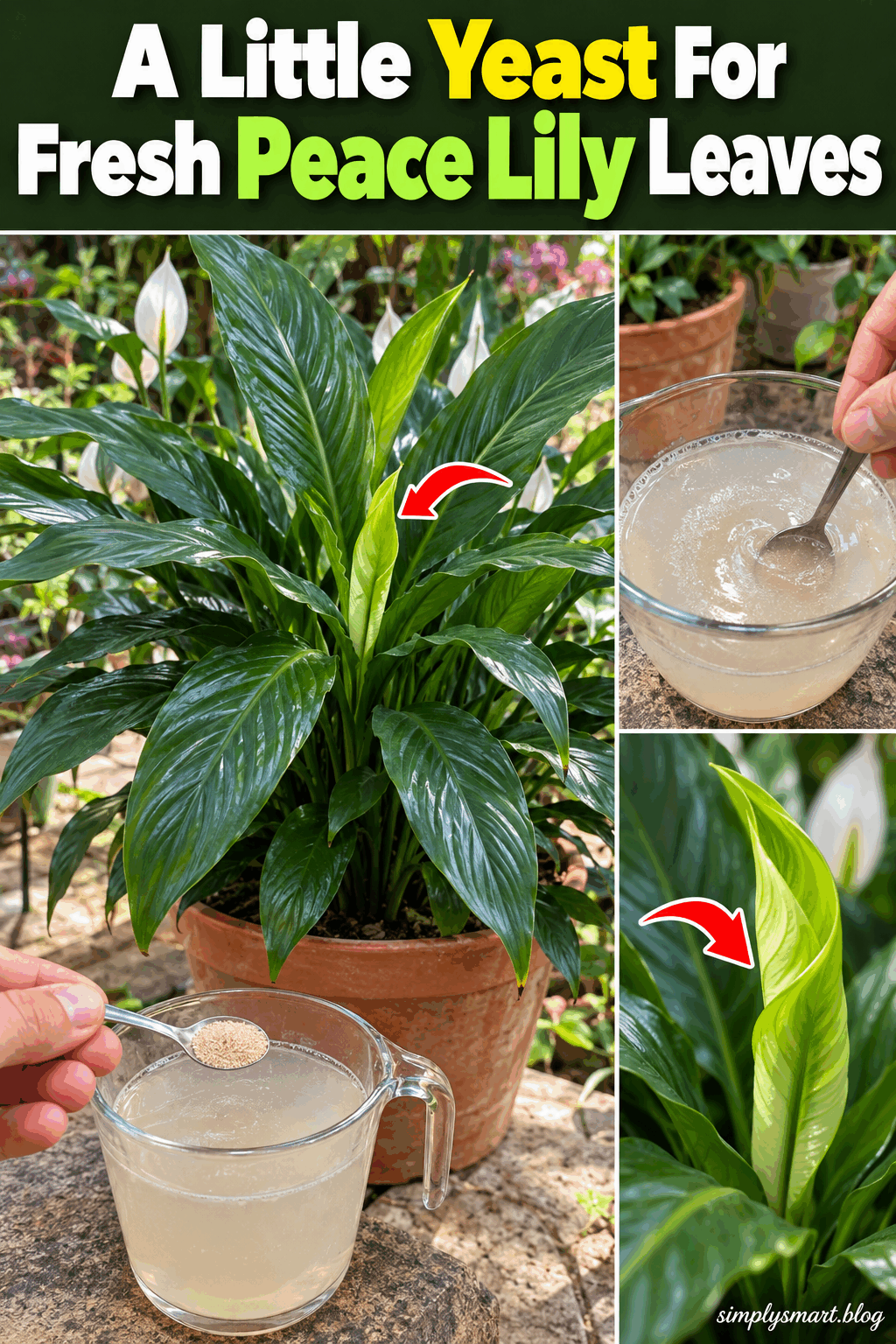
Leaf growth depends on the plant’s existing reserves, suitable light, functioning roots and balanced nutrition. Yeast is a living food ingredient, but its presence in a kitchen mixture does not establish that it accelerates peace lily growth. A new leaf after a trial is an observation, not proof of which factor caused it.
A useful comparison keeps the view, lighting and watering routine consistent. Measure the length of the same emerging leaf once a week rather than every few hours. Look for a firm leaf that opens normally. An already open leaf standing taller after watering has recovered its posture; it has not become a new leaf.
Keep the growing conditions consistent
Place the pot in bright, indirect light, where the foliage is not pressed against cold glass or a hot radiator. Turn it a little during routine care if it leans towards the window. Avoid abruptly moving a shade-grown plant into direct sunshine while you are trying to judge a small change.
Check moisture below the surface with a finger before watering. A dry crust can hide a wet lower root ball, especially inside a decorative cover pot. Lift the nursery pot occasionally to check its weight and drainage. Keep the crown above the medium instead of burying the leaf bases during a tidy-up.
Errors that make the result difficult to read
Do not combine the yeast trial with a new feed, a repotting, a heavy pruning and a different window. Too many changes create an impressive story but a poor comparison. Keep ordinary care steady and record any unavoidable change, including a colder room or several unusually dark days.
A frequent mistake is adding more because the first week looks quiet. Peace lilies do not respond on a social-media timetable, and winter light can slow growth considerably. Extra organic material can change the condition of a small pot without making the plant produce leaves more quickly.
Keep a small observation card
Write the date, the measured amount, the pot size and the newest leaf beside the photograph. Add a simple note about light and room temperature. This small card prevents a second application by mistake and makes it easier to compare the same plant fairly when the next leaf opens.
Questions people ask
Can I use instant yeast instead of active dry yeast?
Both are baker’s yeast, but neither has a validated household dose for peace lilies in this routine. Use only a plain, identifiable ingredient if you conduct the limited trial. Do not substitute baking powder, a flavoured nutritional supplement or a prepared bread mixture, because those introduce different materials.
Should I repeat the mixture every week?
No automatic weekly application is part of this method. Make one limited observation, then allow time to assess the plant and the pot. If there is no useful change, do not escalate the amount. Normal seasonal care and a suitable established nutrition routine remain separate decisions.
Can the mixture rescue a drooping peace lily?
Drooping is a reason to check moisture, drainage and root condition first. A wet, drooping plant needs a different response from a dry one. Do not add yeast to a stressed root ball simply because the leaves hang down; the trial described here is only for a healthy, stable plant.
What counts as a useful result?
A dated photograph showing a new rolled leaf opening into a firm, normally coloured leaf is useful evidence of growth. It does not identify yeast as the cause. Record the whole routine, including light and watering, so that you can decide whether the trial was worth repeating in another active growth period.
What should I do if the surface develops a film?
Stop adding the mixture, remove loose surface residue without digging into the roots and check the drainage. Allow the pot to return to its normal moisture pattern. Persistent odour, soft leaf bases or worsening decline call for inspection of the plant rather than another kitchen preparation.
A simple record is more useful than a bigger dose
Keep the ingredient small, the preparation fresh and the comparison clear. Watch the next leaf develop under steady care, and let the plant’s condition decide what you do next.
Further reading: RHS peace lily care and University of Maryland guidance on indoor plant nutrition.