🌸1 Spoon a Week! Suddenly Your Orchid Is Producing New Roots and Flowers All Year Round
🌸1 Spoon a Week! Suddenly Your Orchid Is Producing New Roots and Flowers All Year Round
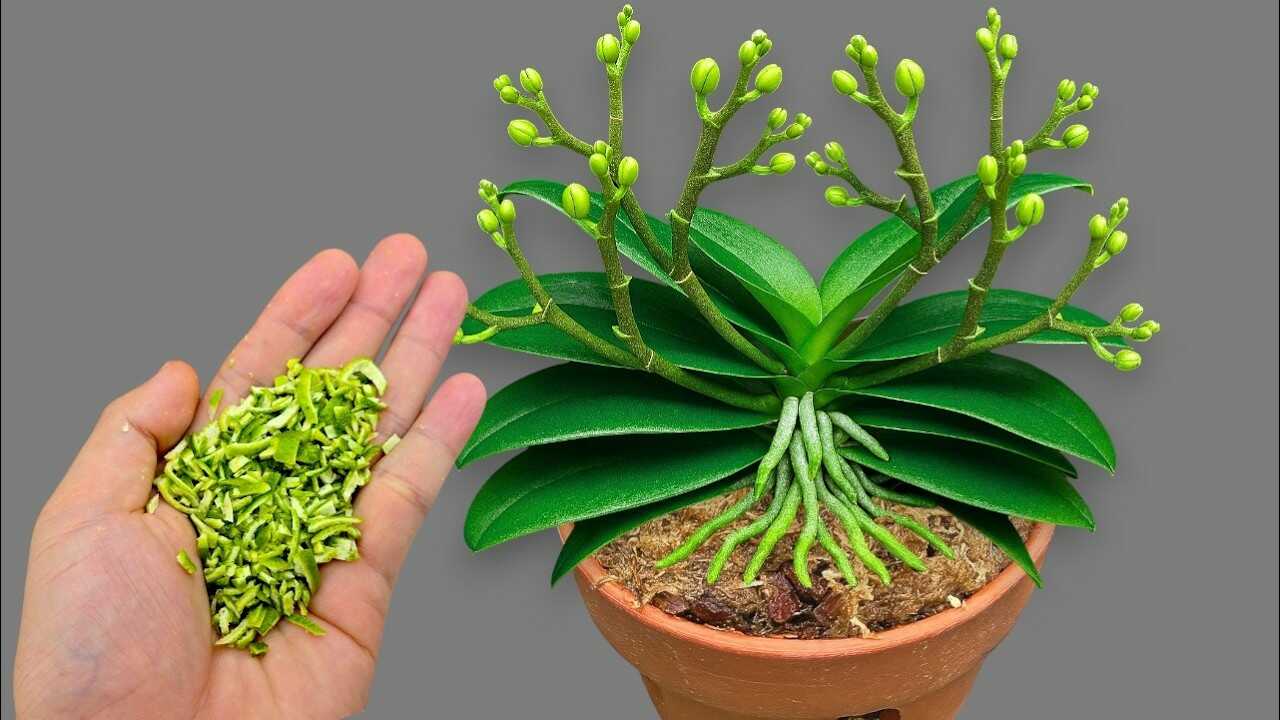
Look at the bright green shredded pieces in the photo — those are **fresh lime/citrus peels**, thinly chopped. In my experience this vivid, oily green peel can be turned into a gentle, nutrient-rich weekly boost for potted orchids when used correctly. Below is a safe, evidence-based method plus timing, doses and real mistakes to avoid.
Why lime peel? The real botanical benefit
Citrus peels contain measurable amounts of **potassium, calcium and trace minerals** as they break down, and they also contain essential oil components (notably **limonene**) that show mild antimicrobial activity in laboratory studies. Used properly — not applied raw and rotting in the pot — a dilute citrus peel infusion can supply a small steady dose of potassium and micronutrients and may help reduce some surface pathogens. This method is a **complement** to proper light, watering, drainage and balanced fertilizer, not a miracle cure.
What you’ll need (visible in the picture)
- Fresh lime/citrus peel — thinly chopped as shown.
- Jar with lid (1 L), clean water (chlorine-free if possible).
- Fine strainer or cloth, measuring spoons.
- Small syringe or watering can with narrow spout for precise doses.
Step-by-step: make and use a citrus peel tea (safe for orchids)
- Step 1 — Prepare the peel: Use only the green outer peel and a little of the white pith if present. Chop the peel finely (as in the image). For best results lightly air-dry the chopped peel for 24–48 hours on a paper towel to reduce the risk of fresh rot in the jar.
- Step 2 — Steep (ferment) the peel: Place 1 tablespoon of the dried/chopped lime peel into 1 liter of room-temperature, dechlorinated water in a jar. Close the lid loosely and let it steep for exactly 7 days in a cool, dark place. This creates a mild infusion that extracts soluble potassium and aromatic compounds without leaving large fresh solids in the pot.
- Step 3 — Strain and dilute: After 7 days, strain out the solids through a fine sieve or cloth. Take the strained liquid and dilute it to a 1:10 ratio with plain water (one part citrus tea + nine parts water).
- Step 4 — Dose precisely: For a small 10 cm (4 in) orchid pot, use 30–50 ml of the diluted tea per application. For 12–15 cm pots use 75–100 ml. Apply as a substrate drench (pour onto the potting medium slowly so it soaks through); avoid splashing the leaves and crown.
- Step 5 — Frequency & season: Use once weekly during the active growth season (spring–summer). Reduce to once every two weeks in autumn and once a month in winter dormancy. Keep records of responses.
Why this exact approach?
Steeping and diluting removes large organic solids that would otherwise rot in orchid bark, while extracting soluble nutrients. The 7-day steep reduces volatile concentrations so you’re not pouring concentrated oils directly onto roots. The 1:10 dilution and small volumes avoid salt or organic build-up in the medium.
Practical tips from experience
- Use small amounts: Orchids have sensitive roots. Stick to the volumes above — less is better than more.
- Time your watering: Apply the diluted tea when the potting mix is slightly dry to the touch, not waterlogged, so the roots take it up quickly.
- Rotate with regular fertiliser: Continue your normal balanced orchid fertilizer schedule (weakly, regularly). Use the citrus tea as a supplemental weekly boost, not the main feed.
- Maintain airflow and drainage: Good ventilation and a fast-draining medium (bark, charcoal, sphagnum mix appropriate to species) are essential to avoid rot when adding any organic amendment.
- Use clean equipment: Always strain and discard solids; never bury fresh peel in the pot.
Common mistakes to avoid (real botanical consequences)
- Adding raw peel directly to the pot: Fresh citrus peel will rot, create anaerobic pockets and promote root rot — do not do this.
- Using undiluted infusion: Concentrated citrus oil (limonene) can damage root tissue and upset beneficial microbes — always dilute 1:10 after straining.
- Over-applying in winter: Orchids slow growth in cooler months; too much organic feed then can cause fungal problems and weak, leggy growth.
- Ignoring basic care: Relying on a weekly spoon of citrus tea while neglecting light, temperature or drainage will not produce lasting results.
What to expect (realistic timeline)
When combined with proper light and watering, you may notice improved root vigor and slightly fuller spikes or more frequent flowering over a period of 6–12 weeks. New root tips tend to appear first, followed by more consistent spike development across the growing season. Results vary by species and starting plant health.
Final encouragement & call to action
This bright green chopped peel in your hand is a low-cost, easy-to-make supplement that can nudge orchids toward better root health and more reliable flowering when used carefully. Try the 1-tablespoon-per-liter, 7-day steep method and stick to the dosing schedule for at least two growth cycles to judge results. Share a photo in a few months — I’d love to hear how your orchid responds!