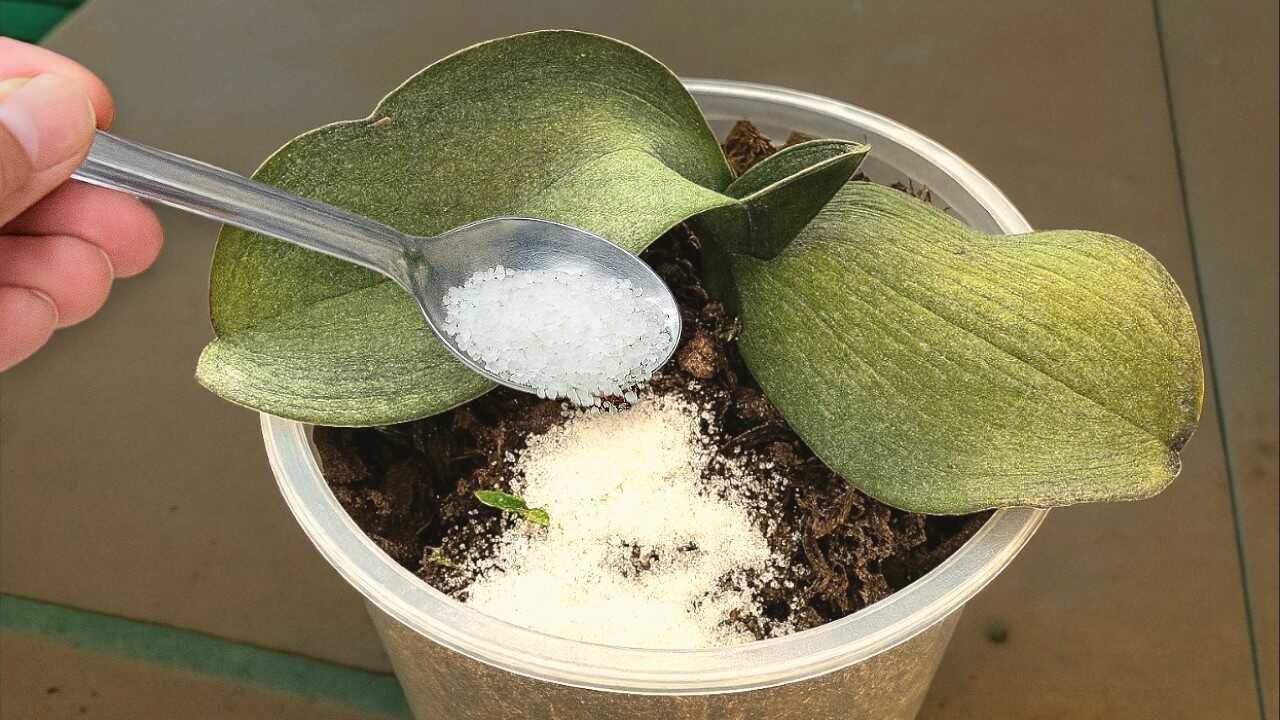
🌸Sprinkle a spoonful on the wilted orchid and it will magically revive
🌸Sprinkle a spoonful on the wilted orchid and it will magically revive
Introduction — what you see in the photo
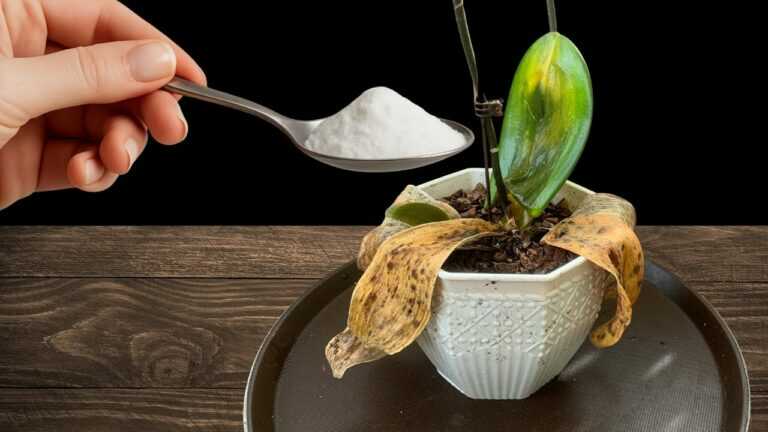
The photo shows a **white crystalline powder** being spooned onto the orchid potting medium — this is visually consistent with **Epsom salt (magnesium sulfate)**. Many gardeners use Epsom salt as a supplemental source of **magnesium** and **sulfur**, both botanically important elements. Below you’ll find a practical, evidence-based routine to use Epsom salt safely as a complement to proper orchid care.
Why Epsom salt can help orchids (brief, factual)
Magnesium is the central atom in **chlorophyll**, so low magnesium can cause interveinal yellowing and reduced photosynthesis. Sulfur is part of essential amino acids. When an orchid shows signs of magnesium deficiency or weak flowering, a measured application of **magnesium sulfate** can improve nutrient balance and support leaf color and bloom production. This is a supplement — not a cure for root rot, pest infestations, or inadequate light.
When it can be useful
- Interveinal chlorosis on older leaves (pale tissue between veins).
- Weak or reduced blooming despite good light and feeding.
- Plants growing in bark mixes that can be low in magnesium.
Step-by-step: How to prepare and apply Epsom salt for orchids
Choose one of the two safe methods below depending on whether you prefer a foliar spray (faster leaf uptake) or a light soil drench (root uptake). Always measure carefully.
1) Foliar spray (recommended if roots are poor)
- Mix: dissolve 1 teaspoon (≈5 g) Epsom salt in 1 liter (≈1 quart) of lukewarm water.
- Application: spray the solution lightly onto leaves and the crown in the morning, avoiding midday sun. Wet surfaces but do not drench to runoff.
- Frequency: once every 4–6 weeks during the active growth season (spring and summer). Reduce to once every 8–10 weeks in autumn and stop in deep winter.
- Expectations: subtle improvement in leaf color and vigor over 3–8 weeks.
2) Light soil drench (when roots are healthy)
- Mix: dissolve 1 tablespoon (≈15 g) Epsom salt in 3.8 liters (1 US gallon) of water.
- Application per small orchid pot: pour about 100–200 ml (⅓–¾ cup) of this solution into the pot so the medium is moistened, then allow to drain. For larger pots, increase proportionally but do not saturate repeatedly.
- Frequency: every 4–6 weeks in spring and summer. Reduce frequency in cooler months.
- Expectations: gradual improvement over 3–8 weeks if magnesium deficiency was limiting growth.
Practical tips from experience
- Always apply in moderation — orchids are sensitive to salt build-up. Flush the pot with plain water (one full pot volume) every 8–12 weeks to prevent accumulation.
- Use Epsom salt only as a supplement. Maintain balanced orchid fertilizer (balanced N-P-K with micronutrients) and the correct watering, light, and drainage schedule.
- If leaves are limp and roots are brown and mushy, treat the roots first (repot, trim rotten roots) — Epsom salt will not fix root rot.
- Time foliar sprays for cooler parts of the day and avoid spraying in direct sun to prevent leaf scorch.
- Label your solution and store it briefly if needed — make fresh mix if left more than a week.
Common mistakes to avoid (real botanical pitfalls)
- Do not substitute with table salt (sodium chloride). Table salt will desiccate roots and kill orchids.
- Avoid over-application. Repeated, heavy doses cause salt stress, root burn and reduced uptake of other nutrients.
- Don’t expect instant miracles. Improvements take several weeks as magnesium is incorporated into plant tissues.
- Don’t use Epsom salt as a replacement for balanced fertilizer. It supplies magnesium and sulfur but not the full range of nutrients orchids need.
- Don’t apply to recently repotted plants with freshly trimmed roots — let them recover for a couple of weeks first to avoid extra stress.
Troubleshooting — if nothing improves
If after 6–8 weeks there’s no visible improvement, check roots, potting medium and light. Consider a complete repot into fresh bark, inspect for pests, and confirm proper watering intervals. Have a simple water-soluble balanced orchid fertilizer on hand and follow its label for a regular feeding schedule.
Conclusion — a measured, helpful boost
Sprinkling the white crystals shown in the image — **Epsom salt (magnesium sulfate)** — can be an effective, low-cost supplement when used correctly. Follow the precise doses and timing above, treat it as an occasional supplement, and always prioritize core needs: **light, drainage, watering, and balanced fertilizer**. Try one measured application and observe your orchid for several weeks — if leaf color and bloom set improve, continue at the suggested intervals. Happy growing — and if you’re not sure about root health, check roots before applying any supplements.
Action: If you decide to try this, prepare the foliar mix (1 tsp per 1 L) and apply once in the morning during the growing season — then monitor changes over the next 3–8 weeks.