Bring together 2 apples and yogurt: 5 minutes of preparation, no oven, and a surprising result
Bring together 2 apples and yogurt: 5 minutes of preparation, no oven, and a surprising result
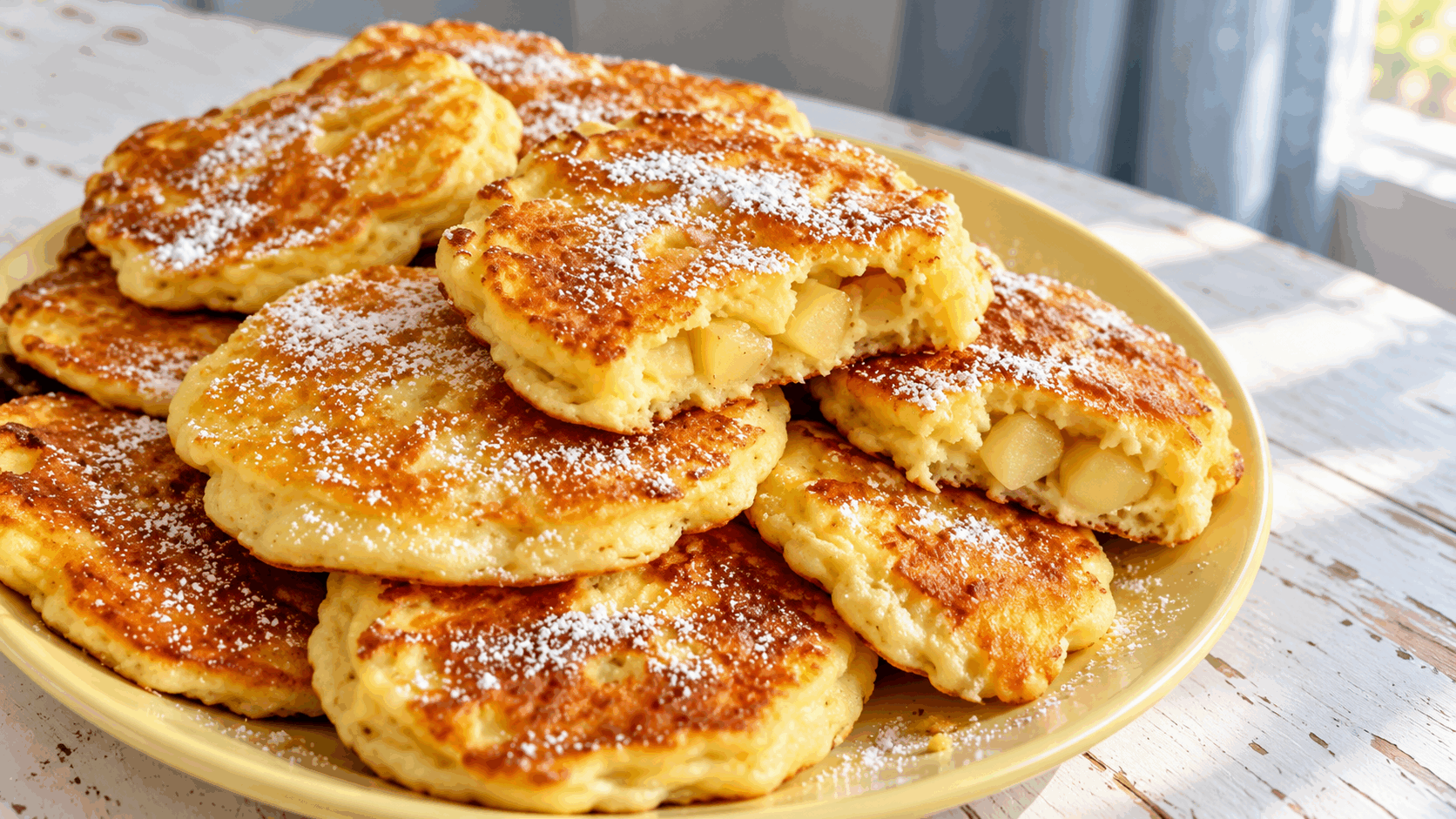
Two apples and a little yogurt can become a batch of tender skillet pancakes without turning on the oven. Grated apple runs through the batter, keeping the inside soft, while the pan creates lightly golden edges. They are easy to serve in small stacks with yogurt, fruit, or a dusting of cinnamon, depending on how you like your dessert or afternoon snack.
The five-minute preparation refers to mixing the batter when the ingredients and grater are ready. Cooking takes additional time, especially if your skillet holds only a few pancakes. This recipe keeps those stages separate so you can plan realistically. The method is simple: grate, mix, cook in modest portions, and use the first pancake to check the heat before finishing the batch.
What these apple yogurt pancakes are like
These are small, spooned pancakes with apple mixed into the batter rather than arranged only on top. The yogurt adds a mild tang, and the fruit softens as the pancakes cook. They are more tender and moist than a plain breakfast pancake, but they should still be set in the center rather than gummy or wet.
The recipe makes about twelve to fourteen pancakes, depending on their size. That is enough for four snack portions or two to three more substantial servings. Keeping each pancake about three inches wide makes it easier to turn and helps the center cook before the outside gets too dark.
Ingredients and equipment
- 2 medium apples, approximately 10 ounces or 280 g after coring.
- ¾ cup plain Greek yogurt, approximately 180 g.
- 1 large egg.
- 1 cup all-purpose flour, approximately 125 g.
- 1 teaspoon baking powder.
- ½ teaspoon ground cinnamon.
- A small pinch of salt.
- 1 to 2 tablespoons milk, only if needed to loosen the batter.
- About 2 teaspoons neutral oil for lightly greasing the skillet.
No sugar is required in the batter, though the final sweetness depends on the apples and your chosen toppings. Use plain yogurt rather than a flavored dessert product. Have a bowl, a large-hole grater, a spoon, and a wide spatula ready. A dependable nonstick or well-seasoned skillet makes turning the delicate pancakes easier.
Set out a plate for the cooked batch before you begin. If you plan to serve yogurt or fruit alongside, prepare those additions first. The pancakes are at their best shortly after cooking, so finishing the toppings afterward can leave the first batch sitting longer than necessary.
Pick apples that hold some texture
A firm, sweet-tart apple works well because it keeps small pieces in the batter without remaining hard. Very soft apples can also be used, but they may release more liquid or turn into a puree during grating. If your apples are especially juicy, drain only the loose juice that collects at the bottom of the bowl.
Peeling is optional when the skin is thin and pleasant to eat. Wash the fruit well, remove the cores, and grate on the large holes. Thick or tough peel is better removed because it can remain noticeable in the finished pancakes. Weigh the prepared apple if possible, since two unusually large apples may add too much moisture.
Do not squeeze the shreds completely dry. Some fruit moisture is part of the recipe. The aim is to avoid a puddle of free juice, not to turn the apple into a dry bundle. Keeping that distinction in mind makes the batter easier to adjust without adding unnecessary flour.
Mix the batter in a few minutes
Whisk the egg and yogurt together in a bowl. Add the flour, baking powder, cinnamon, and salt, then stir just until combined. Fold in the grated apple, distributing it throughout the mixture. A few small lumps are fine; vigorous mixing is not needed and can make a flour-based batter less tender.
The mixture should be thick enough to fall slowly from a spoon. It should spread a little when placed in the skillet, but not run outward like crepe batter. If it is very stiff, add one tablespoon of milk, stir, and reassess. If the apples have made it unusually loose, add a small spoonful of flour.
Make adjustments gradually. A thick Greek yogurt behaves differently from a thin regular yogurt, and apples vary in moisture. Waiting a minute after stirring lets the flour absorb some liquid before you decide whether another addition is necessary. The goal is a manageable batter, not an exact appearance copied from a different set of ingredients.
Cook gently enough for the apples to soften
Warm the skillet over medium heat and brush it with a thin film of oil. Add a heaped tablespoon of batter for each pancake, leaving room to slide a spatula between them. Spread the batter lightly into a small round, keeping the center from becoming much thicker than the edges.
Cook for about two to three minutes on the first side, until the bottom is golden and the edges look more set. Turn carefully with a wide spatula and cook the second side for another two to three minutes. Adjust the heat as needed. If the outside darkens in less than a minute, the pan is too hot for the apple-filled center to cook properly.
Cut the first pancake in half after a short rest. The inside should be soft with cooked apple pieces, but there should be no sticky streak of raw batter. If needed, lower the heat and give the next batch a little longer. This small test is more useful than repeating the same timing for every skillet and stove.
Keep the later batches consistent
As you cook, the skillet may become hotter even if the burner setting stays unchanged. Watch the color of each batch and reduce the heat slightly if necessary. Wipe away any burnt crumbs before adding more batter, using a safe method that keeps your hands away from the hot surface.
The batter may also thicken as it sits. If the last few spoonfuls are noticeably firmer than the first, stir in a teaspoon or two of milk. Avoid thinning the entire bowl heavily at the start just in case it thickens later. Small adjustments preserve the balance between fruit and batter.
Place cooked pancakes on a warm plate in a loose layer. A tall, tightly covered stack traps steam and softens the edges. If people are ready to eat, serving each batch as it finishes gives the best result and avoids keeping everything waiting until the final pancake is cooked.
Toppings and flavor changes
Plain yogurt, sliced apple, and cinnamon make a simple serving combination. Berries add a fresher, sharper contrast, while chopped nuts provide crunch if they are suitable for everyone eating. Offer sauces or sweet toppings separately so each person can choose the amount, rather than soaking every pancake in advance.
Vanilla can replace some of the cinnamon, and a little finely grated lemon zest brightens the apple flavor. Avoid adding a large splash of lemon juice to the batter, because it changes the liquid balance. A spoonful of applesauce alongside the finished pancakes is easier to control than extra puree mixed into the bowl.
You can replace one apple with a firm pear, but a very ripe pear may make the batter wetter. For the first attempt, change only one ingredient at a time. That makes it easier to understand whether a new variation needs more resting time, a different heat level, or a small adjustment in flour.
Storage and make-ahead planning
These pancakes are most enjoyable freshly cooked. Refrigerate cooled leftovers promptly in a covered container and use them the next day for the best texture. Keep any yogurt topping separate. Reheat a single layer in a skillet over gentle heat until hot throughout, turning once so both sides warm evenly.
A microwave is convenient but produces a softer surface. Reheat only the amount you plan to eat rather than warming the entire batch repeatedly. If you want to prepare ahead, measure the dry ingredients and set out the equipment. Grate the apples and mix the batter closer to cooking, since the fruit releases juice as it stands.
Frequently asked questions
Does the recipe really take only five minutes?
The batter can be prepared quickly when everything is ready, but the cooking time is additional. Several batches may take fifteen minutes or more. A small skillet needs more rounds than a large one, so allow enough time for the equipment you have.
Why did my pancakes break when I turned them?
They may have been turned before the first side set, or the batter may have contained too much apple juice. Use smaller portions, wait for the bottom to firm up, and slide the spatula fully underneath before lifting.
Can I replace the flour with oats?
Not as a simple equal-volume substitution while expecting the same result. Oats absorb moisture differently and need time to soften. For this version, keep the flour-based batter; an oat pancake is better made with proportions designed for it.
Do I need any special pan?
No special pancake appliance is necessary. A skillet with a reliable surface and even heat is enough. More important than the brand is keeping the temperature moderate and making pancakes small enough to cook through comfortably.