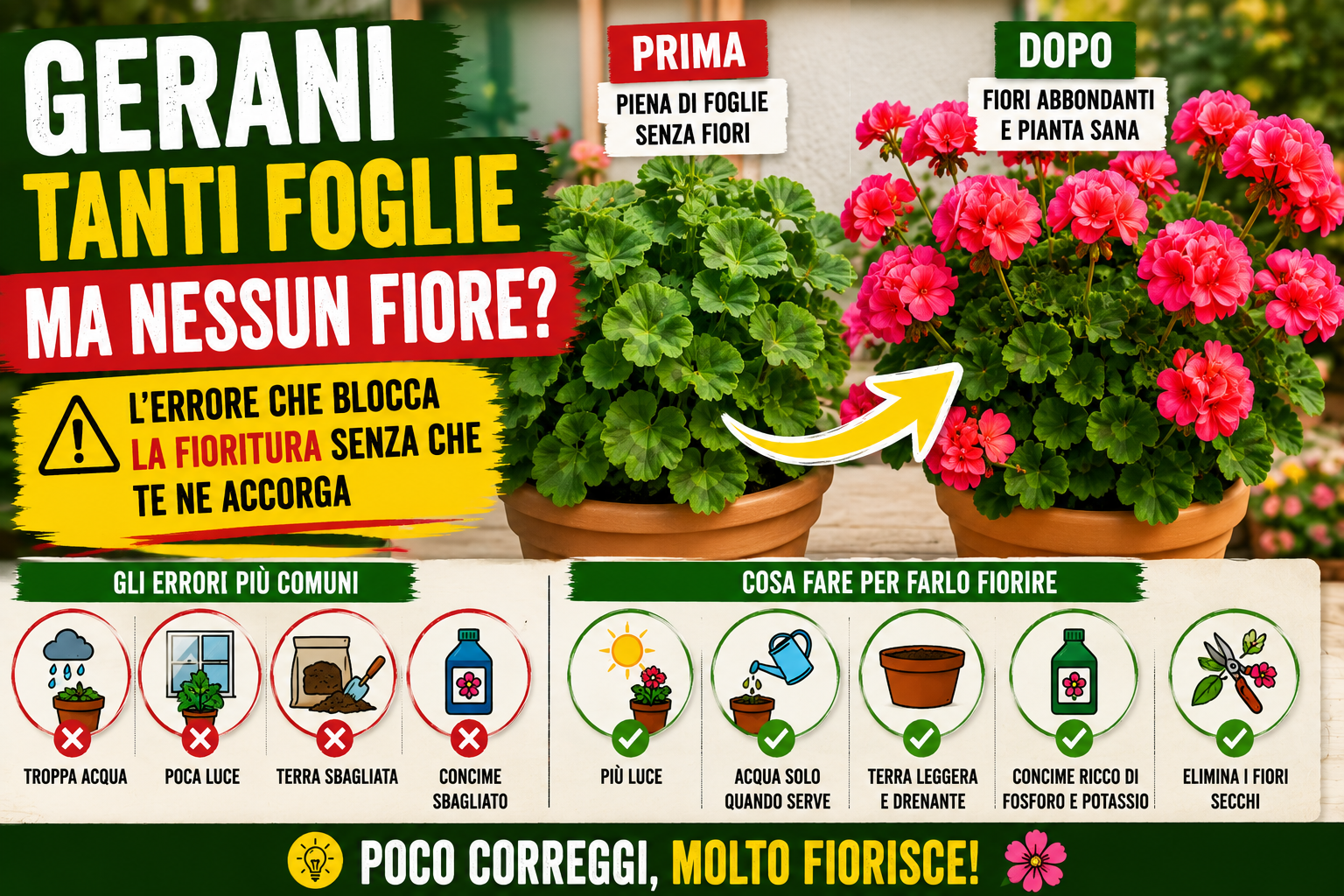
Geraniums Full of Leaves but No Flowers? The Hidden Mistake That Stops Them Blooming
A geranium covered in green leaves may look healthy, but if it produces few or no flowers, something is out of balance. The most common causes are insufficient sunlight, excessive watering, unsuitable soil, or the wrong fertilizer.
These problems often develop gradually through small everyday mistakes. The plant continues growing, but instead of using its energy to form buds, it produces more leaves and stems.
Fortunately, once you identify the cause, geraniums can often begin flowering again with a few simple adjustments.
Why Geraniums Produce Leaves but No Flowers
One of the most common reasons is too much nitrogen.
Nitrogen is essential for plant growth because it encourages the development of leaves, stems, and new shoots. However, when a geranium receives too much of it, the plant focuses almost entirely on green growth instead of producing flowers.
This often happens when using:
- Fertilizer intended for green houseplants
- A general-purpose fertilizer with high nitrogen levels
- Excessive amounts of compost or fertilizer
- Frequent feeding without following the recommended dosage
The geranium may look lush and vigorous, but it is directing its energy toward foliage rather than buds.
For abundant flowering, geraniums need a more balanced fertilizer containing phosphorus and potassium, with only moderate amounts of nitrogen.
Potassium supports flower production and overall plant strength, while phosphorus helps with root development and bud formation.
Not Enough Sunlight
Geraniums need plenty of light to flower properly.
A plant kept in deep shade may survive and continue producing leaves, but it will rarely bloom well. Sunlight provides the energy required to create buds and maintain a long flowering season.
Ideally, geraniums should receive at least five to six hours of direct sunlight each day.
In very hot climates, morning sun and late-afternoon light are usually best. Strong midday sun can sometimes scorch leaves, especially when plants are grown in small containers.
If your geranium has plenty of leaves but no flowers, try moving it to a brighter location gradually.
Too Much Water
Geraniums do not like constantly wet soil.
When the roots remain soaked for too long, they cannot absorb oxygen properly. This weakens the plant and reduces its ability to produce flowers.
A green plant is not always a healthy plant. Even if the leaves look good, waterlogged roots may already be under stress.
Before watering, press your finger a few centimeters into the soil. If it still feels moist, wait another day or two.
Water only when the upper layer has dried out.
During hot weather, watering may be needed more frequently, but it should never be done automatically according to a fixed daily schedule.
Never Leave Water in the Saucer
Standing water beneath the pot is one of the worst mistakes you can make.
If the saucer remains full, the roots stay wet for too long and may begin to rot. Over time, the plant becomes weaker, leaves may turn yellow, and flowering slows or stops completely.
After watering, allow excess water to drain and empty the saucer.
Heavy or Poorly Draining Soil
Geraniums prefer soil that is fertile but light and well drained.
Dense, compacted soil retains too much moisture and makes it difficult for the roots to breathe.
For better results, use a potting mix designed for flowering plants. You can improve drainage by adding materials such as:
- Perlite
- Coarse sand
- Fine pumice
- Small amounts of expanded clay
The container must also have drainage holes at the bottom.
A Pot That Is Too Small
A pot that is too small can restrict root growth, dry out too quickly, and overheat in summer.
However, placing a small geranium in an excessively large container is not ideal either. Too much unused soil stays wet for longer and may encourage root problems.
Choose a pot that is only slightly larger than the current root ball.
Repot when roots are tightly circling the container or growing through the drainage holes.
Dead Flowers Left on the Plant
Removing faded flowers encourages the plant to produce new buds.
If old blooms remain attached, the geranium may begin directing energy toward seed production rather than creating more flowers.
Cut each faded flower stem close to its base instead of removing only the petals.
Also remove:
- Yellow leaves
- Damaged stems
- Diseased foliage
- Weak or crowded shoots
This keeps the plant tidy and improves air circulation.
How to Water Geraniums Correctly
Watering properly is simple, but it requires observation.
Follow these basic rules:
- Check the soil before watering.
- Water deeply until excess water drains from the pot.
- Empty the saucer afterward.
- Avoid wetting the flowers and leaves unnecessarily.
- Water early in the morning or in the evening during hot weather.
- Allow the upper soil layer to dry between waterings.
Frequently wet foliage, especially in poorly ventilated areas, can encourage fungal diseases.
How to Fertilize Geraniums for More Flowers
Geraniums benefit from regular feeding during their active growing and flowering season, usually from spring until late summer.
Choose a liquid fertilizer designed for flowering plants or specifically formulated for geraniums.
Look for a product that contains:
- Moderate nitrogen
- Adequate phosphorus
- A good level of potassium
Fertilizer labels usually display three numbers representing nitrogen, phosphorus, and potassium. For flower production, avoid products where the first number is much higher than the others.
Liquid fertilizer is commonly applied every 10 to 15 days, but always follow the instructions on the label.
Using more fertilizer than recommended will not make the plant bloom faster. It may burn the roots, damage the leaves, and stop flowering completely.
Natural Feeding Options
For a gentler approach, you can use mature compost or worm castings.
Apply a thin layer to the soil surface and mix it in carefully without damaging the roots.
These natural amendments release nutrients slowly and also improve soil structure.
Some gardeners use diluted banana-peel water because banana peels contain potassium. However, it should be used carefully.
Do not bury fresh banana peels directly in the pot, as they can rot, smell unpleasant, and attract fungus gnats or other insects.
If you prepare a banana-peel infusion, strain it thoroughly and apply it only occasionally.
Pruning Can Encourage New Growth
If your geranium has become tall, thin, or untidy, light pruning can help it grow more compactly.
Trim long stems just above a healthy leaf node. This encourages the plant to develop new side branches.
More strong branches can create more potential flowering points.
Avoid removing too much growth at once, especially during very hot weather.
Watch for Pests
Aphids, whiteflies, spider mites, and other pests can weaken geraniums and reduce flowering.
Inspect the undersides of leaves and new shoots regularly.
Warning signs include:
- Sticky leaves
- Curled growth
- Small insects around buds
- Pale spots on foliage
- Fine webbing
Treat infestations early before they spread across the plant.
The Secret Is Balance
A geranium does not need complicated care. It needs the right balance of sunlight, water, soil, space, and nutrients.
For better flowering:
- Give it at least five to six hours of sunlight.
- Allow the soil to dry slightly between waterings.
- Never leave water sitting beneath the pot.
- Use light, well-draining soil.
- Avoid fertilizers that are too rich in nitrogen.
- Feed regularly but moderately.
- Remove faded flowers and yellow leaves.
- Check often for pests.
When these conditions work together, the plant stops investing all its energy in leaves and begins producing more buds.
The result is a healthier, stronger geranium filled not only with greenery, but also with the bright, colorful flowers that make balconies and gardens look beautiful throughout the season.