Seeing Lots of Ants in Your Vegetable Garden? This Simple Bottle Trap Can Help Keep Them Away
If you grow vegetables, you’ve probably noticed long trails of ants moving around your plants, especially near tomatoes, peppers, zucchini, and eggplants.
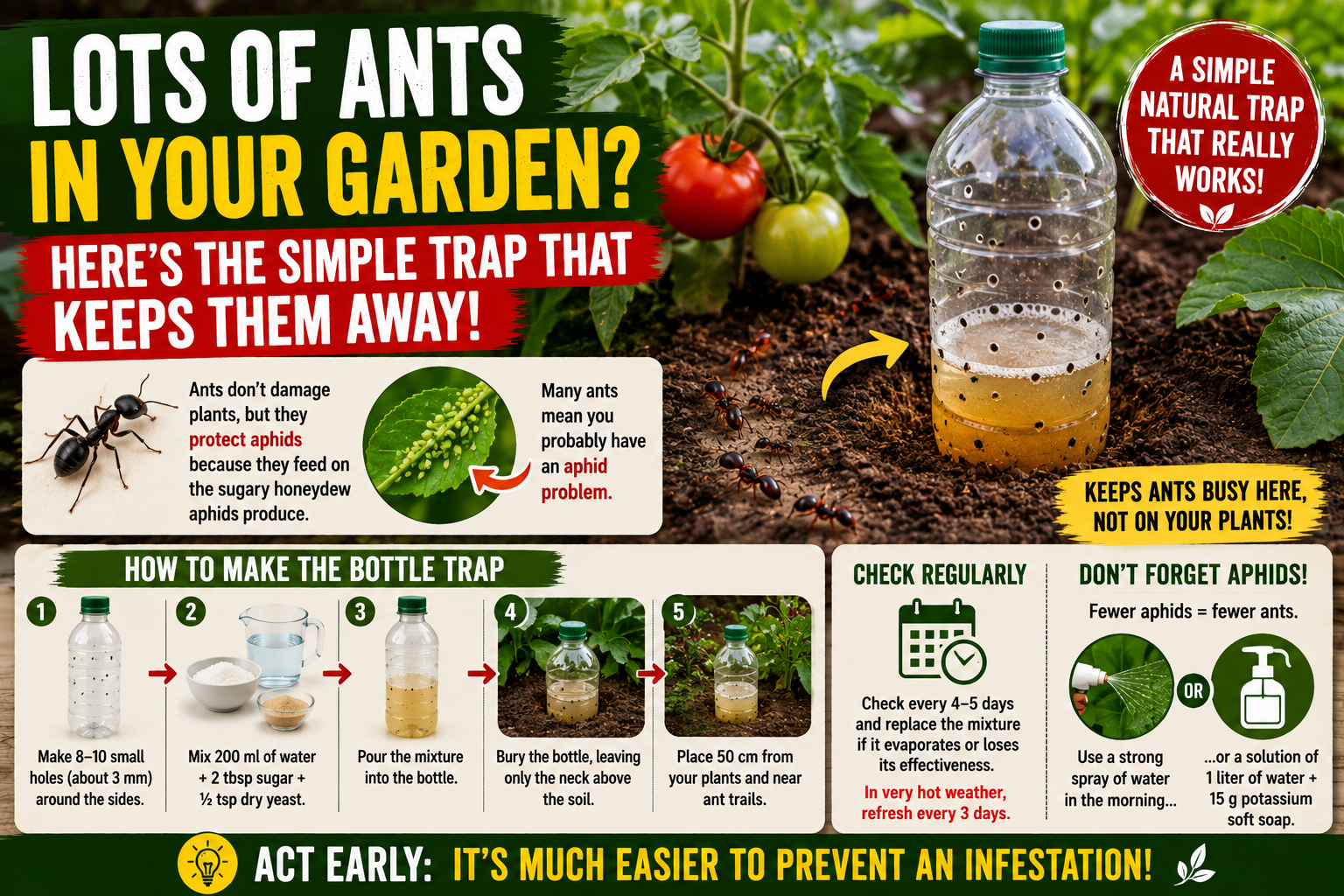
While ants rarely damage plants directly, they often protect aphids because they feed on the sweet honeydew these tiny insects produce. In many cases, a large number of ants is actually a warning sign that your garden has an aphid problem.
Fortunately, there’s a simple homemade bottle trap that many home gardeners use to help divert ant activity away from vulnerable plants.
Why Are Ants Gathering Around Your Plants?
Ants and aphids have a mutually beneficial relationship.
Aphids feed on plant sap and produce a sugary liquid known as honeydew. Ants collect this sweet substance as food and, in return, defend the aphids from many natural predators.
As aphid populations grow, ant activity usually increases as well.
If you only focus on the ants without addressing the aphids, the problem often returns.
The Simple Bottle Trap
A homemade bottle trap can help attract ants away from the most sensitive areas of your vegetable garden.
You’ll Need
- One 500 ml plastic bottle
- A sharp tool to make holes
- 200 ml of water
- 2 tablespoons of sugar
- ½ teaspoon of active dry yeast
How to Make It
- Make 8 to 10 small holes, about 3 mm wide, around the sides of the bottle.
- Mix the water, sugar, and dry yeast until combined.
- Pour the mixture into the bottle.
- Bury the bottle so that only the neck and the upper part remain above the soil.
- Place it about 50 cm (20 inches) from the plants most affected by ants and close to the trails they commonly use.
The sweet scent of the fermenting mixture helps attract ants toward the bottle, reducing their activity around your vegetables.
Check the Trap Regularly
Inspect the trap every four to five days.
Replace the mixture whenever:
- The liquid has evaporated.
- The scent becomes weak.
- The contents become dirty.
During very hot weather, refreshing the mixture every three days may provide better results.
Don’t Forget the Aphids
Because ants are attracted by aphids, controlling the aphid population is just as important as reducing ant activity.
Inspect the undersides of leaves regularly, where aphids tend to gather.
For small infestations, a strong spray of water in the morning is often enough to dislodge many insects.
For larger populations, you can prepare a gentle solution using:
- 1 liter (about 1 quart) of water
- 15 grams of potassium soft soap
Spray the affected leaves thoroughly, paying special attention to the undersides where aphids usually hide.
As aphid numbers decrease, ants generally lose interest in the plants and move elsewhere.
Prevention Is Always Easier
The earlier you act, the easier it is to prevent a small problem from becoming a widespread infestation.
Make it a habit to:
- Inspect plants every few days.
- Watch for new aphid colonies.
- Remove heavily infested leaves if necessary.
- Replace the trap mixture regularly.
- Keep weeds under control, as they can shelter both aphids and ants.
A Simple Solution for a Healthier Garden
Although ants are an important part of the garden ecosystem, large numbers around vegetable plants often indicate the presence of aphids.
By combining a simple homemade bottle trap with regular aphid control, you can help reduce ant activity naturally and protect your tomatoes, peppers, zucchini, eggplants, and other crops throughout the growing season.
A few minutes of preventative care each week can make a big difference, helping your vegetable garden stay healthier, more productive, and easier to manage.