How to Keep Lantana Blooming All Summer: Simple Care Tips for Heat and Drought
How to Keep Lantana Blooming All Summer: Simple Care Tips for Heat and Drought
Lantana is one of the toughest flowering plants you can grow in a hot, sunny garden. It handles heat, tolerates dry conditions, and produces clusters of colorful flowers that attract butterflies and pollinators.
But even this heat-loving plant can suddenly slow down and produce more leaves than blooms.
When that happens, the problem is usually not the temperature. In most cases, lantana stops flowering because it is forming seeds, receiving too much fertilizer, staying too dry, or dealing with hidden pests.
Fortunately, a few simple adjustments can usually bring the flowers back quickly.
Here is how to keep lantana blooming strongly throughout summer.
Why Lantana Stops Blooming
Lantana naturally shifts its energy from flower production to seed development once its blooms fade.
After flowering, small green berries may begin forming. If these remain on the plant, lantana often reduces flower production because it is directing energy toward producing seeds.
This is one of the most common reasons a healthy lantana plant suddenly stops blooming.
Removing faded flower clusters and developing berries encourages the plant to focus on fresh growth and new flowers instead.
Give Lantana a Light Summer Trim
You do not need to remove every faded flower individually.
A faster and more effective method is to lightly shear the plant.
Use clean, sharp bypass pruners and cut approximately 2 to 3 inches from the ends of long or leggy stems.
Make each cut just above a healthy leaf node.
This removes:
- Spent flower clusters
- Developing seed pods
- Weak stem tips
- Excessively long growth
Lantana flowers on new growth, so trimming encourages fresh branching and creates more places for flowers to develop.
The plant may look slightly bare immediately afterward, but new growth often appears within days, followed by another flush of blooms within a few weeks.
Avoid Using Too Much Fertilizer
When a plant stops flowering, it can be tempting to feed it immediately. However, excess fertilizer is often part of the problem.
Too much nitrogen encourages lantana to produce:
- Large leaves
- Long stems
- Weak, floppy growth
- Very few flowers
If your lantana looks green and vigorous but is not blooming, stop fertilizing.
The plant probably has more than enough nutrients already.
For weak or pale lantana growing in containers, apply one light feeding of a low-nitrogen bloom fertilizer, such as 5-10-10, diluted to half strength.
Use fertilizer sparingly. Lantana usually performs better in moderately lean soil than in rich, heavily fertilized conditions.
What to Do After Overfertilizing
If you have already applied too much fertilizer, stop feeding the plant immediately.
For container-grown lantana:
- Make sure the pot has drainage holes.
- Water deeply until water runs freely from the bottom.
- Repeat if necessary to help flush excess fertilizer salts from the soil.
Do not allow the pot to sit in standing water afterward.
The plant may need time to use up the excess nutrients before normal flowering resumes.
Water Deeply, but Not Constantly
Lantana is drought tolerant once established, but drought tolerance does not mean it blooms best in completely dry soil.
If the plant remains dry for too long, it may drop developing buds and slow down flowering to conserve energy.
Instead of giving small amounts of water every day, water deeply and less frequently.
For established plants in the ground, one thorough watering each week is often enough during dry weather.
Allow the upper 1 to 2 inches of soil to dry before watering again.
Deep watering encourages roots to grow downward, where the soil remains cooler and retains moisture longer.
Container-grown lantana may need more frequent watering, especially in small pots, clay containers, or extremely hot weather.
Make Sure the Soil Drains Well
Lantana needs well-draining soil.
Although the plant tolerates drought, it does not tolerate soggy roots. Waterlogged soil can cause root rot and weaken flowering.
For plants in containers, use a potting mix that drains quickly and choose pots with several drainage holes.
For plants in garden beds, avoid low areas where water collects after rainfall.
A sunny location with lean, well-draining soil is usually ideal.
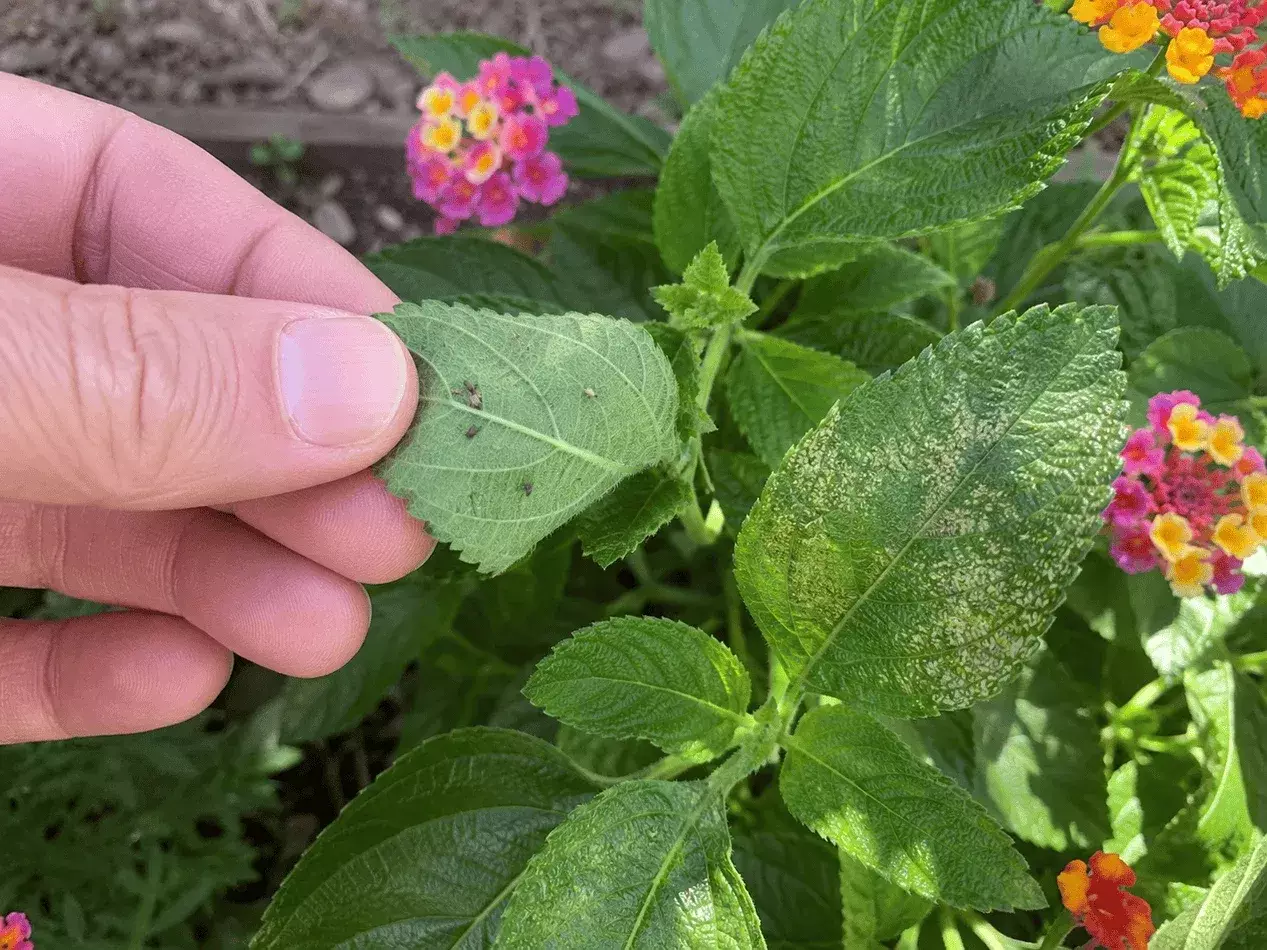
Check for Lace Bugs and Other Pests
Sometimes lantana receives enough sun and water but still looks unhealthy.
If the leaves appear:
- Pale
- Bleached
- Dusty
- Gray or silver-speckled
- Stippled with tiny marks
Check the undersides of the leaves.
Lace bugs often hide there and feed on the foliage, weakening the plant and reducing flower production.
You may also notice small dark spots of waste underneath affected leaves.
How to Control Lace Bugs
Start with the simplest method.
In the evening, spray the undersides of the leaves with a firm stream of water from a garden hose.
Use enough pressure to dislodge the pests without damaging the stems or foliage.
Repeat this treatment every few days until new growth appears clean.
If the infestation continues, insecticidal soap may help. Apply it carefully to both sides of the leaves and follow the product instructions.
Avoid spraying during the hottest part of the day, as this may damage the plant.
Give Lantana Plenty of Sun
Lantana needs full sun for the strongest flowering.
Aim for at least 6 to 8 hours of direct sunlight each day.
Plants growing in too much shade often become:
- Leggy
- Weak
- Less compact
- Covered with leaves but few flowers
If your lantana receives only a few hours of sun, move container plants to a brighter location or trim nearby plants that may be blocking the light.
Choose Low-Seed or Sterile Varieties
Some lantana varieties naturally produce more seed than others.
Older varieties often form berries quickly, causing flowering to slow unless they are deadheaded regularly.
For easier maintenance, look for varieties labeled:
- Sterile
- Seedless
- Non-fruiting
- Low-seed
These cultivars spend less energy producing berries and often continue flowering more consistently throughout summer.
‘New Gold’ is a well-known example, although many newer sterile cultivars are also available.
Even sterile varieties still need plenty of sunlight, proper watering, and occasional pruning.
A Simple Lantana Care Routine
For continuous summer blooms, follow this basic routine.
Do This
- Trim the top 2 to 3 inches from leggy stems.
- Cut just above healthy leaf nodes.
- Remove developing berries and spent blooms.
- Provide at least 6 to 8 hours of sun.
- Water deeply when the upper soil becomes dry.
- Keep the soil lean and well-draining.
- Inspect the undersides of leaves for pests.
- Use fertilizer only when the plant truly needs it.
Avoid This
- Removing every dead flower one at a time.
- Applying high-nitrogen fertilizer.
- Watering lightly every day.
- Letting containers dry out completely during extreme heat.
- Ignoring pale, speckled, or dusty-looking leaves.
- Leaving seed clusters on heavily fruiting varieties.
How Quickly Will Lantana Bloom Again?
After a light summer pruning, healthy lantana usually begins producing new shoots fairly quickly.
Depending on the weather and growing conditions, new flower clusters may appear within two to four weeks.
To support recovery:
- Keep the plant evenly but lightly hydrated.
- Avoid heavy fertilizer.
- Continue providing full sun.
- Remove new seed clusters as they develop.
Warm weather helps lantana recover quickly, making midsummer an excellent time for a light trim.
Final Thoughts
Lantana is built to handle summer heat, but even a tough plant needs the right care to keep blooming.
If flowering slows down, remove spent blooms and seed clusters, trim back leggy growth, avoid excess fertilizer, and water deeply instead of frequently. It is also important to check the undersides of the leaves for lace bugs and other sap-sucking pests.
With plenty of sun, well-draining soil, and an occasional light pruning, lantana can continue producing colorful flowers through the hottest part of summer and well into the end of the growing season.