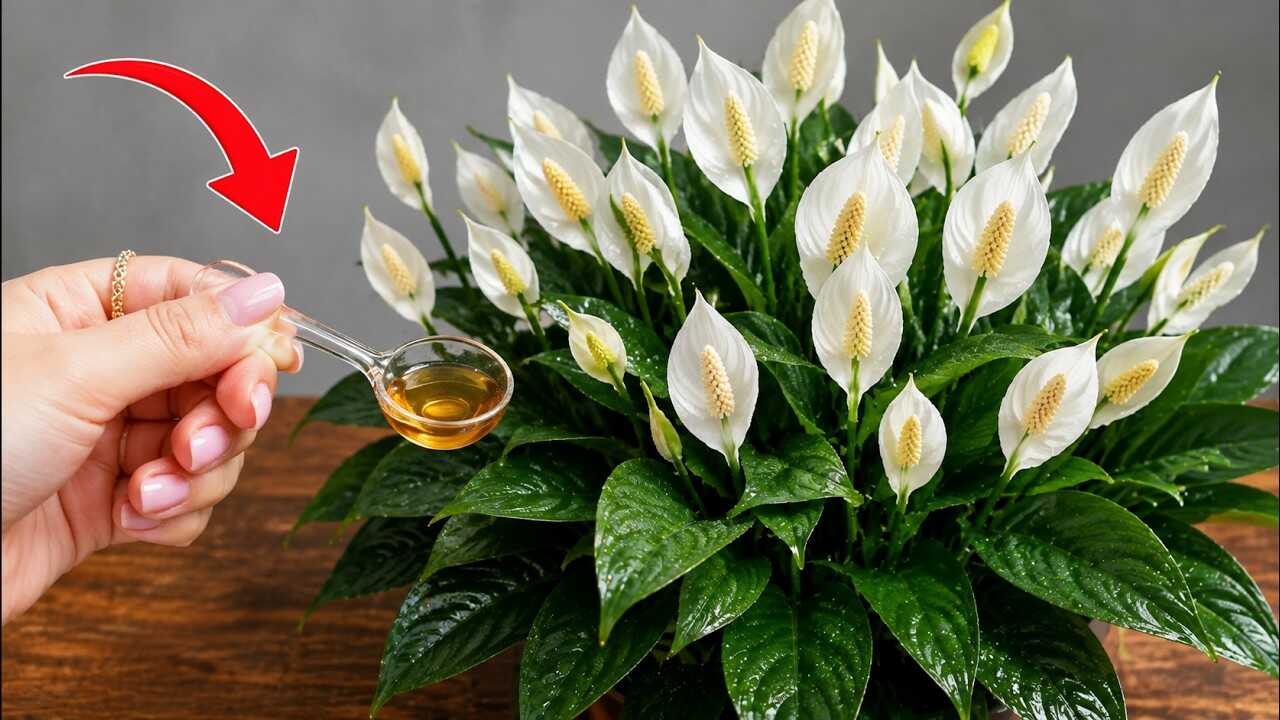
Just 1 Teaspoon! The Simple Peace Lily Trick for Strong Roots and More Blooms
# Just 1 Teaspoon! The Simple Peace Lily Trick for Strong Roots and More Blooms
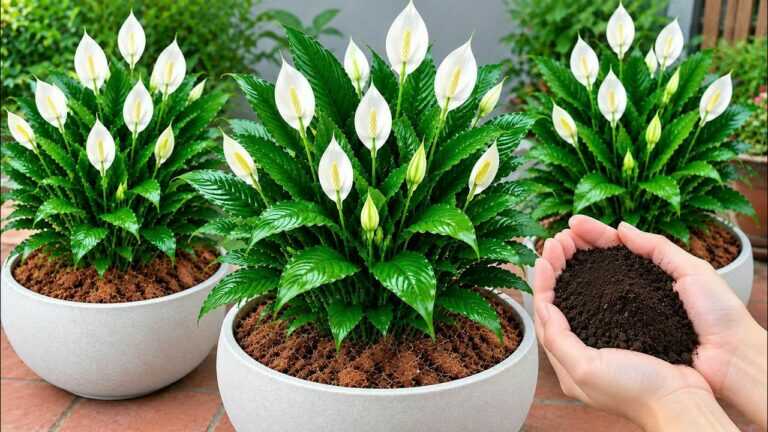
Peace lilies are loved for their glossy green foliage and elegant white spathes, but they can quickly become frustrating when leaves droop, tips turn brown, or flowering stops. Before reaching for a strong fertilizer, it is worth checking the basics and using gentle nutrition only when the plant actually needs it.
## Why a Peace Lily Stops Blooming
A peace lily needs bright, indirect light to flower reliably. A plant kept in a dark corner may survive and produce leaves but rarely bloom. Root stress, compacted soil, irregular watering and excessive fertilizer can also slow growth.
Brown tips are not automatically a sign of nutrient deficiency. They can result from dry air, accumulated salts, inconsistent watering or water quality.
## The “One Teaspoon” Rule
When using any concentrated homemade or commercial plant feed, a teaspoon should be treated as a measured dose rather than a guarantee of nonstop flowers. Dilute the chosen fertilizer well and apply it only to moist soil.
For a gentle routine, use a mild houseplant fertilizer at reduced strength during active growth. Never keep adding kitchen ingredients directly to the pot simply because the plant is not flowering.
## How to Apply It
1. Check that the soil is slightly moist.
2. Prepare a well-diluted nutrient solution.
3. Apply a small amount evenly around the root zone.
4. Allow excess water to drain completely.
5. Wait and observe the plant before feeding again.
## Strong Roots Come First
Healthy roots should be firm rather than mushy. If the plant remains limp despite wet soil, inspect the root system because constant moisture can cause root rot.
Use a pot with drainage holes and an airy indoor-plant mix. Peace lilies like evenly moist soil, but the roots still need oxygen.
## Light Makes the Biggest Difference
Place the plant near a bright window without exposing the leaves to harsh midday sun. More appropriate indirect light often improves flowering more effectively than adding extra fertilizer.
## Common Mistakes
### Feeding a stressed plant
Do not fertilize a plant suffering from severe root rot, extreme dehydration or a pest infestation before correcting the main problem.
### Using too much
More fertilizer does not mean more flowers. Excess salts can damage roots and produce brown leaf edges.
### Leaving water in the saucer
After watering, discard excess drainage water.
## FAQ
### Can a peace lily bloom all year?
It can flower repeatedly under good conditions, but flowering naturally varies with light, plant maturity and growing conditions.
### Why are the leaves drooping?
Dry soil is common, but persistently wet soil and damaged roots can produce similar symptoms.
### Should I mist the leaves?
Misting provides only temporary humidity. Stable room humidity and correct watering are more important.
### How often should I fertilize?
Feed lightly during active growth according to the fertilizer instructions rather than applying concentrated nutrients frequently.
## A Simple Routine for a Healthier Peace Lily
Give your peace lily bright indirect light, an airy root zone, consistent moisture and modest nutrition. Those fundamentals are what create the conditions for strong roots, fresh foliage and repeat flowering.