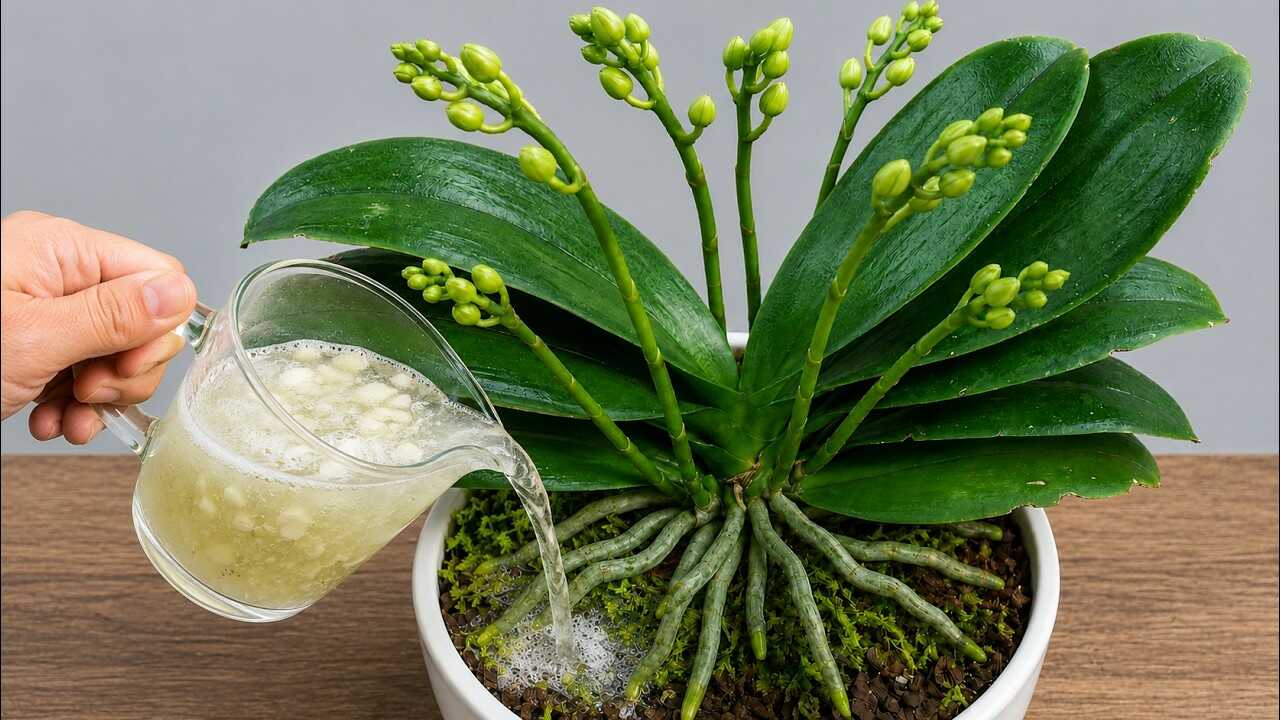
One Cup a Week? How to Help Damaged Orchids Grow Fresh Roots and Bloom Again
# One Cup a Week? How to Help Damaged Orchids Grow Fresh Roots and Bloom Again
An orchid with damaged roots can look hopeless, but Phalaenopsis orchids often recover when the unhealthy tissue is removed and the plant is returned to clean, airy growing conditions. Homemade ingredients such as garlic or aloe are frequently promoted as miracle fertilizers, yet successful recovery depends primarily on sanitation, moisture control, airflow and viable roots.
## Step 1: Inspect the Orchid
Remove the orchid from its pot and gently clear away the old medium. Healthy roots are generally firm. Dead or rotten roots are often brown, hollow, papery or mushy.
Sterilize your cutting tool before removing clearly dead tissue.
## Step 2: Repot in Fresh Orchid Medium
Use fresh orchid bark or another coarse medium designed for epiphytic orchids. Do not use dense ordinary garden soil.
Choose a ventilated pot with excellent drainage. Position the orchid so that the crown remains above the medium.
## Step 3: Water Carefully
After repotting, avoid keeping the root zone constantly wet. Water thoroughly when the medium is approaching dryness, then allow all excess water to escape.
The phrase “one cup a week” can be useful as a reminder, but it should not be a rigid rule. Pot size, temperature, humidity and bark type all change how quickly an orchid dries.
## What About Garlic and Aloe Vera?
Garlic and aloe are popular in homemade plant-care recipes. They contain various natural compounds, but they are not substitutes for balanced orchid nutrition and correct culture.
If experimenting with a homemade solution, keep it weak, test it cautiously and never leave organic residue packed around orchid roots. Stop immediately if roots or leaves react badly.
## Encourage New Roots
Provide:
– bright, filtered light;
– warm, stable temperatures;
– gentle airflow;
– high but not stagnant humidity;
– an airy potting medium.
New green or silvery root tips are a positive sign that the orchid is recovering.
## Getting the Orchid to Bloom Again
A recovering orchid should first rebuild leaves and roots. Once healthy, good light and a modest difference between daytime and nighttime temperatures can help encourage a new flower spike.
Use an orchid fertilizer at low concentration during active growth rather than overfeeding.
## Common Mistakes
Do not leave water trapped in the crown, cut healthy firm roots, repot into dense soil or fertilize heavily immediately after severe root damage.
## FAQ
### How long does recovery take?
Visible improvement may take weeks or months depending on the amount of healthy tissue remaining.
### Can an orchid survive with very few roots?
Sometimes, provided the crown and remaining tissue are healthy.
### Should I water exactly once a week?
No. Water according to the condition of the medium and roots.
### Can I use tap water?
Often yes, although very hard or highly mineralized water can cause salt buildup over time.
## Patience Produces Better Results
Orchid recovery is rarely an overnight transformation. Clean roots, fresh medium, appropriate watering and adequate light provide a far more dependable foundation for new roots and future flowers.