Transform your zucchini with 2 ingredients! You can’t imagine the melt-in-your-mouth texture waiting for you
Transform your zucchini with 2 ingredients! You can't imagine the melt-in-your-mouth texture waiting for you
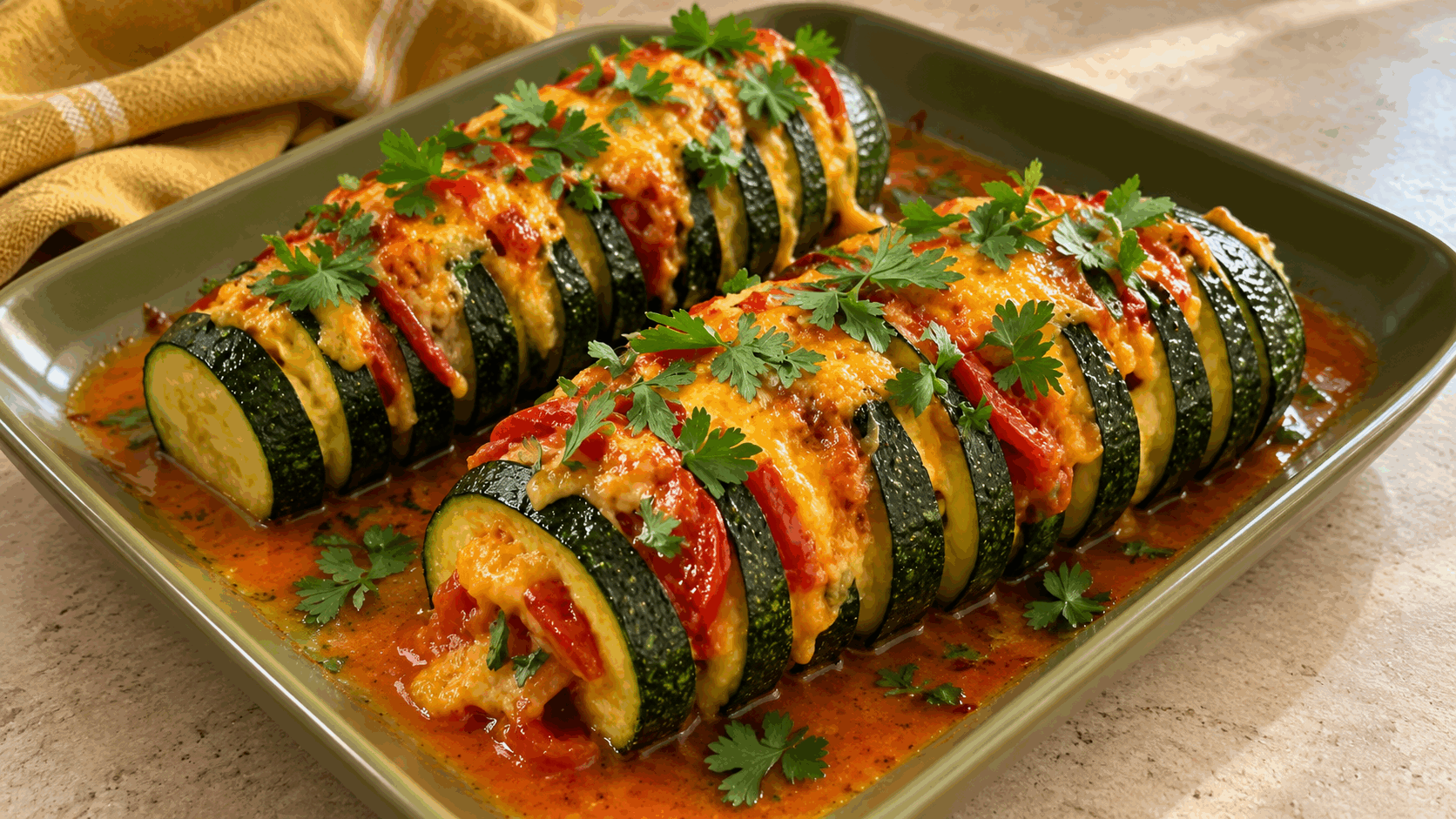
A whole zucchini becomes surprisingly inviting when it is sliced like a little accordion, nestled into tomato sauce, and finished with melted cheese. The cuts allow heat and flavor to reach the center while the uncut base keeps the vegetable together. You get tender zucchini, a bubbling sauce, and golden cheese in one baking dish, with very little active work.
The two ingredients added to the zucchini are tomato sauce and cheese. A little oil, salt, pepper, or herbs can be used as optional pantry seasonings. That distinction matters when shopping: this is a short ingredient list, but the zucchini itself is still part of the dish. The method below explains how to make the cuts safely, choose the right cheese, and bake the vegetable until the center is tender rather than merely covering a firm zucchini with browned cheese.
Why the accordion cuts work
Thin, closely spaced cuts create more exposed surface without turning the zucchini into separate rounds. Tomato sauce can settle around the slices, and the vegetable opens slightly as it softens. The result is easy to serve with a spoon and fork, with each bite carrying some sauce and cheese.
This approach works best with medium zucchini of fairly even thickness. Very large garden zucchini may have a spongy center and tough seeds, making them less suitable for keeping whole. Tiny zucchini cook quickly but are harder to cut evenly. Choose firm vegetables with smooth skin, then use a baking dish that holds them comfortably without crowding them together.
Ingredients for four servings
- 4 medium zucchini, about 7 ounces each, approximately 800 g total.
- 1½ cups thick tomato sauce, approximately 360 g.
- 5 ounces low-moisture mozzarella, approximately 140 g, shredded.
- Optional: 1 tablespoon olive oil, black pepper, a small pinch of salt, and a few basil leaves.
These quantities make four vegetable portions. For a more substantial meal, serve them with bread, rice, beans, or another dish you enjoy. The tomato sauce can be homemade or a jarred sauce with a flavor you like. Taste it before adding salt, because both prepared sauce and cheese may already provide enough seasoning.
You will need a sharp knife, a cutting board, two wooden chopsticks or similar guides, and a baking dish about 9 by 13 inches. Allow roughly fifteen minutes for preparation and thirty-five to forty-five minutes for baking. Zucchini thickness and the material of the baking dish can change the cooking time, so check the vegetable itself near the end.
Choose a sauce that stays around the zucchini
A thick, smooth tomato sauce is easier to manage than a watery tomato mixture. It should spread across the bottom of the dish without immediately separating into thin liquid and solids. Zucchini releases some moisture as it cooks, so starting with a very loose sauce can leave the finished dish soupy.
If your sauce is thin, simmer it briefly in a small saucepan before using it, then let it cool slightly. Do not add extra sugar automatically. Taste first and consider whether the acidity is pleasant with the mild zucchini and cheese. A simple tomato sauce also lets you change the herbs at serving time without committing the entire dish to a strong seasoning blend.
Make the cuts without slicing all the way through
Wash the zucchini and dry them thoroughly. Trim a small piece from each end. If one zucchini rolls on the board, remove a very thin strip from its underside to create a stable base. Avoid cutting away a thick slab, because the base needs enough strength to hold the slices together during baking.
Place a chopstick along each side of the zucchini. Cut crosswise at intervals of about a quarter inch, allowing the knife to stop against the guides. The ends may taper below the height of the chopsticks, so be especially careful there. Work slowly rather than trying to make every cut in one fast motion.
Check that the base remains intact. If one slice separates, do not discard it; place it beside the zucchini in the baking dish. Gently open a few cuts with your fingers to make sure the slices can move, but do not force them apart. Raw zucchini can snap if bent too aggressively.
Assemble the baking dish
Heat the oven to 400°F, or 200°C. Spread the tomato sauce over the bottom of the baking dish. Place the zucchini on top with the cuts facing upward. If using olive oil, brush it lightly over the surfaces, allowing a small amount to enter the cuts. Add pepper and only a little salt if needed.
Spoon some sauce between a few of the slices and around the sides. You do not need to fill every cut completely. The zucchini will relax during baking, allowing the sauce to move into more spaces. Keep most of the cheese aside for the later part of cooking so it does not become overly dark before the vegetable is tender.
Cover the dish loosely with foil suitable for oven use. This first covered stage helps the thickest part of the zucchini soften. Make sure the foil is not pressed tightly against the food. If your dish has an oven-safe lid, it can be used instead, provided the manufacturer's instructions allow the chosen temperature.
Bake first, then add the cheese
Bake the covered zucchini for about twenty-five minutes. Carefully uncover the dish, keeping your face away from the escaping steam. Test the thickest zucchini with the tip of a knife. It should be starting to soften, although it may still offer some resistance. If it remains very firm, give it another five to ten minutes before adding the cheese.
Scatter the mozzarella over the zucchini, pushing a little into the opened cuts. Return the dish to the oven uncovered for ten to fifteen minutes, until the cheese melts and develops some golden spots. The sauce should bubble gently around the vegetables. A knife inserted into the thickest part should slide in easily.
If you want more color, use the broiler briefly only when the baking dish is rated for that heat. Watch continuously, because cheese can move from golden to scorched quickly. Browning is optional; fully tender zucchini with simply melted cheese is already a successful result. Rest the dish for five minutes before serving.
Fix the most common problems
If the cheese is brown but the zucchini remains firm, the topping was added too early or the vegetable was unusually thick. Cover the dish loosely again and continue baking until the zucchini softens. On the next attempt, extend the first stage and check tenderness before adding the cheese.
If the sauce becomes watery, allow the finished dish to stand briefly, then serve with a slotted spoon and add the amount of sauce you want. For the next batch, use a thicker sauce and avoid oversized zucchini with watery centers. Do not try to solve every moisture problem by baking until the vegetable collapses completely; a longer uncovered finish is helpful only within reason.
If slices break away, the base may have been cut too deeply. The dish is still usable. Arrange the pieces together and finish cooking them in the sauce, checking smaller fragments earlier because they can soften faster than the intact zucchini.
Serving ideas and useful variations
Fresh basil added after baking gives a bright aroma without becoming dark in the oven. A little chopped parsley also works. If you enjoy a stronger cheese flavor, replace a small part of the mozzarella with grated Parmesan. Keep the main cheese low in moisture so the topping melts without releasing excessive liquid.
Serve the zucchini with crusty bread to collect the sauce, or place a portion beside cooked grains. White beans warmed separately make a convenient addition to the meal. For a dinner with several components, keep the accompaniments simple: the tomato sauce and cheese already provide plenty of flavor, so the plate does not need several competing sauces.
Make-ahead planning, storage, and questions
You can prepare the tomato sauce and shred the cheese ahead of time, keeping them refrigerated separately. Cut the zucchini closer to baking so the exposed surfaces do not dry out. If you assemble the dish in advance, refrigerate it and remember that a cold baking dish and cold ingredients may need additional cooking time, following the dish manufacturer's guidance about temperature changes.
Refrigerate cooled leftovers promptly in a covered container and use them within two days for the best texture. Reheat only the portion you plan to eat until hot throughout. Cover loosely at first to protect the cheese, then uncover briefly if desired. Repeated reheating can make the zucchini very soft.
Can I use fresh mozzarella?
Yes, but drain it well and expect more moisture in the sauce. Cut it into small pieces and add it late in cooking. Low-moisture mozzarella is more predictable for a first attempt.
Do I need to peel the zucchini?
No. The skin of a young zucchini helps the accordion shape hold together and softens during baking. A very tough-skinned vegetable is better used in another preparation where it can be peeled and cut into smaller pieces.
Can I make only one or two portions?
Yes. Reduce the ingredients proportionally and use a smaller dish so the tomato sauce does not spread into a thin layer that dries out. Keep the tenderness checks rather than assuming the cooking time will be cut in half.