Why Your Dog Licks You (Here’s the REAL Reason)
Why Your Dog Licks You — Here’s the Real Reason
Most people assume that when a dog licks them, it is simply a sign of affection. While love can certainly be part of the explanation, canine behavior is often far more complex.
Dogs use licking, body posture, sounds, routines, and seemingly strange habits to communicate with the people around them. Many of these signals are subtle, so owners may overlook what their pets are trying to express.
Here are 10 fascinating dog behaviors and what they may really mean.
1. Your Dog Sits on Your Feet
Your dog does not sit beside your feet. It places its whole body directly on top of them.
You might think your dog is simply looking for warmth or being possessive, but your feet carry a strong and familiar scent. Your dog associates your smell with comfort, protection, and security.
If an unfamiliar person approaches, your dog may press even more firmly against you. This does not necessarily mean aggression or fear. It may simply be your dog’s way of staying close to the person it trusts most.
In other words, your dog may be saying:
“You are my safe place, and I want to stay near you.”
2. Your Dog Growls When You Wake It
You gently touch your sleeping dog, and it suddenly growls. This reaction can feel surprising or even hurtful, but it is not always a sign that your dog is angry with you.
During deep sleep, a dog may react instinctively before it fully realizes what is happening. A sudden touch can activate a defensive reflex before the brain has had time to recognize the familiar person nearby.
Rather than touching a sleeping dog immediately, gently say its name and allow it to wake up first.
Punishing a dog for a startled growl may increase anxiety and discourage it from giving warning signals in the future.
The growl may not mean:
“I am angry with you.”
It may simply mean:
“You startled me. I wasn’t ready.”
3. Your Dog Eats Dirt
A well-fed dog suddenly begins chewing or swallowing soil in the garden. Why would it do that?
Eating non-food materials is sometimes described as pica. Dogs may eat dirt for several possible reasons, including boredom, curiosity, stress, digestive discomfort, or an underlying health problem.
Some owners believe their dogs are searching for missing minerals, but repeated dirt eating should not automatically be treated as a nutritional deficiency.
If your dog regularly eats soil, speak with a veterinarian. Dirt may contain parasites, pesticides, fertilizers, stones, or other harmful substances.
Once medical problems have been ruled out, more exercise, mental stimulation, training games, and an appropriate diet may help reduce the behavior.
Your dog may be telling you that something in its routine, environment, or health needs attention.
4. Your Dog Sneezes During Play
You are playing with your dog when it suddenly sneezes several times. Is it getting sick?
Look at the rest of its body language. If the tail is wagging, the body is relaxed, and the dog immediately returns to playing, it may be performing a “play sneeze.”
Dogs sometimes sneeze during energetic play to signal that their movements are friendly and not aggressive.
This can be especially useful when play becomes rough, noisy, or physically intense. The sneeze may act like a natural message that says:
“This is only a game.”
However, frequent sneezing outside play, nasal discharge, coughing, or difficulty breathing should be discussed with a veterinarian.
5. Your Dog Hides Toys in Your Bed
You wake up and discover a favorite toy buried under the blanket.
Dogs have a natural tendency to hide or store valuable objects. Their ancestors protected food and other important resources by burying or concealing them.
Your dog may choose your bed because it carries your scent more strongly than almost any other place in the house. The bed feels safe, familiar, and closely connected to you.
By hiding a treasured toy there, your dog may be placing it in the location it considers most secure.
It is not necessarily bad behavior. It may be a sign of instinct, comfort, and trust.
6. Your Dog Suddenly Runs Around the House
Everything is calm, and then your dog begins sprinting through the room at full speed, turning in circles and bouncing off the furniture.
These sudden bursts of activity are commonly called “zoomies.” The technical term is frenetic random activity periods.
Zoomies often happen when dogs release built-up energy or excitement. They are especially common after a bath, after waking from a long nap, or after being restrained or calm for an extended period.
In most cases, zoomies are normal and harmless.
Make sure your dog has enough space to run safely, especially around slippery floors, stairs, glass objects, or sharp furniture.
A dog experiencing zoomies may simply be releasing excitement through movement.
7. Your Dog Eats Only When You Are Nearby
You fill the bowl and walk away, but your dog refuses to eat. As soon as you return and stay in the room, it begins eating.
Some dogs feel more secure when their owner is present. Eating requires them to lower their head and focus on the food, which can make nervous dogs feel vulnerable.
Your presence may reassure your dog that the environment is safe.
However, if your dog suddenly refuses to eat alone or shows a major change in appetite, do not assume it is merely seeking attention. Dental pain, digestive problems, stress, illness, or changes in the home may also affect eating behavior.
A sudden or prolonged loss of appetite should be evaluated by a veterinarian.
8. Your Dog Shakes and Destroys Toys
Your dog grabs a stuffed toy, shakes it violently, and tears it apart within minutes.
This behavior is connected to natural predatory instincts. The side-to-side shaking movement resembles an action wild canines use when handling prey.
Squeaky toys can make the behavior even more exciting because the sound may imitate the noise of a small animal.
For many dogs, shaking and tearing toys is a normal and satisfying form of play.
Choose durable toys that match your dog’s size and chewing strength. Remove damaged toys immediately if pieces of fabric, plastic, stuffing, or squeakers could be swallowed.
Destroying a toy does not mean your dog is aggressive. It may simply be expressing a deeply rooted instinct in a playful and controlled way.
9. Your Dog Lies on Your Suitcase
You begin packing for a trip, and a few minutes later your dog is lying directly on top of the suitcase.
Dogs are excellent at recognizing patterns. They quickly connect objects and routines with what happens next.
A suitcase may predict that someone is about to leave. Your dog may lie on it because it smells like you, because it wants your attention, or because the packing routine makes it anxious.
Some dogs show signs of stress before their owner has even left the house. They may follow the owner closely, pant, whine, pace, or refuse food.
Packing calmly, keeping normal routines, and avoiding dramatic departures may help. Dogs with severe separation anxiety may need support from a veterinarian or qualified behavior professional.
Your dog may not be trying to stop the journey. It may simply be reacting to a familiar sign that predicts your absence.
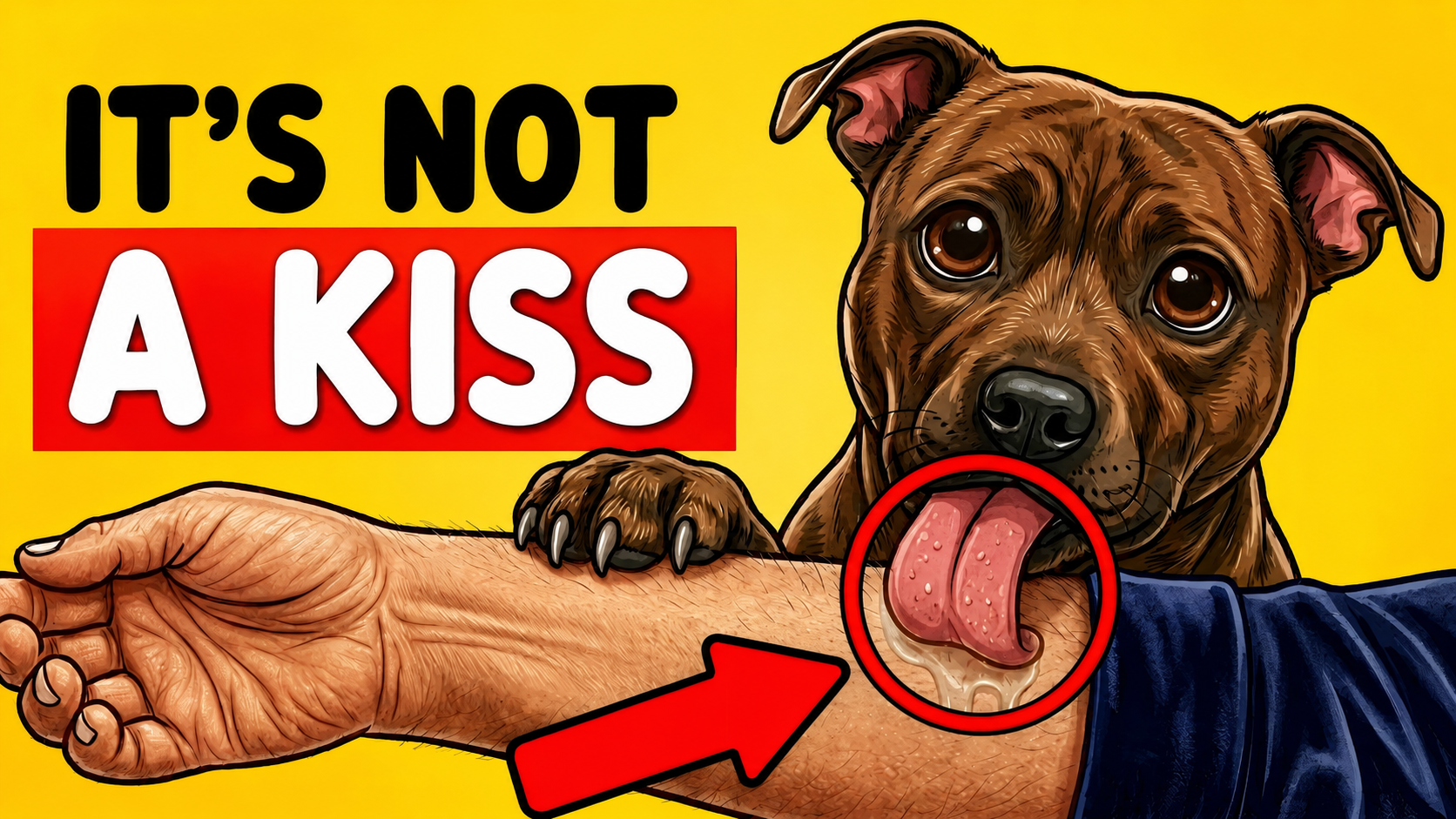
10. Why Your Dog Licks You
Now we come to the behavior that inspired the title.
Your dog licks your hands, arms, or face, and you naturally think:
“My dog loves me.”
Affection may be one reason, but licking can communicate several different things.
Licking begins early in a dog’s life. Mother dogs lick their puppies to clean and stimulate them, while puppies use licking as part of social interaction.
As adults, dogs may lick people to:
- Show affection
- Seek attention
- Greet someone
- Ask for food or interaction
- Calm themselves
- Respond to stress
- Explore interesting tastes and smells
- Reinforce a learned behavior
Human skin also contains salt, sweat, food traces, lotions, and many other scents that dogs find interesting.
Dogs possess an extraordinary sense of smell and may notice changes in human body odor associated with emotion, stress, or physical conditions. However, ordinary licking should not be interpreted as a reliable medical diagnosis.
Sometimes licking is simply a habit that owners unintentionally reward. If you speak, laugh, pet the dog, or offer attention every time it licks you, the dog learns that licking produces a response.
Excessive licking may also indicate anxiety, boredom, discomfort, allergies, nausea, or compulsive behavior. Contact a veterinarian if the licking becomes intense, sudden, difficult to interrupt, or causes skin irritation.
What Your Dog Is Really Trying to Say
Dogs communicate constantly, but they do not rely on words. They use their eyes, ears, tails, posture, movement, sounds, routines, and physical contact.
A single behavior rarely has only one meaning. Context matters.
When trying to understand your dog, consider:
- What happened immediately before the behavior
- Whether the body looks relaxed or tense
- How often the behavior occurs
- Whether it appeared suddenly
- Whether appetite, sleep, energy, or health has changed
Licking may mean affection, but it may also mean curiosity, reassurance, attention-seeking, stress, or habit.
The more closely you observe your dog’s complete body language, the easier it becomes to understand what it is really trying to tell you.