You’ll Never Throw Away Dried Coconuts Again After Seeing This Amazing Chayote Growing Idea!
You’ll Never Throw Away Dried Coconuts Again After Seeing This Amazing Chayote Growing Idea!
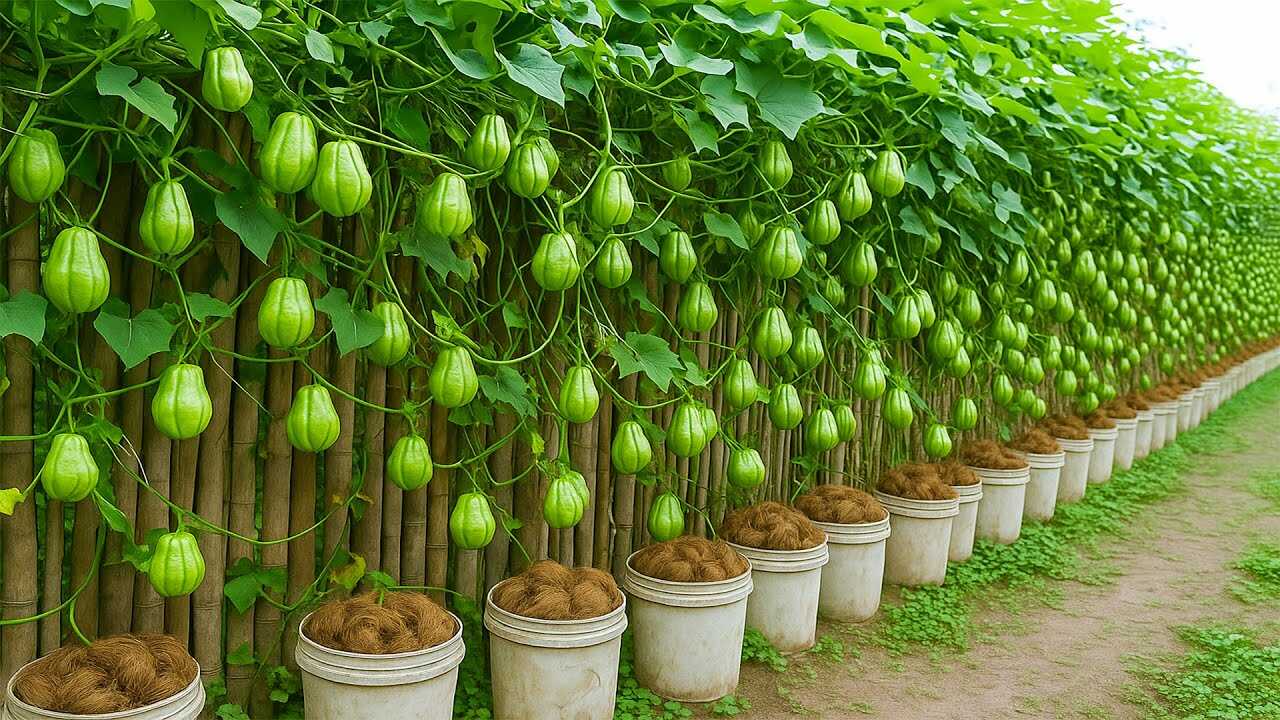
The photo shows rows of vigorous chayote vines trained on bamboo with white pots filled with brown fibrous material — clearly **dried coconut coir (coconut husk fiber)**. In this guide I’ll show you exactly how to turn those dried coconut husks into a reliable, science-backed amendment and mulch that boosts **chayote growth**, improves soil structure, and keeps roots happy for the whole season.
Why dried coconut coir helps chayote (real, verifiable benefits)
Coconut coir is a horticultural substrate made from the husk. It offers proven benefits: it improves **soil aeration and drainage**, increases **water retention** without becoming waterlogged, has a near-neutral **pH**, and resists compaction. These properties help chayote roots explore freely, reduce root rot risk in heavy soils, and maintain steady moisture for vigorous vine growth. Note: coir is low in nutrients, so it must be used alongside regular fertilization.
Materials and exact doses you’ll need
- Compressed coir brick (typical 600–700 g brick expands to ~8–9 L when hydrated) — 1 brick per 20–30 cm pot or per planting hole for a single chayote seedling.
- Clean water for hydration and rinsing — about 10–12 L per coir brick for soaking and rinses.
- Mix ratio for containers: 50% quality potting mix + 30% hydrated coir + 20% perlite or well-rotted compost by volume.
- In-ground amendment: spread a 2–3 cm layer of coir over the planting area and incorporate to 20 cm depth, or mix coir at 20–30% by volume into the top 20 cm of soil.
- Mulch layer: apply a 2–3 cm (0.8–1.2 in) coir mulch around vines; keep mulch 5–10 cm from the crown to avoid collar rot.
- Fertilizer: because coir has little N-P-K, use a balanced fertilizer — e.g., slow-release 10-10-10 — at planting: 1 cup (240 mL) per 75–110 L container or 50 g per planting hole. Follow up with liquid feed every 4 weeks during the active growing season.
Step-by-step: Prepare and use dried coconut coir for chayote
- Hydrate and rinse the coir: break the compressed brick into a bucket, add ~8–12 L water and let it soak 10–20 minutes until it expands. Drain and refill the bucket 2–3 times, stirring, until runoff is not noticeably salty. This flush reduces soluble salts that can burn young roots.
- Fluff and measure: once hydrated, break clumps with your hands to a light, crumbly texture. One standard brick yields ~8–9 L usable coir — plan volume accordingly.
- Mix for containers: combine potting soil, hydrated coir and perlite/compost in the ratios above. Fill a 75–110 L container (ideal for one chayote vine) with this blend for better aeration, moisture balance and root growth.
- Amend in-ground beds: spread 2–3 cm of hydrated coir across the planting area and mix into the top 20 cm of soil. For new planting holes, mix 1 part coir to 3 parts native soil inside the hole.
- Mulch: place a 2–3 cm layer of loose coir around the vine base after planting (leave a small gap at the stem). Refresh this mulch each spring.
- Watering & feeding: because coir holds water, reduce watering frequency moderately (about 15–30% less frequent than bare soil) but monitor moisture with a finger test — keep evenly moist. Start fertilizing at planting and feed every 4 weeks with a balanced liquid fertilizer during the growing season; top-dress slow-release every 8–10 weeks if preferred.
Seasonal schedule and realistic timeline
Implement coir in spring when planting chayote or renewing containers. Expect **measurable improvements in soil structure and moisture stability within 4–8 weeks** as roots grow into the amended medium. With proper light, watering and feeding, chayote vine establishment and steady vegetative growth will be clear by **8–12 weeks**. Fruit set and meaningful yield come later in the season (several months), so treat coir as a season-long support, not an instant fix.
Practical tips from experience
- Buy pre-buffered coir if you prefer less rinsing — great for time-savers. If using raw bricks, always rinse to lower salts.
- For trellised chayote in pots (like the photo), use a large container (75–110 L) and at least one full coir brick mixed as directed to keep the root zone loose during vigorous growth.
- Use coir mulch to suppress weeds and maintain consistent moisture under the vine canopy — it’s lighter and less attractive to slugs than some organic mulches.
- Combine coir with compost, not just inert fillers: compost adds microbial life and nutrients that coir lacks.
- Keep the coir layer away from the vine crown to prevent excess moisture against stems which can encourage fungal issues.
Common mistakes to avoid (real botanical errors)
- Using unwashed coir straight from a brick: un-rinsed coir can contain salts that cause leaf browning and poor establishment.
- Relying on coir as the only nutrient source: coir is mostly inert — without added fertilizer or compost your chayote will show nitrogen and micronutrient deficiencies.
- Applying a thick coir mulch directly against the stem: this traps moisture and can lead to collar rot or stem disease.
- Assuming coir eliminates watering needs: it holds water, but roots still need oxygen. Never compact coir into a dense mass — keep it airy.
- Using 100% coir in long-term containers without periodic nutrient management — plants become nutrient-starved over weeks to months.
Short checklist before you start
- Hydrate and rinse coir bricks thoroughly.
- Mix coir with quality potting soil and compost — follow the 50/30/20 container formula.
- Use a 75–110 L container per chayote vine if growing in pots; incorporate 1–2 bricks of coir per container.
- Apply a 2–3 cm coir mulch each spring and refresh annually.
- Feed with balanced fertilizer monthly during the active growing season.
With a simple, properly prepared use of those dried coconut husks you won’t just recycle a waste product — you’ll give your chayote vines a breathable, moisture-stable root environment that encourages strong growth. Try it this spring, monitor moisture and nutrients, and you should see healthier vines and better root activity within 4–8 weeks. Ready to repurpose those dried coconuts into garden gold? Start by hydrating one brick and mixing it into your potting blend today — then watch your chayote thrive.