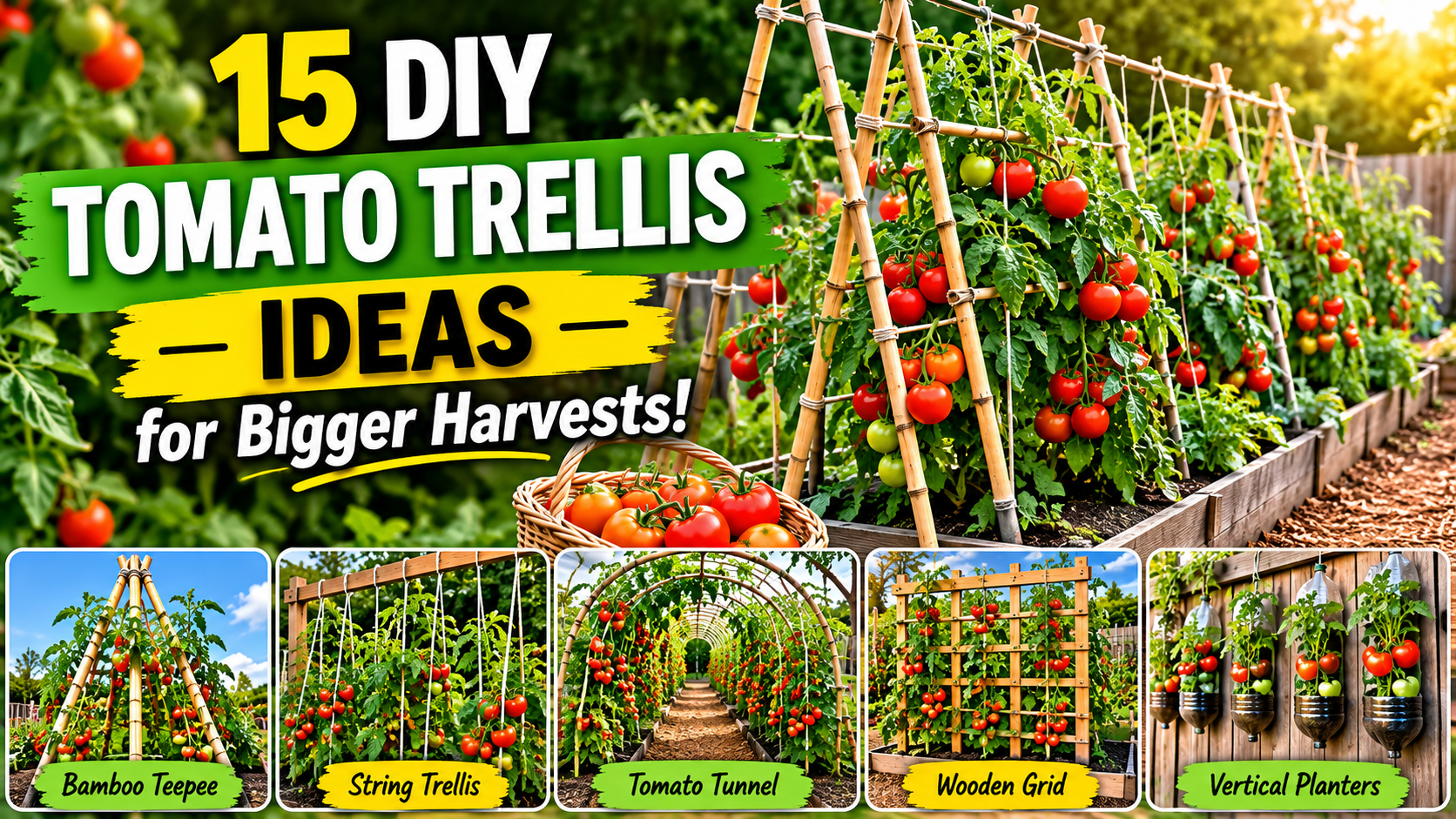
15 Easy DIY Tomato Trellis Ideas for Bigger, Healthier Harvests
Growing tomatoes vertically is one of the smartest ways to maximize your garden space while producing healthier plants and larger harvests. A sturdy trellis keeps vines off the ground, improves airflow, reduces the risk of disease, and makes watering, pruning, and picking ripe tomatoes much easier.
Whether you have a spacious backyard or a small patio, these affordable DIY trellis ideas can help you grow stronger, more productive tomato plants all season long.
Materials You’ll Need
Most of these projects require only basic supplies:
- Bamboo poles or sturdy wooden stakes
- Lumber or wooden boards (optional)
- Garden twine or strong rope
- Screws, nails, or heavy-duty zip ties
- Wire mesh or garden netting (optional)
- Tomato seedlings
- Compost-rich soil
- Mulch
- Soft plant ties
1. Bamboo Ladder Trellis
A bamboo ladder is one of the simplest and most effective tomato supports.
Horizontal bamboo rungs give vines multiple attachment points while encouraging upright growth. It’s inexpensive, lightweight, and perfect for raised beds or narrow garden spaces.
2. Bamboo Tunnel
Create a beautiful walk-through tunnel using bent bamboo poles joined across the top.
Plant tomatoes along both sides, and as they grow, the vines will eventually cover the structure, creating a productive green arch while providing excellent airflow.
3. Hanging String Trellis
Secure two sturdy posts with a crossbeam overhead and suspend strong garden twine down to each tomato plant.
As the vines grow, gently wrap them around the strings for continuous support. This method is widely used in commercial gardens because it’s simple, inexpensive, and highly effective.
4. Wooden A-Frame with Garden Netting
Build an A-shaped wooden frame and stretch durable garden netting between both sides.
The angled design supports heavy fruit while keeping plants well ventilated. It also folds flat for easy storage after the season.
5. Bamboo Teepee
Tie six to eight bamboo poles together at the top to form a tall pyramid.
Tomato plants naturally climb around the outside, receiving sunlight from every direction while creating an attractive focal point in the garden.
6. Vertical Bottle or Container Planters
Attach recycled bottles or flower pots to a fence or wooden frame.
Place a bamboo stake inside each container to support compact tomato varieties. This setup is ideal for balconies, patios, and small gardens.
7. Wooden Garden Arch
Build a sturdy wooden arch and guide tomato vines over the top.
By midsummer, the plants form a living tunnel filled with clusters of ripening tomatoes while adding a decorative feature to your garden.
8. Traditional Wooden Stake
Sometimes the simplest solution is still one of the best.
Drive a strong wooden stake beside each plant and secure the stems with soft ties as they grow.
This classic technique works especially well for determinate tomato varieties.
9. Wooden Lattice Trellis
Build a square lattice using wooden slats attached to a solid frame.
The multiple crossing points provide excellent support while allowing vines to spread naturally, improving airflow and making harvesting easier.
10. Fan-Shaped Bamboo Trellis
Arrange bamboo poles in a wide fan shape behind each plant.
This open structure allows sunlight to reach every branch while giving each stem plenty of room to grow.
11. Obelisk Trellis
Construct a tall obelisk from bamboo or wood.
The four-sided design supports vigorous climbing tomatoes from every direction while adding elegance to vegetable gardens.
12. Bamboo Crossbar Trellis
Install two vertical bamboo poles connected by several horizontal crossbars.
This sturdy framework easily supports large tomato plants loaded with heavy fruit throughout the growing season.
13. Small Pergola Support
Build a simple pergola above a raised bed and allow tomato vines to climb overhead.
Besides increasing vertical growing space, it creates attractive natural shade beneath the plants.
14. Fence-Mounted Trellis
If you already have a wooden fence, transform it into a tomato support by attaching bamboo poles, wire, or horizontal rails.
It’s an excellent way to save space while keeping vines organized.
15. Freestanding Wooden Frame
Construct a rectangular wooden frame and fill the center with rope, wire mesh, or garden netting.
This versatile design works well for long rows of tomatoes and can easily be expanded as your garden grows.
5 Bonus Tomato Growing Ideas
Bonus 1. Grow Tomatoes in Large Buckets
Use 20–30-liter (5–8 gallon) containers with good drainage.
Container growing is perfect for patios, decks, and balconies.
Bonus 2. Upside-Down Tomato Planters
Grow tomatoes in hanging containers with the stems emerging from the bottom.
This space-saving method can reduce some soil-related pests while creating an eye-catching display.
Bonus 3. Straw Bale Gardening
Condition straw bales with water and fertilizer before planting directly into them.
Straw bales provide excellent drainage, suppress weeds, and create healthy growing conditions.
Bonus 4. Raised Bed Tomato Boxes
Deep wooden raised beds filled with compost-rich soil encourage vigorous root development while making maintenance much easier.
Bonus 5. Hanging Fabric Grow Bags
Suspend heavy-duty fabric grow bags from a sturdy frame or pergola.
Support each plant with twine to maximize vertical space while keeping the garden neat and productive.
Tips for Growing More Tomatoes
For the healthiest plants and biggest harvests:
- Space plants 45–60 cm (18–24 inches) apart.
- Install supports before plants become large.
- Tie stems loosely using soft plant ties.
- Remove lower leaves to improve air circulation.
- Water deeply rather than frequently.
- Feed every two to three weeks with compost or a tomato fertilizer.
- Apply mulch to retain moisture and suppress weeds.
More Than Just Tomatoes
Most of these DIY trellis designs also work beautifully for many other climbing crops, including:
- Cucumbers
- Pole beans
- Peas
- Gourds
- Melons (with sturdy support)
- Climbing squash
By growing upward instead of outward, you’ll save valuable garden space, improve plant health, and enjoy larger, cleaner, and easier-to-harvest crops throughout the growing season. 🍅🌿