15 Vegetables You Should Plant in August for an Amazing Fall Harvest
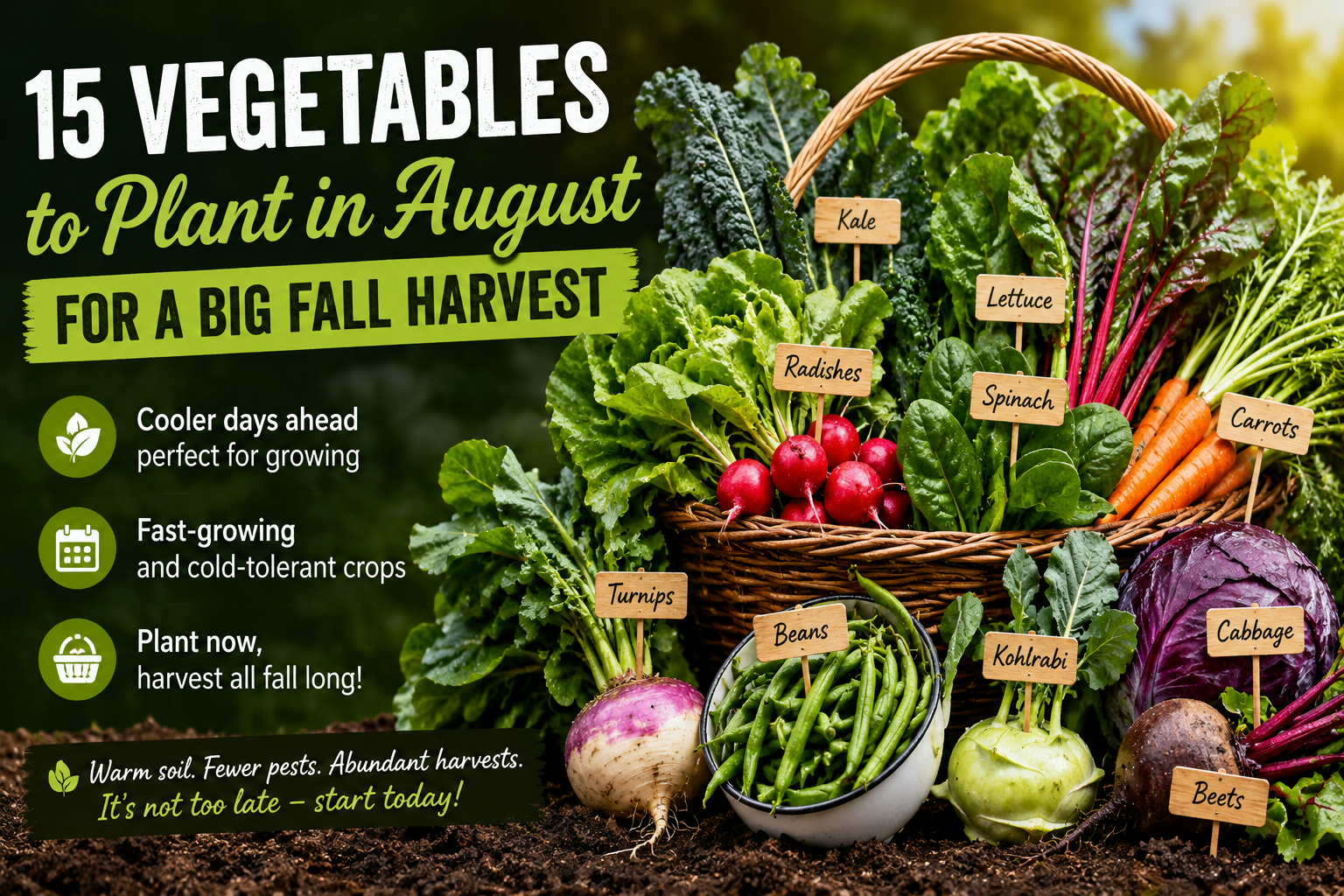
Many gardeners assume that August marks the end of the growing season, but it’s actually the perfect time to start a productive fall garden. The soil is still warm enough for rapid seed germination, while the cooler days ahead create ideal conditions for many vegetables that struggle in the heat of summer.
Whether you have a vegetable patch, raised beds, or containers, planting the right crops now can reward you with fresh harvests well into autumn—and in some climates, even into winter.
Why August Is One of the Best Planting Months
Late-summer planting offers several advantages:
- Warm soil encourages fast germination.
- Cooler weather reduces stress on many vegetables.
- Many common summer pests begin to disappear.
- Fall vegetables often develop sweeter, richer flavors after cool nights or light frosts.
- Garden beds become available as summer crops finish producing.
Choose fast-growing or cold-tolerant vegetables to make the most of the remaining growing season.
1. Lettuce
Lettuce grows quickly and thrives in cool weather. Many varieties are ready to harvest within four to six weeks.
Recommended varieties:
- Buttercrunch
- Parris Island Cos (Romaine)
- Red Sails
- Salad Bowl
Growing tips:
- Provide afternoon shade during hot weather.
- Sow new seeds every two weeks for continuous harvests.
- Protect plants with row covers if frost arrives early.
2. Radishes
Few vegetables mature as quickly as radishes. Many varieties are ready in just three to four weeks.
Recommended varieties:
- Cherry Belle
- French Breakfast
- Daikon
Growing tips:
- Sow directly into loose soil.
- Keep the soil evenly moist.
- Harvest while roots are still tender.
3. Spinach
Spinach loves cool temperatures and becomes sweeter after light frosts.
Recommended varieties:
- Bloomsdale
- Space
- Tyee
Growing tips:
- Sow every two weeks for ongoing harvests.
- Mulch to keep the soil cool.
- Use row covers in colder regions.
4. Kale
Kale is one of the toughest vegetables for fall gardens and continues producing long after many crops have stopped.
Recommended varieties:
- Lacinato
- Red Russian
- Dwarf Siberian
Growing tips:
- Harvest outer leaves first.
- Frost improves the flavor.
- Keep plants watered during dry spells.
5. Carrots
Fall-grown carrots are often sweeter than spring crops thanks to cool nights.
Recommended varieties:
- Scarlet Nantes
- Napoli
- Mokum
Growing tips:
- Sow directly into stone-free soil.
- Thin seedlings early.
- Water consistently for straight, smooth roots.
6. Beets
Beets provide both nutritious greens and delicious roots.
Recommended varieties:
- Detroit Dark Red
- Chioggia
- Golden Beet
Growing tips:
- Soak seeds before planting.
- Thin seedlings once they emerge.
- Harvest young roots or allow them to reach full size.
7. Bush Beans
Gardeners in warmer regions can still enjoy one final crop of bush beans before frost.
Recommended varieties:
- Provider
- Contender
- Tendergreen
Growing tips:
- Plant in full sun.
- Pick beans regularly to encourage more production.
- Protect plants if early frost threatens.
8. Turnips
Turnips mature quickly and provide both flavorful roots and leafy greens.
Recommended varieties:
- Purple Top White Globe
- Hakurei
- Tokyo Cross
Growing tips:
- Thin seedlings early.
- Keep the soil moist.
- Harvest before hard freezes.
9. Arugula
Arugula is one of the fastest-growing leafy vegetables for autumn gardens.
Recommended varieties:
- Astro
- Roquette
- Dragon’s Tongue
Growing tips:
- Sow every few weeks.
- Harvest baby leaves for a mild flavor.
- Allow plants to mature for a pepperier taste.
10. Swiss Chard
Swiss chard tolerates both lingering summer heat and the cooler temperatures of fall.
Recommended varieties:
- Bright Lights
- Fordhook Giant
- Ruby Red
Growing tips:
- Harvest the outer leaves regularly.
- Leave the center intact for continuous growth.
- Protect plants during severe frosts.
11. Bok Choy
This fast-growing Asian vegetable performs especially well in cooler weather.
Recommended varieties:
- Joi Choi
- Mei Qing Choi
- Shanghai Green
Growing tips:
- Water regularly.
- Harvest young for tender leaves.
- Grow in partial shade if temperatures remain high.
12. Mustard Greens
Mustard greens grow rapidly and become milder after cool weather arrives.
Recommended varieties:
- Southern Giant Curled
- Mizuna
- Red Giant
Growing tips:
- Harvest young leaves for a milder taste.
- Sow every couple of weeks.
- Protect plants to extend harvests.
13. Kohlrabi
Kohlrabi develops crisp, sweet bulbs that are delicious raw or cooked.
Recommended varieties:
- Early White Vienna
- Purple Vienna
- Kossak
Growing tips:
- Harvest when bulbs reach about 2–3 inches (5–8 cm).
- Keep the soil evenly moist.
- Avoid letting bulbs become oversized.
14. Broccoli Raab (Rapini)
Unlike traditional broccoli, broccoli raab grows quickly and is ideal for late-summer planting.
Recommended varieties:
- Spring Raab
- Sessantina Grossa
- Zamboni
Growing tips:
- Harvest before flower buds open.
- Continue picking side shoots for longer production.
15. Cabbage
Fast-maturing cabbage varieties are excellent choices for August planting.
Recommended varieties:
- Golden Acre
- Copenhagen Market
- Fast Vantage
Growing tips:
- Start seeds indoors if temperatures are extremely hot.
- Use row covers to discourage cabbage pests.
- Harvest before prolonged freezing weather.
Tips for a Bigger Fall Harvest
Know Your First Frost Date
Count backward from your area’s average first frost and choose vegetables that have enough time to mature.
Improve Your Soil
Mix compost or well-rotted organic matter into empty beds before planting to replenish nutrients after summer crops.
Water Regularly
August can still be hot and dry. Keep the soil consistently moist, especially while seeds are germinating.
Mulch the Soil
A layer of mulch helps conserve moisture, regulate soil temperature, and suppress weeds.
Use Row Covers
Floating row covers protect crops from insects, cool nights, and early frosts, extending your harvest well into autumn.
Plant Successively
For vegetables like lettuce, spinach, arugula, and radishes, sow new seeds every 10 to 14 days to enjoy continuous harvests throughout the season.
Don’t Let August Fool You
August isn’t the end of the gardening season—it’s the beginning of one of the most rewarding growing periods of the year. By choosing fast-growing and cool-season vegetables, you can enjoy fresh salads, crisp roots, and nutritious greens long after summer has faded.
With warm soil, fewer pests, and ideal autumn temperatures, late-summer planting is one of the smartest ways to keep your garden productive and your harvest baskets full until the first frost—and sometimes even beyond.