Christmas Cactus Care Calendar: A Month-by-Month Guide to Perfect Holiday Blooms
Christmas Cactus Care Calendar: A Month-by-Month Guide to Perfect Holiday Blooms
A Christmas cactus (Schlumbergera) doesn’t bloom beautifully by chance. The secret isn’t just knowing how to care for it—it’s knowing exactly when to perform each task.
From watering and feeding to pruning and providing the right amount of darkness, every stage of the year plays a role in preparing your plant for a spectacular display during the holiday season.
Follow this month-by-month care calendar to keep your Christmas cactus healthy and encourage reliable blooms year after year.
January–February: Rest and Recovery
Once flowering has finished, your Christmas cactus enters its natural resting period. This recovery stage is essential because it allows the plant to rebuild its energy reserves before producing new growth.
During these months:
- Remove faded flowers.
- Trim any weak or leggy stems by cutting at the joints between segments.
- Water sparingly, allowing the potting mix to dry noticeably before watering again.
- Stop fertilizing completely.
Giving the plant time to rest now encourages stronger growth and better flowering later in the year.
March–April: Spring Growth Begins
As daylight increases, your Christmas cactus starts producing fresh growth.
This is the time to encourage healthy stems that will eventually support flower buds.
Care routine
- Water whenever the top inch (2–3 cm) of soil feels dry.
- Feed once a month with a balanced fertilizer such as 10-10-10 or 20-20-20 diluted according to the label.
- Rotate the pot every week or two so all sides receive equal light.
- Place the plant in bright, indirect sunlight.
Healthy spring growth creates the foundation for abundant flowering later in the season.
May–June: Outdoor Growing Season
If temperatures remain warm, your Christmas cactus will benefit from spending the summer outdoors.
Choose a location with:
- Bright, filtered light
- Protection from direct afternoon sun
- Shelter from heavy rain
Continue monthly fertilizing with a balanced fertilizer.
This is also the final opportunity to prune.
Pinch or remove the last two or three stem segments from long branches to encourage branching and create a fuller plant with more potential flowering sites.
Avoid pruning after June.
July–August: Build Energy for Flower Buds
During mid to late summer, your cactus shifts from producing stems to storing energy for flowering.
Continue providing:
- Bright indirect light
- Consistent moisture without waterlogging the soil
- Monthly feeding with a fertilizer higher in phosphorus, such as a 5-15-10 formulation, applied at reduced strength
Do not prune during this period.
Removing growth now can reduce the number of flower buds that develop later.
September: Trigger Flowering
September is the most important month of the entire growing cycle.
As night temperatures begin to cool, move the plant indoors if necessary before temperatures consistently fall below about 50°F (10°C).
Stop fertilizing.
Reduce watering slightly.
Most importantly, begin the darkness treatment.
For approximately six weeks, the plant should receive:
- 12–14 hours of uninterrupted darkness every night
- Cool nighttime temperatures around 50–55°F (10–13°C)
Even artificial light from lamps or televisions can interrupt the flowering process.
October: Bud Formation
If the September routine has been successful, small flower buds should begin appearing on the ends of the stem segments.
Continue:
- The nightly darkness schedule
- Cool nighttime temperatures
- Light watering only when the soil becomes mostly dry
Do not fertilize.
Avoid moving the plant unnecessarily.
This stable environment allows buds to continue developing.
November: Protect Developing Buds
Once flower buds become clearly visible, the darkness treatment can end.
Move the plant to its final display location where it receives bright, indirect light.
After this point:
- Do not rotate the pot.
- Avoid changing its location.
- Keep watering lightly.
- Protect it from drafts, heaters, and sudden temperature changes.
Even small disturbances can cause buds to drop before opening.
December: Enjoy the Flowers
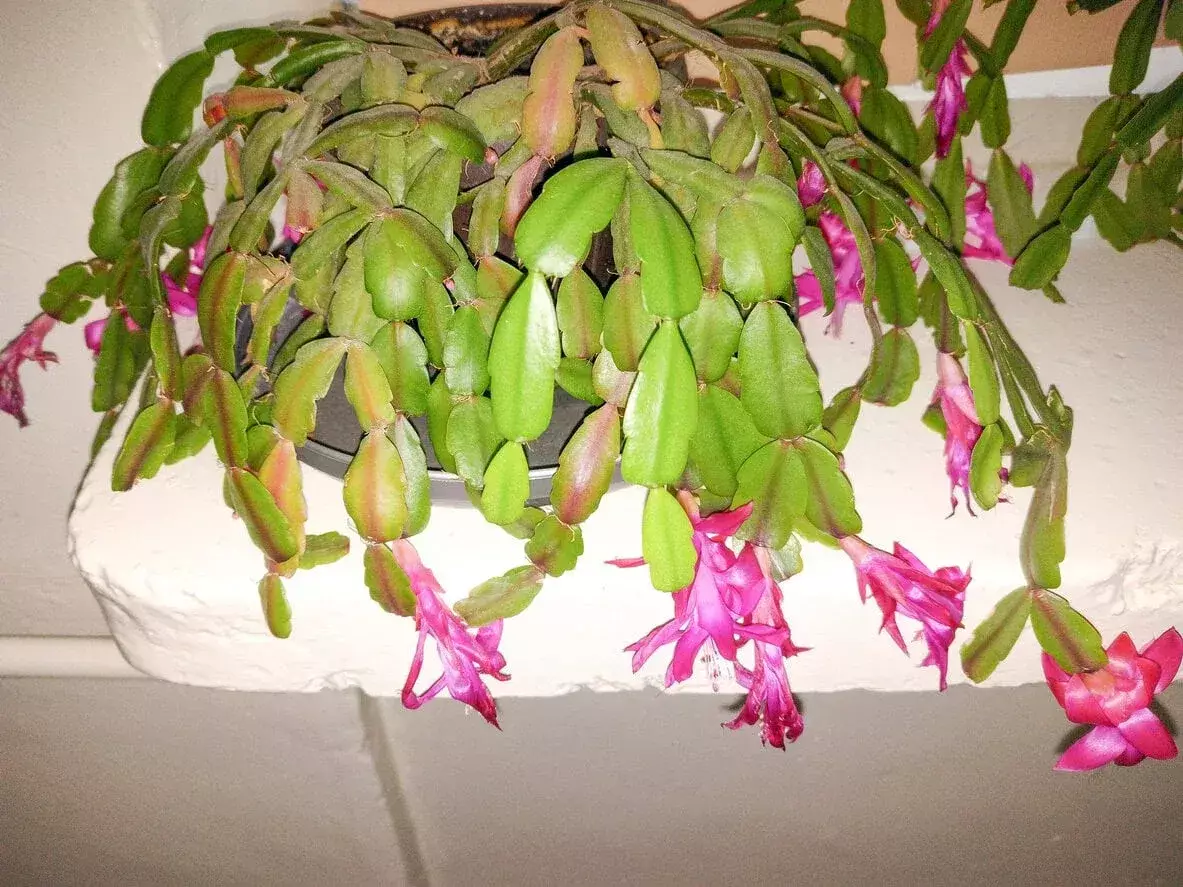
By December, your Christmas cactus should be covered with colorful blooms.
To keep flowers lasting as long as possible:
- Water only when the upper soil begins to dry.
- Keep the plant away from heating vents and cold drafts.
- Maintain bright, indirect light.
- Continue light feeding with a diluted bloom fertilizer if desired.
Proper care during flowering helps extend the blooming period throughout the holiday season.
Four Common Mistakes That Prevent Blooming
Keeping the Plant Too Warm
Warm nights during early autumn often prevent flower buds from forming.
Interrupting the Darkness Period
Artificial light during the required dark treatment can delay or completely stop blooming.
Fertilizing Too Late
Feeding heavily in autumn encourages leafy growth instead of flowers.
Moving the Plant After Buds Form
Christmas cactus buds are sensitive to changes in light and temperature.
Rotating or relocating the plant may cause them to fall off before opening.
Annual Christmas Cactus Care Calendar
Final Thoughts
Growing a Christmas cactus that blooms on time every year isn’t difficult—it simply requires following the plant’s natural seasonal rhythm. Rest in winter, steady growth in spring, energy building during summer, and careful light management in autumn all work together to produce a spectacular display just in time for the holidays.
By following this calendar year after year, you’ll enjoy a healthier plant and a reliable burst of colorful flowers every Christmas season.