Is Your Snake Plant Not Growing? Try This Simple Trick to Encourage Healthy New Shoots
Is Your Snake Plant Not Growing? Try This Simple Trick to Encourage Healthy New Shoots
Snake plants (Sansevieria, now classified as Dracaena trifasciata) are among the easiest houseplants to grow. They tolerate low light, irregular watering, and a wide range of indoor conditions, making them a favorite for homes and offices alike.
However, if your snake plant has stopped producing new shoots, has wrinkled leaves, or seems to have lost its vibrant green color, it may simply need better care rather than a miracle fertilizer.
The method presented in the source focuses on cleaning the roots, repotting the plant into fresh soil, and using a simple rice-water solution as a gentle plant tonic. While rice water is not a scientifically proven fertilizer, refreshing the soil and improving root health can certainly help many struggling snake plants recover.
Why Snake Plants Stop Growing
A healthy snake plant naturally produces new shoots, often called pups, from its underground rhizomes.
Growth may slow because of:
- compacted or exhausted soil
- poor drainage
- damaged roots
- overwatering
- insufficient light
- root-bound pots
- natural seasonal dormancy
Before adding fertilizers, it’s worth checking whether the plant simply needs healthier growing conditions.
Step 1: Remove the Plant From Its Pot
Carefully slide the snake plant out of its container.
Gently remove some of the old soil around the roots so you can inspect them more easily.
Look for:
- soft roots
- black or brown roots
- mushy sections
- dead roots
- healthy white or firm orange roots
Healthy roots are firm and free from foul odors.
Step 2: Prune Damaged Leaves and Roots
Using clean, disinfected pruning scissors, remove:
- dead leaves
- yellow leaves
- severely damaged foliage
- rotten roots
Disinfecting pruning tools before use helps reduce the chance of spreading disease between plants.
Avoid removing healthy green leaves unless they are badly damaged.
The remaining healthy foliage continues producing energy through photosynthesis, helping the plant recover more quickly.
Step 3: Clean the Root System
After pruning, gently rinse the roots with clean water to remove old soil.
This allows you to inspect the root system more carefully while removing debris that may harbor fungal spores or bacteria.
Once cleaned, allow the plant to dry in a bright, airy location away from direct sunlight before repotting.
Step 4: Prepare a Mild Baking Soda Solution
The source recommends preparing a simple solution by mixing:
- 1 liter of room-temperature water
- 1 tablespoon of baking soda
The plant’s roots are briefly soaked in this solution before repotting.
While baking soda is sometimes used by gardeners as a mild cleaning agent, it should not be considered a fertilizer.
Extended or repeated exposure may alter soil pH, so use this method only occasionally if you choose to try it.
Step 5: Wipe the Leaves
A soft cloth dampened with the baking soda solution is used to gently wipe both sides of each leaf.
Cleaning the leaves removes dust and allows more light to reach the leaf surface.
This improves the plant’s appearance and may help maximize photosynthesis by keeping the foliage clean.
For routine care, plain water is usually sufficient.
Step 6: Prepare Fresh Potting Mix
Fresh soil is one of the biggest improvements you can make for a struggling snake plant.
The source recommends mixing:
- 50% quality potting soil
- 50% coconut coir
This combination balances moisture retention with good airflow around the roots.
Many growers also add coarse sand, pumice, or perlite to improve drainage even further.
Step 7: Repot Correctly
Choose a clean pot with drainage holes.
Add a layer of the fresh growing mix to the bottom.
Place the plant in the center of the pot and spread the roots naturally.
Fill around the roots with more potting mix without packing it tightly.
Loose soil allows better air circulation and healthier root development.
Step 8: Water Carefully
After repotting, water lightly around the base of the plant.
The goal is simply to settle the soil around the roots.
Avoid soaking the pot.
Snake plants store water inside their thick leaves and generally prefer the soil to dry before being watered again.
Step 9: Give the Plant Time to Recover
Place the newly repotted plant in a bright location with indirect light.
The source suggests keeping it away from direct sunlight for the first few days after repotting while the roots recover.
Avoid fertilizing immediately after repotting.
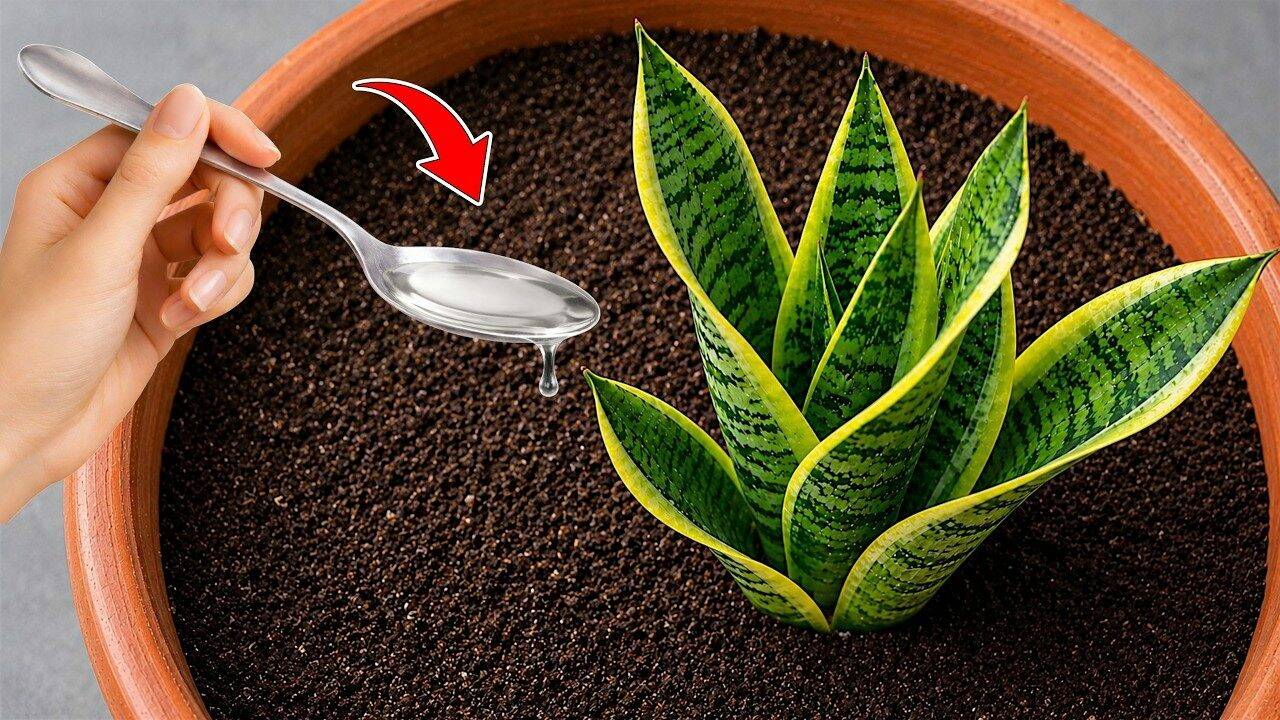
Step 10: Prepare Rice Water
Three days after repotting, the source prepares a simple rice-water solution.
The method is:
- add 3 tablespoons of uncooked rice
- pour in 500 ml of room-temperature water
- stir well
- strain out the rice
- dilute the liquid with another 500 ml of clean water
The resulting liquid is used as a mild plant tonic.
Rice water contains small amounts of starch and trace minerals, but it should not replace a balanced houseplant fertilizer.
Spray and Water Sparingly
The diluted rice water is sprayed lightly over the leaves and may also be used to water the soil occasionally.
The source recommends applying the solution about twice each week.
If you choose to try this method:
- use fresh rice water
- never store it until it ferments
- avoid leaving standing moisture on the leaves
- stop using it if mold or unpleasant odors develop
Other Factors That Encourage New Shoots
Healthy pups appear when the plant receives the right growing conditions.
To encourage new growth:
- provide bright indirect light
- avoid overwatering
- allow the soil to dry between waterings
- use a pot with drainage holes
- repot only when necessary
- avoid damaging underground rhizomes
Patience is important, as snake plants naturally grow more slowly than many houseplants.
Common Mistakes
Avoid these common problems:
Overwatering
This is the leading cause of root rot.
Poor Drainage
Heavy soil that stays wet can suffocate roots.
Pots Without Drainage
Standing water quickly damages the root system.
Too Little Light
Very dark locations slow growth dramatically.
Excess Fertilizer
Too much fertilizer may damage roots instead of stimulating growth.
Signs Your Snake Plant Is Recovering
As the plant becomes healthier, you may notice:
- firmer leaves
- deeper green color
- stronger roots
- upright growth
- fresh shoots emerging from the base
- faster overall development
These improvements usually appear gradually over several weeks or months rather than overnight.
Final Thoughts
If your snake plant has stopped growing, the solution is rarely a single “secret ingredient.” Healthy roots, fresh well-draining soil, proper watering, and adequate light are far more important than any homemade plant tonic.
Cleaning damaged roots, repotting into an airy growing mix, and maintaining consistent care can often revive a struggling plant and encourage the appearance of healthy new shoots. Rice water may be used occasionally as a mild supplement, but it should never replace balanced plant care or proper fertilization.