Skip Harsh Herbicides! How to Control Weeds Naturally Around Your Home and Garden
Skip Harsh Herbicides! How to Control Weeds Naturally Around Your Home and Garden
Weeds can quickly take over driveways, patios, sidewalks, garden beds, and even cracks in concrete. Besides making outdoor spaces look untidy, they compete with desirable plants for water, nutrients, and sunlight.
Many viral videos promise to eliminate every weed within hours using homemade sprays. While some ingredients can damage weed leaves, there is no miracle mixture that permanently destroys every weed after a single application.
Here’s what really works—and how to remove weeds safely without harming your garden.
Why Weeds Keep Returning
Weeds are remarkably resilient.
Some spread through thousands of seeds, while others regrow from underground roots or creeping stems.
Common reasons weeds return include:
- bare soil
- compacted ground
- cracks in pavement
- poor lawn health
- neglected garden beds
- wind-blown seeds
- underground rhizomes
Removing the visible leaves does not always eliminate the entire plant.
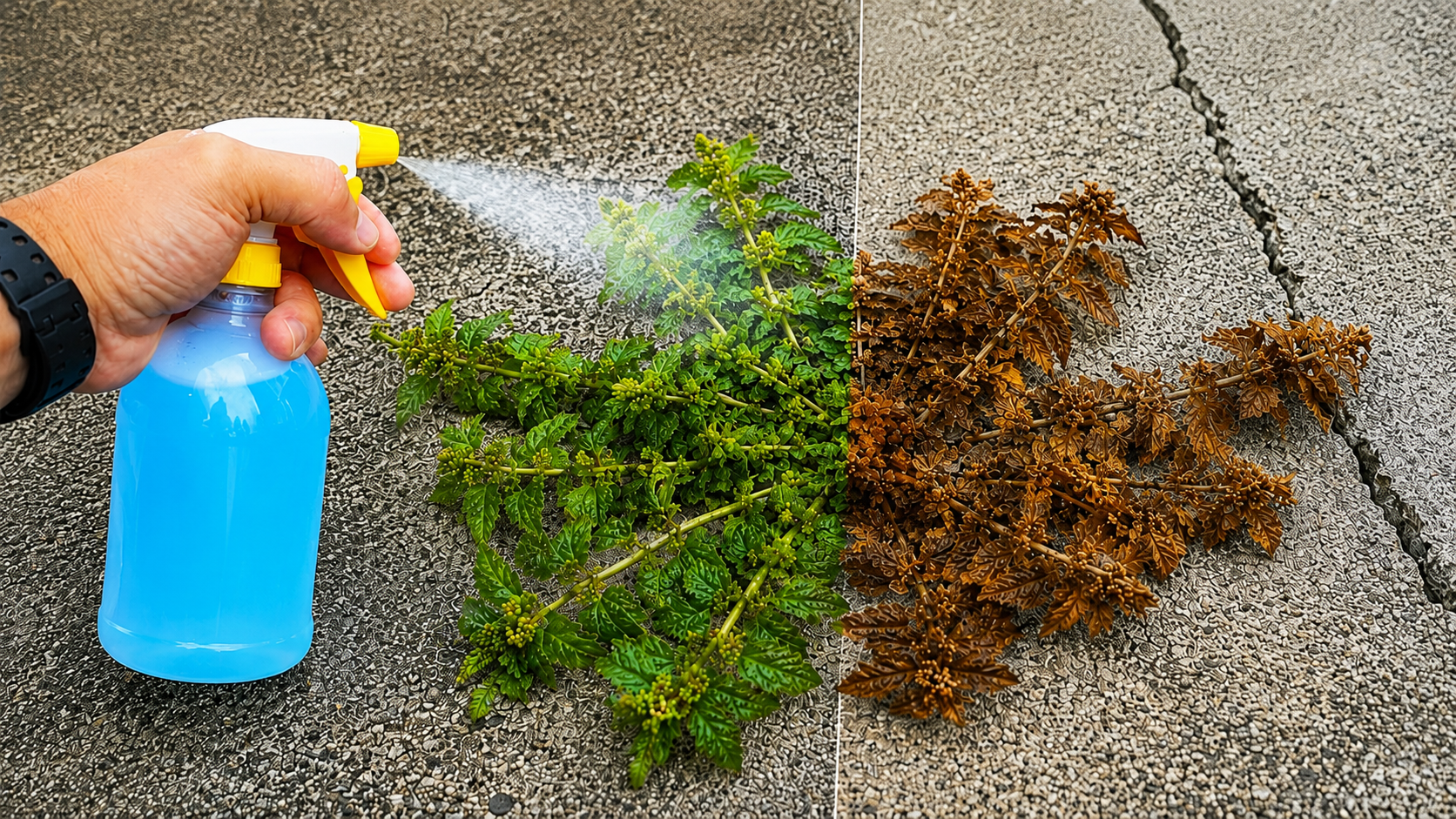
The Homemade Weed Spray
The original method combines:
- 500 ml water
- 1 tablespoon table salt
- 1 tablespoon baking soda
- 2 tablespoons liquid dish detergent
- 1 tablespoon vegetable oil
The ingredients are mixed together and sprayed directly onto weeds growing in pavement cracks or other unwanted areas.
While this mixture may damage exposed leaves, it should be used carefully because some ingredients may also affect nearby soil and desirable plants.
What Each Ingredient Does
Water
Water simply dilutes the mixture and helps distribute it over the leaves.
Salt
Salt can dehydrate plant tissue.
However, it does not distinguish between weeds and desirable plants.
Salt may also remain in the soil, making it difficult for future plants to grow.
For this reason, it should never be used in lawns, vegetable gardens, flower beds, or around trees and shrubs.
Baking Soda
Baking soda may dry some leaf surfaces after repeated applications.
Its effectiveness varies greatly depending on the weed species.
It is not a reliable long-term weed killer.
Dish Soap
Dish soap helps the solution stick to the leaves.
It acts as a surfactant, improving contact between the liquid and the plant surface.
On its own, dish soap does not kill established weeds.
Vegetable Oil
Oil helps coat the leaves and slows evaporation.
However, excessive oil may also coat nearby desirable plants if oversprayed.
Where This Type of Spray May Be Used
If you decide to experiment with a homemade spray, restrict its use to isolated weeds growing in:
- sidewalk cracks
- driveway joints
- gravel paths
- between paving stones
Avoid spraying anywhere you plan to grow plants.
Never Spray These Areas
Do not use salt-based mixtures on:
- lawns
- vegetable gardens
- flower beds
- around trees
- near shrubs
- natural stone planting areas
- healthy garden soil
Salt can accumulate in the ground and remain there long after the weeds have disappeared.
Does the Sun Help?
The source recommends spraying during the hottest part of the day.
Bright sunshine may increase drying on the leaf surface, but weather alone will not permanently eliminate established perennial weeds.
Plants with deep root systems often regrow even if the leaves initially appear dead.
Better Ways to Remove Weeds
For long-lasting results, combine several methods.
Pull Weeds by Hand
Removing weeds after rainfall makes it easier to pull out the entire root.
This is often the most effective solution for garden beds.
Mulch Bare Soil
Apply 5–8 cm (2–3 inches) of mulch to reduce sunlight reaching weed seeds.
Suitable mulches include:
- bark chips
- straw
- compost
- shredded leaves
- pine bark
Keep Lawns Healthy
Dense grass naturally crowds out many weeds.
Regular mowing, watering, and overseeding help prevent weed invasion.
Remove Weeds Early
Young weeds are much easier to remove than mature plants with deep root systems.
Pull them before they flower and produce seeds.
Weeds Growing in Concrete Cracks
For weeds emerging through pavement:
- scrape out the roots
- use a crack weeding tool
- refill empty joints if necessary
Mechanical removal often lasts longer than homemade sprays alone.
Common Mistakes
Avoid these common errors:
Using Too Much Salt
Excess salt damages soil and nearby vegetation.
Spraying on Windy Days
The solution can drift onto flowers, vegetables, or ornamental plants.
Expecting Permanent Results
Many perennial weeds regrow from underground roots.
Ignoring New Seedlings
Small weeds quickly become much harder to remove if left untreated.
Safe Alternatives to Chemical Herbicides
If you prefer to avoid synthetic herbicides, consider:
- hand weeding
- hoeing
- mulching
- landscape fabric
- boiling water (for isolated weeds in pavement cracks only)
- regular lawn maintenance
Using several methods together usually provides better long-term control than relying on a single homemade spray.
Prevent Future Weed Growth
The easiest weeds to remove are the ones that never establish.
To reduce future problems:
- keep garden beds mulched
- repair bare patches in lawns
- clean paving joints regularly
- remove weeds before they seed
- improve soil health
- inspect your garden every week
Consistent maintenance dramatically reduces the amount of weeding required later.
Final Thoughts
Homemade weed sprays containing salt, baking soda, dish soap, and oil may dry the leaves of some weeds, particularly those growing in cracks or gravel. However, they are unlikely to permanently eliminate established weeds with deep root systems, and salt can damage soil where you want plants to grow in the future.
For lasting weed control, the safest and most effective approach combines early removal, healthy soil, mulching, and regular maintenance. These methods protect your garden while keeping unwanted weeds under control throughout the growing season.