7 Essential Things to Do with Hydrangea Cuttings in July for Bigger, Healthier Plants Next Year
7 Essential Things to Do with Hydrangea Cuttings in July for Bigger, Healthier Plants Next Year
July is an exciting time for hydrangea enthusiasts. While these beautiful shrubs are putting on their spectacular summer display, experienced gardeners know that it’s also the perfect month to start planning for next year’s blooms.
One of the best ways to expand your hydrangea collection is by taking cuttings. Softwood cuttings collected in midsummer root surprisingly well, making it easy to grow new plants without buying additional shrubs. With the right technique, a single healthy hydrangea can provide many new plants over the years.
Success, however, depends on more than simply placing a stem in soil. Choosing the right shoots, preparing them correctly, and providing the proper growing conditions will greatly improve your chances of producing strong, healthy plants ready to flourish next season.
Here are seven important steps to help your hydrangea cuttings thrive.
1. Choose Healthy Softwood Stems
July is one of the best times to propagate hydrangeas because the plants are producing fresh, vigorous growth.
Look for young green stems that are still flexible but firm enough to handle without bending excessively. The best cuttings usually come from non-flowering shoots, as these stems direct their energy toward root and leaf development rather than producing flowers.
Choose stems that are:
- Healthy and free from disease
- Bright green
- About 4 to 6 inches (10–15 cm) long
- Free from insect damage or signs of stress
For the best results, take cuttings early in the morning while the stems are fully hydrated.
2. Remove Excess Leaves
Fresh cuttings lose moisture quickly because they have not yet developed roots.
To reduce water loss, remove the leaves from the lower half of each stem, leaving only two or three healthy leaves near the top.
If the remaining leaves are particularly large, trim them in half. This helps reduce evaporation while allowing the cutting to continue producing energy through photosynthesis.
A properly prepared cutting is much less likely to wilt during the rooting process.
3. Encourage Faster Root Development
Hydrangeas often root successfully without any special treatment, but many gardeners use rooting hormone to improve their chances of success.
Lightly moisten the cut end of the stem, dip it into rooting hormone powder or gel, and gently tap off any excess before planting.
Rooting hormone may help promote quicker root formation and stronger young plants, especially when you’re propagating several cuttings at once.
The better the root system develops during summer, the stronger the plant is likely to be the following spring.
4. Use a Well-Draining Rooting Mix
Heavy garden soil is not ideal for rooting cuttings because it tends to stay wet and compact around the stem.
Instead, use a light propagation medium such as:
- Seed-starting mix
- Perlite and peat moss
- Coco coir mixed with perlite
- A commercial propagation mix
Insert each cutting about two inches (5 cm) into the growing medium and gently firm it around the stem.
Keep the medium evenly moist but never saturated.
5. Maintain High Humidity
Without roots, hydrangea cuttings rely on humidity to prevent dehydration.
A simple way to create the right environment is to cover the cuttings with a clear plastic dome, plastic bag, or transparent container to trap moisture.
Be sure to open the cover briefly each day to allow fresh air to circulate and reduce the risk of fungal problems.
Maintaining consistent humidity is especially important during the hot weather often experienced in July.
6. Place Cuttings in Bright, Indirect Light
Although hydrangeas enjoy sunlight once established, fresh cuttings are much more delicate.
Keep them in a location with bright but indirect light, such as:
- A shaded patio
- A greenhouse with filtered light
- A bright indoor windowsill
- Beneath the light shade of larger shrubs
Avoid direct afternoon sun, which can quickly dry out cuttings before roots have a chance to develop.
Once the plants have established a healthy root system, they can gradually be introduced to brighter conditions.
7. Pot Up Rooted Cuttings Before Autumn
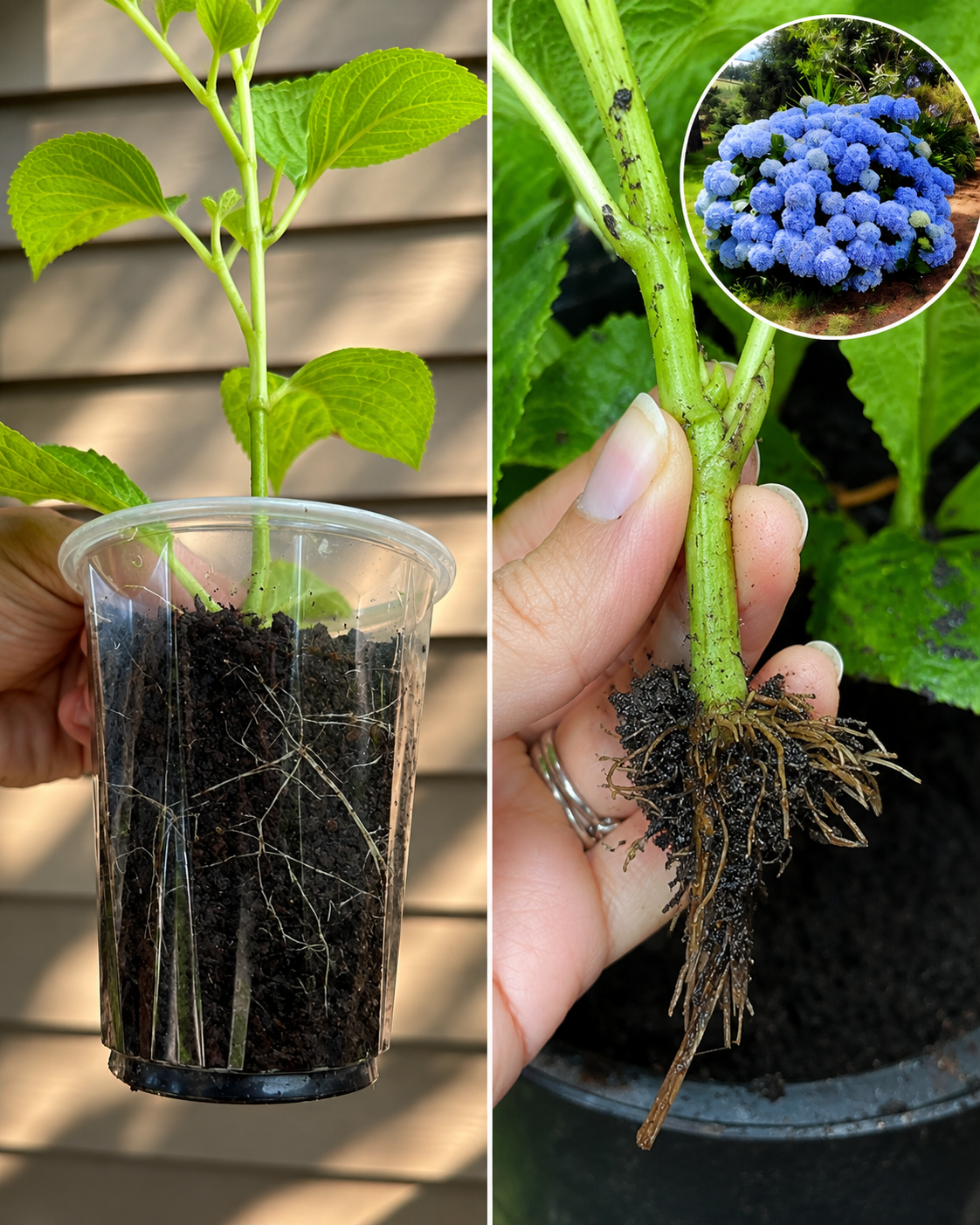
Most healthy cuttings begin developing roots within four to six weeks.
You can test for rooting by gently tugging on the stem. If you feel resistance, roots have likely formed.
Once rooted, transplant each cutting into its own pot filled with quality potting mix.
Growing young plants in containers through autumn allows them to:
- Develop stronger roots
- Produce more foliage
- Become better established before winter
- Be protected more easily during cold weather
By the following spring, many will be ready for planting in the garden.
Bonus Tip: Pinch New Growth
When your young hydrangeas begin producing fresh shoots, pinch out the growing tips.
This encourages the plant to branch naturally, creating a fuller, bushier shrub with a stronger structure.
Well-branched hydrangeas often produce more flower heads as they mature.
Common Mistakes to Avoid
Even healthy cuttings can fail if a few basic mistakes are made.
Try to avoid:
- Overwatering, which encourages stem rot
- Heavy garden soil with poor drainage
- Direct afternoon sunlight
- Taking cuttings from flowering stems
- Disturbing cuttings too frequently while roots are developing
Patience is essential. Some cuttings root faster than others, and constant checking can damage fragile new roots.
Why Propagating Hydrangeas Is Worth It
Hydrangeas are among the most popular ornamental shrubs, but they can also be one of the more expensive additions to a garden.
Learning to propagate your own plants allows you to:
- Expand your garden at very little cost
- Create colorful hedges and borders
- Replace older shrubs
- Share young plants with family and friends
Over time, a single healthy hydrangea can provide dozens of new plants.
Final Thoughts
July offers the perfect opportunity to prepare for next year’s garden.
By selecting healthy softwood cuttings, reducing moisture loss, providing a suitable rooting environment, and giving young plants the care they need, you can grow vigorous new hydrangeas that will reward you with beautiful blooms for many seasons.
A little effort now can lead to a garden filled with thriving hydrangeas year after year.