Don’t Throw It Away! Here’s How to Clean a Burnt Pot Safely and Easily
Don’t Throw It Away! Here’s How to Clean a Burnt Pot Safely and Easily
A badly burnt pot or pan can look impossible to save. Thick black residue, yellow stains and baked-on grease may make you think the only solution is to throw it away.
Fortunately, many stainless-steel pans can be restored with a careful soaking and scrubbing method. The key is to soften the burnt residue before trying to remove it.
However, the correct technique depends on the material. Abrasive tools that may be acceptable on unfinished stainless steel can permanently damage nonstick, enamelled or coated cookware.
Check the Pan Before You Begin
First, identify what the pot or pan is made from.
This method is most suitable for uncoated stainless-steel cookware.
Do not use abrasive powders, metal scrubbers or sandpaper on:
- Nonstick coatings
- Ceramic-coated pans
- Enamelled cookware
- Polished decorative finishes
- Copper cookware
- Anodized aluminium
If the surface is peeling, deeply pitted or badly warped, the pan may no longer be safe to use.
Remove Detachable Parts
If the handle can be removed safely, take it off before soaking the pan.
This makes it easier to clean the sides and bottom. Keep screws and small parts in a safe place so they are not lost.
Do not remove a handle unless it is designed to be detachable.
Soften the Burnt Residue
Place the burnt pan inside a larger heat-resistant pot or basin.
Fill the larger container with enough hot water to reach the stained areas. Add a small amount of dishwashing liquid.
For heavy grease, you may also add a spoonful of baking soda.
Allow the pan to soak for at least 30 minutes. For severe buildup, leave it for several hours or overnight.
Hot water helps soften burnt food and grease, making the next stage much easier.
Avoid boiling cookware in laundry detergent. Laundry products are not designed for food-contact surfaces and may leave residues that are difficult to rinse away completely.
Prepare a Gentle Cleaning Paste
A simple paste can help loosen stubborn marks.
You’ll Need
- 2 tablespoons baking soda
- 1 tablespoon fine salt
- Enough dishwashing liquid to form a paste
- A little warm water, if needed
Mix everything in a small bowl.
The baking soda helps lift residue, while the dishwashing liquid breaks down grease. Fine salt adds mild abrasion.
There is no need to add grated potato or baking powder. These ingredients are unlikely to clean more effectively than baking soda and dishwashing liquid.
Clean the Inside of the Pan
Spread the paste over the burnt areas.
Leave it for 10 to 15 minutes, then scrub gently with a non-scratch sponge or soft nylon brush.
Work in circular movements and add a little warm water if the paste begins to dry.
Do not use sandpaper inside cookware. Even fine sandpaper can create scratches that trap food, damage the finish and make the pan more difficult to clean in the future.
If residue remains, repeat the soaking process rather than scrubbing more aggressively.
Clean the Outside and Bottom
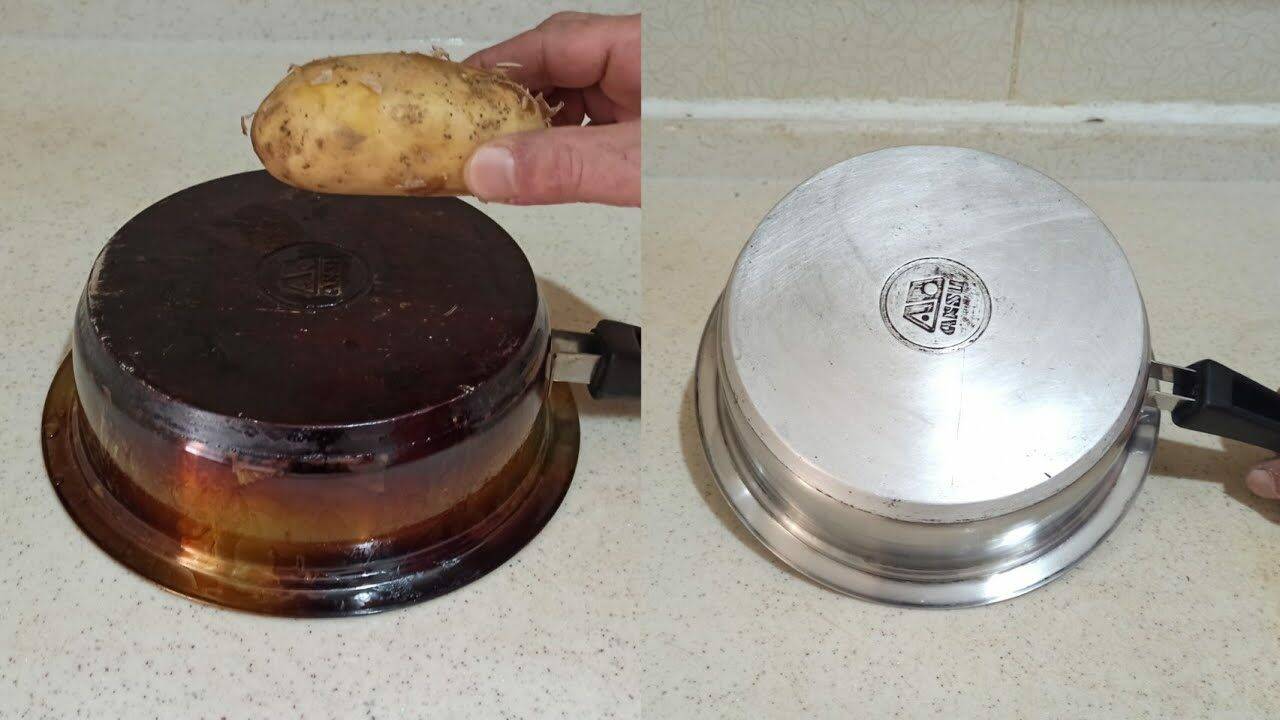
The bottom of a stainless-steel pan often develops dark grease, brown marks and yellow discoloration.
Apply the same baking-soda paste and allow it to sit for several minutes.
Scrub with a non-scratch pad, paying particular attention to the edge where the base meets the sides.
For an unfinished stainless-steel exterior, a dedicated stainless-steel cleaner may be used according to its instructions.
Always scrub in the direction of the metal grain when it is visible.
Be Careful with Aluminium Bases
Many stainless-steel pans have an aluminium layer or exposed aluminium on the bottom.
Strong oven cleaners, caustic degreasers and alkaline products can darken or damage aluminium.
Never heat the pan and then spray it with a powerful degreaser. The fumes can be unpleasant, and the cleaner may react with the metal.
Use mild dishwashing liquid, baking soda and warm water instead.
What About Steel Wool?
Steel wool may remove severe residue from unfinished stainless steel, but it can also leave deep scratches.
A non-scratch pad or nylon brush is usually the safer choice.
Never use steel wool on nonstick, ceramic, enamelled, polished or aluminium surfaces.
Rinse the Pan Thoroughly
Once the burnt residue has been removed, rinse the cookware several times with clean water.
Wash it again with regular dishwashing liquid to make sure no cleaning paste remains.
Dry it immediately with a soft towel to prevent water spots.
For extra shine on stainless steel, buff the dry surface with a clean microfiber cloth.
How to Clean a Burnt Pan from the Inside
For burnt food stuck to the base, try this simple method:
- Cover the burnt area with water.
- Add one tablespoon of baking soda.
- Bring the water to a gentle simmer.
- Leave it for five to ten minutes.
- Turn off the heat and allow the pan to cool.
- Loosen the residue with a wooden or silicone spatula.
- Wash normally.
Never pour cold water into a very hot pan, as sudden temperature changes can warp the metal.
Preventing Future Burn Marks
A few simple habits can make cookware easier to maintain:
- Use low or medium heat whenever possible.
- Do not leave an empty pan on a hot burner.
- Add oil only after the pan has warmed gradually.
- Stir thick sauces and sugary foods regularly.
- Soak burnt residue before it hardens completely.
- Match the burner size to the base of the pan.
- Clean the outside regularly before grease becomes baked on.
When the Pan Should Be Replaced
Not every burnt pan can or should be saved.
Replace the cookware if:
- A nonstick coating is peeling or flaking.
- The base is severely warped.
- Cracks have appeared.
- The pan is deeply corroded.
- The handle can no longer be attached securely.
- Burnt residue cannot be removed from damaged surfaces.
Final Thoughts
A burnt stainless-steel pan often looks worse than it really is. With hot water, dishwashing liquid, baking soda and patient scrubbing, much of the dark buildup can usually be removed.
The most important rule is to avoid overly aggressive methods. Sandpaper, powerful degreasers and harsh chemicals may create a quick visual result, but they can also permanently damage the cookware.
So before throwing away a burnt pot, try soaking it and cleaning it gently. In many cases, it can become clean, usable and shiny again.