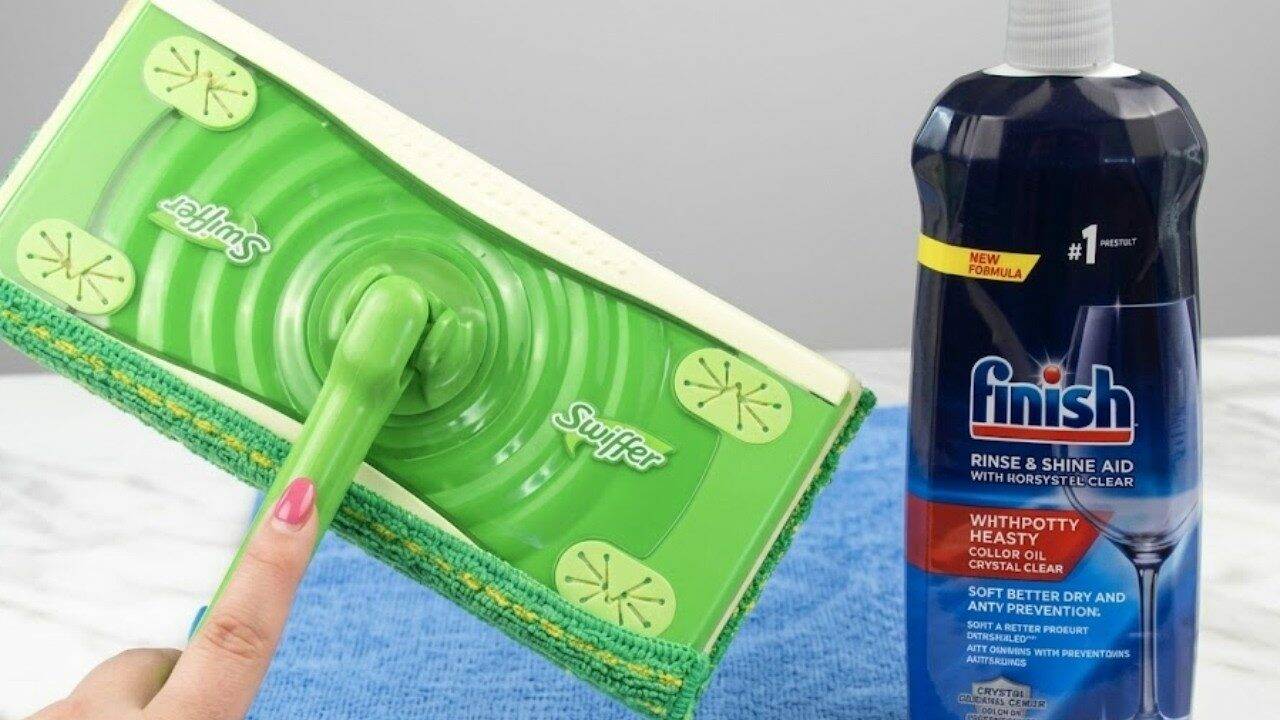
Just a Few Drops of Rinse Aid—Your Swiffer Can Make Surfaces Shine
Just a Few Drops of Rinse Aid—Your Swiffer Can Make Surfaces Shine
Rinse aid is normally used in the dishwasher to reduce water spots and help glasses dry without streaks. However, some people also use a very small amount in household cleaning water to wipe smooth surfaces.
When used carefully and in the correct dilution, it may help leave certain tiles and glossy surfaces looking cleaner and shinier.
How to Prepare the Cleaning Mixture
You will need:
- A bowl of lukewarm water
- A few drops of dishwasher rinse aid
- A clean microfiber cloth
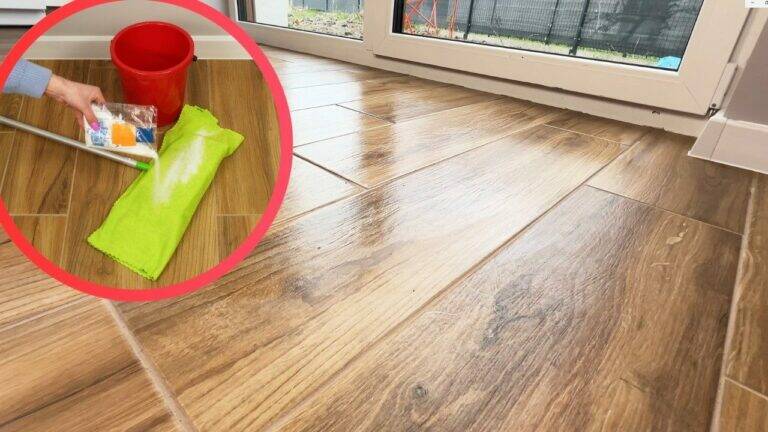
- A flat mop or Swiffer-style floor cleaner
Fill the bowl with lukewarm water and add only a small amount of rinse aid.
Dip the microfiber cloth into the solution and wring it out thoroughly. The cloth should be damp, not dripping wet.
Attach it securely to the flat mop.
Cleaning Bathroom Wall Tiles
A flat mop makes it easier to reach bathroom tiles near the ceiling and other areas that are normally difficult to clean.
Move the mop gently across the walls to remove dust, light residue and water marks.
Rinse the cloth regularly as you work from one wall to another. When finished, wipe the surface again with a clean, slightly damp cloth to remove any remaining product.
Dry the tiles if necessary to prevent streaks.
This method may improve the appearance of smooth glazed tiles, but it does not permanently prevent moisture, mold or limescale.
Good ventilation and regular drying remain essential in bathrooms.
Use It on Kitchen Tiles
The same diluted mixture can be used on smooth kitchen tiles.
Grease and dust gradually settle on tiled walls, especially near cooking areas. Wiping them regularly can help prevent a sticky layer from building up.
Do not use the mixture directly over uncovered food or near electrical outlets.
Can It Be Used on Glossy Cabinets?
A very diluted solution may also work on certain glossy cupboard doors and wardrobe fronts.
Always test it first on a hidden area. Some painted, laminated or coated surfaces may react badly to cleaning products not recommended by the manufacturer.
Apply the solution with a damp cloth rather than spraying it directly onto the furniture.
Avoid unfinished wood, waxed surfaces and delicate finishes.
A Salt and Toothpaste Cleaning Paste
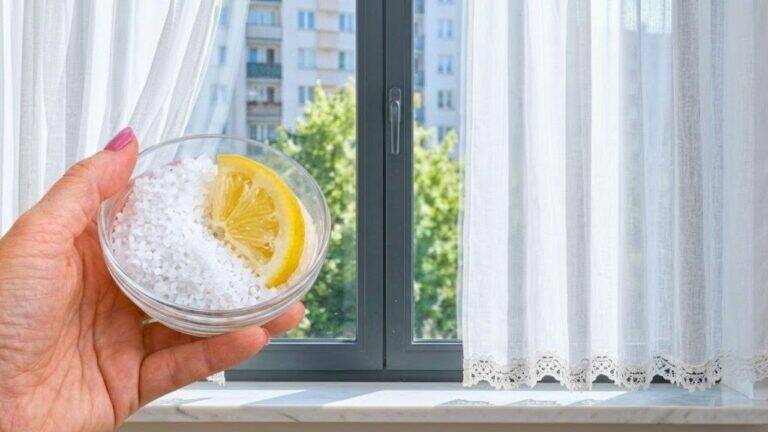
Another popular homemade cleaning trick combines salt, toothpaste and dishwashing liquid.
Ingredients
- 2 teaspoons table salt
- A small amount of white toothpaste
- 1 teaspoon dishwashing liquid
Mix the ingredients in a bowl until they form a smooth paste.
Apply a small amount to the sink or faucet using a soft sponge. Let it sit briefly, then rub gently and rinse thoroughly with clean water.
Dry the surface with a microfiber cloth.
Important Precautions
This paste is mildly abrasive.
It should not be used on:
- Natural stone
- Marble
- Delicate chrome
- Brushed metal
- Acrylic surfaces
- Glossy finishes that scratch easily
Toothpaste and salt may remove light residue, but they will not disinfect every surface or eliminate severe limescale instantly.
For heavy mineral deposits, use a cleaner approved for the specific material.
The Simplest Way to Dust Bathroom Walls
Bathroom walls often collect more dust and residue than people realize.
Attach a clean microfiber or disposable dusting cloth to a flat mop and wipe the walls from top to bottom.
Once the first cloth becomes dirty, replace it with a clean one and wipe the walls again.
Doing this once a month can help prevent dust, hair-product residue and light grime from building up.
Pay particular attention to:
- Areas above the shower
- Tiles close to the ceiling
- Corners
- The wall behind the toilet
- Areas near ventilation openings
How to Keep Bathroom Tiles Cleaner Longer
No homemade mixture can permanently stop moisture or dirt from returning. Regular maintenance makes the biggest difference.
For better results:
- Ventilate the bathroom during and after showers.
- Use an extractor fan when available.
- Wipe wet tiles after bathing.
- Clean grout regularly.
- Repair leaking faucets and pipes.
- Avoid leaving wet towels in the room.
- Wash cleaning cloths after every use.
Final Thoughts
A few drops of rinse aid in a large bowl of water may help certain smooth surfaces look shinier and less streaky. The key is to use only a very small amount, test it first and rinse away any residue.
A flat mop is also a practical tool for cleaning high bathroom and kitchen walls without climbing on furniture.
The best results do not come from using large quantities of product. They come from gentle cleaning, proper drying and regular maintenance.