Incredible! Stained Tiles Become Clean, Fresh, and Shiny With This Simple Homemade Mixture
Incredible! Stained Tiles Become Clean, Fresh, and Shiny With This Simple Homemade Mixture
Grease can quickly build up on kitchen and bathroom tiles. Cooking splashes, soap residue, moisture, dust, and everyday dirt may leave surfaces looking dull and unpleasant.
The original method combines dish soap, talcum powder, water, and a few drops of wood-care oil. It is presented as an economical way to remove grease and add shine. However, this mixture is not suitable for every type of tile, grout, or flooring. It should always be tested on a small hidden area first.
What You Will Need
To prepare the original mixture, you will need:
- 50 ml dish soap
- about 1 tablespoon baby powder, talcum powder, or foot powder
- 3 drops of wood oil or peroba oil
- 50 ml water
- a small container
- a measuring cup
- a spoon
- a clean microfiber cloth
- a mop or broom, optional
How to Prepare the Mixture
Pour 50 ml of dish soap into a clean container.
Any standard dishwashing liquid may be used, although a mild, non-abrasive product is preferable.
Add approximately one tablespoon of talcum powder or baby powder. Stir slowly until the ingredients begin to form a smooth mixture.
Next, add about three drops of wood oil or peroba oil. Only a very small quantity is used in the original method.
Pour in 50 ml of water and mix again until the preparation has an even consistency.
The finished product should be fluid enough to spread with a cloth but not excessively watery.
How to Apply It
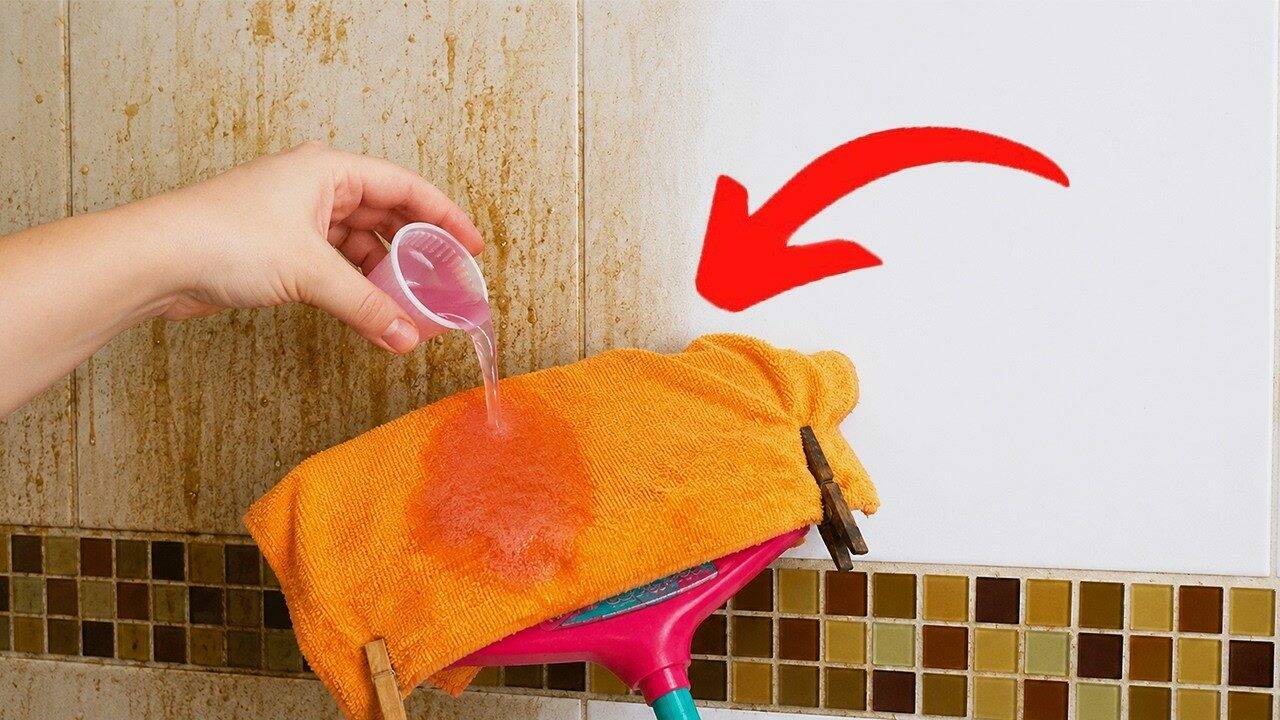
Apply a very small amount of the mixture to a clean microfiber cloth.
Wipe the greasy tile surface using gentle, even movements. Work in small sections so that the product does not dry before it can be removed.
For larger areas, you may attach the cloth to a flat mop or wrap it securely around a broom head.
Pay particular attention to:
- kitchen backsplash tiles
- tiles around the stove
- bathroom wall tiles
- greasy corners
- marks near sinks
- soap residue around the shower
The original method claims that the surface does not need to be rinsed. In practice, rinsing is strongly recommended because dish soap, powder, and oil can leave a film.
Why Dish Soap Helps Remove Grease
Dish soap is designed to break down cooking grease and oily food residue. This makes it useful for cleaning many washable kitchen surfaces.
However, using too much can cause:
- visible streaks
- sticky residue
- excessive foam
- a dull finish
- faster dust accumulation
A small quantity is normally sufficient. If the tiles feel slippery or sticky after cleaning, wipe them again with clean water.
What Does Talcum Powder Do?
Talcum powder is included in the original recipe to thicken the mixture and absorb grease.
However, it may also leave a pale residue, especially on:
- dark tiles
- textured surfaces
- porous grout
- matte finishes
- unsealed stone
The powder can settle inside grout lines and may be difficult to remove. For this reason, it is not essential to the cleaning process.
A simpler mixture of warm water and a small amount of dish soap is often easier to rinse and less likely to leave marks.
Is Wood Oil Safe for Tiles?
Wood oil and peroba oil are intended mainly for wooden furniture and wooden surfaces. They are not standard tile-cleaning products.
Using oil on tiles may create a temporary shine, but it can also:
- make floors slippery
- leave an oily coating
- attract dust
- darken grout
- cause uneven patches
- make future cleaning more difficult
Avoid using oil on floor tiles, shower floors, stairs, or any surface where slipping is possible.
It should also be avoided on natural stone unless the manufacturer specifically confirms that it is safe.
A Safer Version of the Recipe
For regular cleaning, try this simplified mixture:
- 1 liter of warm water
- 1 teaspoon of mild dish soap
- a clean microfiber cloth
Mix the ingredients gently. Dip the cloth into the solution and wring it out well.
Wipe the tiles and then rinse them with a second cloth dampened with clean water.
Dry glossy tiles with a clean microfiber towel to prevent water marks.
This version removes normal grease without adding powder or oil.
How to Clean Heavily Greased Kitchen Tiles
Kitchen tiles near a stove may require more than one pass.
Step 1: Remove Loose Dust
Wipe the surface with a dry cloth before applying water. Wetting loose dust can turn it into a muddy film.
Step 2: Apply Diluted Dish Soap
Mix warm water with a few drops of dish soap.
Apply it to the greasy area with a sponge or microfiber cloth.
Step 3: Let It Sit Briefly
Allow the solution to remain on the grease for two or three minutes. Do not let it dry completely.
Step 4: Wipe Gently
Use gentle circular movements. Avoid harsh scrubbing pads that may scratch glossy tiles.
Step 5: Rinse Thoroughly
Remove all soap residue with clean water.
Step 6: Dry the Surface
Drying helps prevent streaks and restores shine.
How to Clean Bathroom Tiles
Bathroom tiles often collect soap scum, body oils, shampoo residue, and mineral deposits.
Dish soap can help with greasy residue, but it may not remove heavy limescale.
For ordinary bathroom cleaning:
- Rinse the tiles with warm water.
- Apply diluted dish soap.
- Wipe with a soft sponge.
- Rinse thoroughly.
- Dry with a microfiber cloth.
Do not combine random cleaning products. In particular, never mix acidic products with bleach or chlorine-based cleaners.
Do Not Use the Same Mixture on Every Tile
The claim that one recipe works on every type of tile is misleading. Different materials require different care.
Ceramic and Porcelain Tiles
These are generally resistant to mild dish-soap solutions. Avoid leaving oily residue on the surface.
Natural Stone
Marble, limestone, travertine, and other natural stones may be damaged by unsuitable products.
Use a pH-neutral cleaner designed specifically for natural stone.
Cement Tiles
These tiles may be porous and can absorb oils, pigments, and powder. Follow the manufacturer’s cleaning instructions.
Textured Tiles
Powder may become trapped in the texture and leave white marks.
Painted or Coated Tiles
Strong degreasers and abrasive products may damage the finish. Test any solution before widespread use.
How to Clean Grout Lines
Grout is often more difficult to clean than the tile itself because it may absorb grease and moisture.
Use:
- warm water
- a small amount of mild dish soap
- a soft toothbrush or grout brush
Apply the diluted solution and brush gently.
Wipe away the dirty liquid and rinse thoroughly.
Avoid soaking damaged grout, as too much water can enter cracks and create additional problems.
Why the Surface Should Be Rinsed
The original method suggests that wiping is enough and no rinsing is necessary. This may leave several ingredients behind.
Dish soap can form a sticky layer. Talcum powder can create a cloudy finish, while oil may leave the tiles slippery.
Rinsing helps prevent:
- streaks
- dull areas
- sticky spots
- dust buildup
- slippery floors
- visible powder residue
After cleaning, use a separate cloth with clean water.
How to Make Tiles Shine Without Oil
You do not need furniture oil to create a clean-looking shine.
For glossy ceramic or porcelain tiles:
- Remove grease completely.
- Rinse off all detergent.
- Use a clean microfiber cloth.
- Dry the surface immediately.
- Buff gently with a dry cloth.
Most of the shine comes from removing residue rather than adding another coating.
Common Tile-Cleaning Mistakes
Using Too Much Detergent
Excess soap leaves streaks and attracts dirt.
Applying Oil to the Floor
Oil can make the surface dangerously slippery.
Mixing Several Products
Combining cleaning products may damage surfaces or create dangerous fumes.
Using Abrasive Scrubbers
Steel wool and rough pads can scratch tiles and remove protective coatings.
Ignoring the Grout
Dirty grout can make clean tiles appear stained.
Failing to Rinse
Product residue is one of the main reasons tiles look dull after cleaning.
How to Keep Kitchen Tiles Clean Longer
A simple routine can prevent heavy grease buildup:
- Wipe cooking splashes as soon as possible.
- Clean the backsplash after frying.
- Use the extractor hood while cooking.
- Wash greasy cloths regularly.
- Avoid applying oil-based products to tiles.
- Clean grout before it becomes deeply stained.
- Dry wet bathroom surfaces after use.
Frequent light cleaning is easier than removing months of hardened grease.
Important Safety Precautions
Always ventilate the room while cleaning.
Wear gloves if you have sensitive skin, and keep homemade mixtures away from children and pets.
Never mix dish soap or homemade recipes with:
- bleach
- chlorine products
- ammonia
- oven cleaner
- toilet cleaner
- unknown chemical products
If the floor becomes slippery, rinse it immediately with clean water and keep people away until it is completely dry.
Final Thoughts
The original recipe may help loosen grease because it contains dish soap. However, talcum powder and wood oil are unnecessary and may leave residue, attract dust, stain porous materials, or make floors slippery.
For most washable tiles, the safest approach is simple: use warm water, a small amount of mild dish soap, a clean microfiber cloth, and a final rinse.
Clean tiles shine best when grease and detergent residue have been fully removed—not when they are covered with powder or oil.