Why Your Towels Still Smell Bad After Washing—and the Simple Fix
Freshly washed towels should smell clean, but sometimes they come out of the washing machine with a musty, damp, or sour odor. Even worse, the smell may return as soon as the towel becomes wet again.
The problem is not always the washing machine. In many cases, the real cause is a common laundry mistake: using too much detergent and fabric softener.
These products can gradually build up inside towel fibers. Instead of making towels cleaner, the residue traps moisture, body oils, and odor-causing bacteria. Fortunately, a few simple changes can help restore freshness and absorbency.
The Most Common Towel-Washing Mistake
Many people fill the detergent compartment and add a generous amount of fabric softener, believing that more product will produce softer, better-smelling towels.
In reality, excess detergent may not rinse out completely. Fabric softener can also coat the fibers with a waxy layer.
This buildup can:
- Trap unpleasant odors
- Reduce absorbency
- Make towels feel greasy or stiff
- Prevent water and detergent from reaching deep into the fibers
- Encourage musty smells when towels stay damp
Using the correct amount of detergent is usually more effective than adding extra products.
Why Fabric Softener Can Make Towels Smell Worse
Fabric softener temporarily makes towels feel smooth and fragrant, but it may reduce their ability to absorb water.
The coating left behind can trap moisture and residue inside the fabric. Over time, towels may begin to smell unpleasant even immediately after washing.
For regular towel loads, consider skipping fabric softener entirely or using it only occasionally.
Add Baking Soda to Help Neutralize Odors
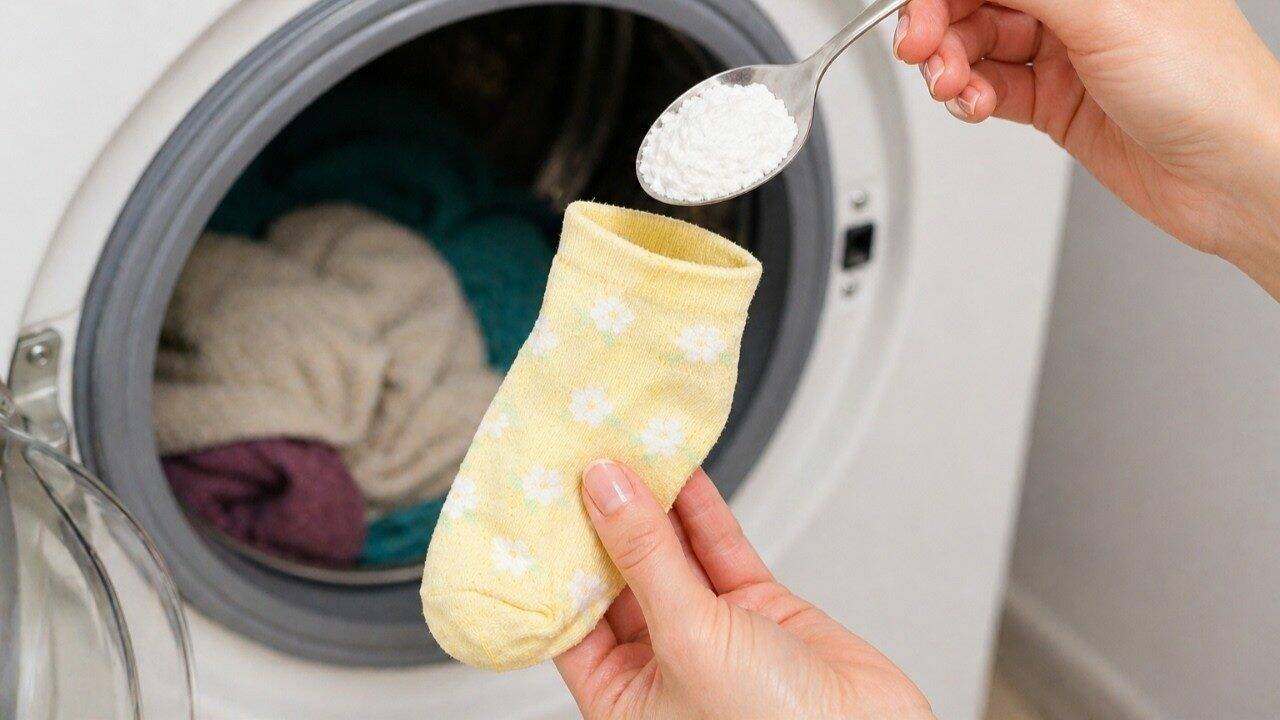
Baking soda can help neutralize unpleasant smells and loosen some detergent residue.
How to Use It
- Place the towels loosely inside the washing machine.
- Add the normal amount of laundry detergent.
- Add approximately half a cup of baking soda directly to the drum.
- Select an appropriate wash cycle.
Avoid overfilling the machine. Towels need enough space to move freely so that water can circulate through the fibers.
Baking soda is mainly an odor neutralizer and cleaning booster. It should not be treated as a complete disinfectant.
Use White Vinegar Instead of Fabric Softener
White vinegar may help break down detergent and mineral residue that makes towels feel stiff or smell stale.
Pour approximately half a cup into the fabric-softener compartment so that it is released during the rinse cycle.
Do not pour vinegar directly onto dry towels, and do not use it in the same compartment as detergent.
Important Safety Note
Never mix vinegar with bleach or chlorine-based products. The combination can produce dangerous fumes.
Check the washing machine manufacturer’s instructions before using vinegar regularly, as repeated exposure to acidic products may affect certain rubber seals and internal components.
Choose the Right Washing Temperature
Warm or hot water can help remove body oils and odor-causing residue, but the correct temperature depends on the towel’s care label.
Many durable cotton towels can be washed at 60°C for a deeper clean. A 90°C cycle should only be used when:
- The towel label permits it
- The fabric is suitable for very hot washing
- The washing machine manufacturer allows it
Very hot water may shrink towels, fade colors, and damage decorative fibers.
For colored or delicate towels, use the highest safe temperature stated on the care label rather than automatically choosing the hottest program.
Do Not Mix Baking Soda and Vinegar Together
Baking soda and vinegar are often mentioned in the same laundry routine, but adding them simultaneously causes them to react and partially neutralize each other.
For better results:
- Use baking soda during the main wash.
- Add vinegar to the rinse compartment.
Keeping them separate allows each product to perform its intended role more effectively.
Remove Towels Immediately After Washing
Even perfectly washed towels can begin to smell if they remain inside a closed machine.
Warm, damp fabric creates ideal conditions for odor-causing microorganisms.
As soon as the cycle finishes:
- Remove the towels from the drum.
- Shake each towel out.
- Hang or dry them immediately.
- Leave the washing machine door slightly open.
Do not leave damp towels sitting in the machine overnight.
Dry Towels Completely
A towel that remains even slightly damp may quickly develop a musty smell.
Air-Drying
Hang towels separately in a well-ventilated place. Outdoor drying can be effective when the weather is dry, but strong sunlight may gradually fade colored towels.
Avoid folding towels over several layers because the inner fabric will take longer to dry.
Using a Tumble Dryer
If you use a dryer:
- Do not overload the drum.
- Select the temperature recommended on the care label.
- Make sure the towels are completely dry before folding them.
- Clean the lint filter after every load.
Overloading restricts airflow and may leave towels damp in the center.
Be Careful with Essential Oils
A few drops of essential oil may add fragrance, but essential oils are highly concentrated and can irritate sensitive skin or stain fabric.
Never place an oil-soaked cloth directly into a tumble dryer. Concentrated oils may be flammable, especially when exposed to heat.
A safer way to keep towels smelling pleasant is to:
- Clean the washing machine regularly.
- Dry towels completely.
- Use a properly formulated laundry fragrance according to its label.
- Store towels only after they are fully dry.
Clean towels should smell neutral and fresh rather than heavily perfumed.
How to Restore Towels That Already Smell Musty
If your towels have developed persistent odors, try a residue-removal wash.
First Cycle
- Place the towels in the drum.
- Add a small amount of detergent.
- Add half a cup of baking soda.
- Wash at the highest safe temperature shown on the care label.
Rinse Cycle
- Add half a cup of white vinegar to the rinse compartment.
- Run an additional rinse if necessary.
Dry the towels immediately and completely.
Do not combine this routine with bleach or other strong cleaning chemicals.
Stop Using Too Much Detergent
The correct amount depends on:
- The size of the load
- How dirty the towels are
- Water hardness
- Whether the detergent is concentrated
- The type of washing machine
Using more than the recommended amount can leave residue behind.
Signs of excess detergent include:
- Towels that feel slippery
- White marks on dark fabrics
- Excessive foam
- Stiff fibers
- A strong perfume that hides a musty smell
Follow the detergent label and reduce the amount when washing a small load.
Wash Towels Separately When Possible
Washing towels with lightweight clothing can reduce cleaning performance.
Towels absorb large amounts of water and produce lint. They also need a stronger cycle than many delicate clothes.
For better results:
- Wash towels with other towels.
- Separate white and colored items.
- Avoid combining heavily soiled cleaning cloths with bath towels.
- Do not overload the drum.
This gives the towels more room to rinse properly.
Do Not Leave Wet Towels in a Laundry Basket
The way towels are handled before washing also matters.
A wet towel rolled into a ball or placed in a closed laundry basket may begin to smell long before it reaches the washing machine.
After use:
- Hang the towel open.
- Let it dry before placing it in the hamper.
- Wash it regularly.
- Keep the laundry basket ventilated.
Never leave wet towels piled on the bathroom floor.
Clean the Washing Machine Regularly
Although poor washing habits are often responsible, a dirty machine can transfer odors back onto clean towels.
Once a month:
- Clean the detergent drawer.
- Wipe the rubber door seal.
- Remove lint and trapped debris.
- Clean the drain-pump filter according to the manual.
- Run the manufacturer’s recommended maintenance cycle.
After every wash, leave the door and detergent drawer slightly open so the interior can dry.
When Should Towels Be Replaced?
Some towels may continue to smell because their fibers are heavily coated, damaged, or permanently contaminated.
Consider replacing towels when they:
- Remain musty after several deep washes
- No longer absorb water properly
- Have visible mold stains
- Feel permanently greasy
- Are badly frayed or damaged
Old towels can often be reused as household cleaning cloths.
A Simple Fresh-Towel Routine
For consistently clean and absorbent towels:
- Let used towels dry before placing them in the hamper.
- Wash them separately without overloading the machine.
- Use the recommended amount of detergent.
- Skip fabric softener.
- Add baking soda to the main wash when odors are present.
- Use a small amount of vinegar during the rinse when appropriate.
- Select the highest temperature permitted by the care label.
- Remove towels immediately after washing.
- Dry them completely before folding.
- Clean the washing machine regularly.
Final Thoughts
If freshly washed towels still smell unpleasant, adding more fragrance is rarely the solution. The odor is often caused by trapped moisture, excess detergent, fabric-softener residue, or incomplete drying.
Using less detergent, avoiding fabric softener, washing at a suitable temperature, and drying towels immediately can make a noticeable difference. Baking soda may help neutralize odors, while carefully used white vinegar can help reduce mineral and detergent buildup.
The real secret is not covering the smell—it is removing the residue and moisture that cause it.