Just One Night Is Enough. This Simple Trick Helps Get Rid of Silverfish from Your Home.
Just One Night Is Enough — This Simple Trick Helps Get Rid of Silverfish from Your Home
Silverfish are small, wingless insects that often appear in bathrooms, kitchens, basements, and other humid parts of the home. They move quickly, hide during the day, and usually become active at night.
Although silverfish do not bite and are not known for spreading disease, many people find them unpleasant. Large numbers may also damage paper, wallpaper, books, cardboard, fabrics, and other materials containing starch or cellulose.
Fortunately, a few simple traps and household changes can help reduce their numbers.
Why Silverfish Appear in Your Bathroom
Silverfish prefer places that are:
- Dark
- Warm
- Humid
- Quiet
- Rich in food sources such as paper, glue, dust, and fabric fibers
Bathrooms provide ideal conditions because moisture remains after showers and baths. Damp towels, leaking pipes, poor ventilation, wet floor mats, and stored toilet paper can make the room even more attractive.
Seeing one or two silverfish does not necessarily mean that your home is dirty. However, frequent sightings usually indicate excess humidity or hidden gaps where the insects are living.
The Simple Honey Trap
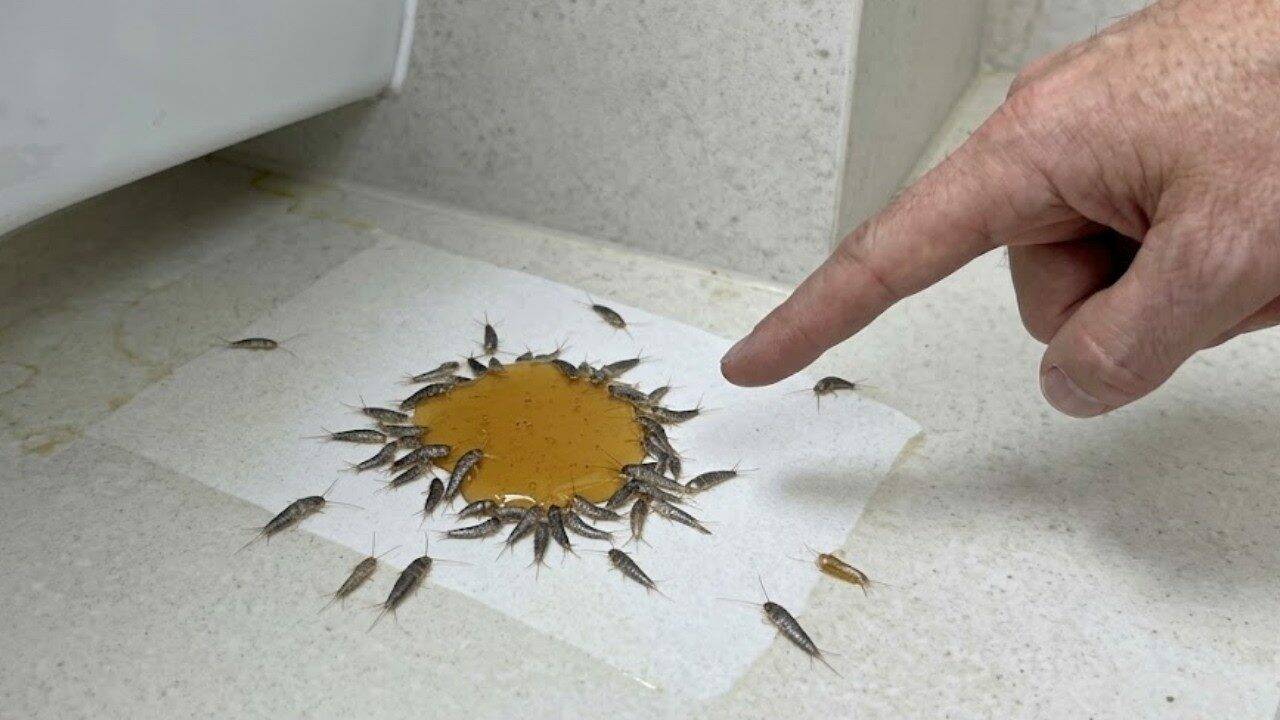
A homemade sticky trap may help catch silverfish overnight.
You Will Need
- A sheet of paper, cardboard, or newspaper
- A small amount of honey
- A shallow tray or disposable plate
Instructions
- Spread a thin layer of honey over the center of the paper.
- Place the paper on a tray to protect the floor.
- Leave it near baseboards, behind the toilet, under the sink, or close to other areas where silverfish have been seen.
- Keep the bathroom dark and leave the trap overnight.
- Check it the following morning.
- Dispose of the entire trap in a sealed bag.
Honey may attract insects because of its scent and sugar content, while its sticky texture can prevent them from escaping.
Do not place honey directly on flooring, furniture, or bathroom surfaces because it can leave stains and attract ants or other pests.
A Damp Newspaper Trap
Silverfish are naturally drawn to moisture and paper.
How to Make It
- Roll up several sheets of newspaper.
- Lightly dampen them with water.
- Secure the roll with rubber bands.
- Leave it near the suspected hiding place overnight.
- In the morning, place the entire roll in a sealed plastic bag and discard it outdoors.
Do not unroll the newspaper inside the house, as the insects may escape.
Repeat the process for several nights if necessary.
Essential Oil Cotton Pads
Strong fragrances may temporarily discourage silverfish from entering certain areas.
Suitable Fragrances
- Lavender
- Rosemary
- Cedarwood
- Citrus
- Peppermint
Instructions
- Apply a few drops of essential oil to a cotton pad.
- Place it behind the trash bin, near the washing machine, under the sink, or beside a suspected entry point.
- Replace the pad every few days when the fragrance fades.
Essential oils may work as mild repellents, but they are unlikely to eliminate an established infestation on their own.
Keep concentrated oils away from children and pets. Some essential oils can be harmful to cats, dogs, and other animals.
Rosemary and Vinegar Cleaning Spray
A scented cleaning spray may help freshen surfaces and make certain hiding places less attractive.
Ingredients
- 250 ml white vinegar
- 250 ml water
- A sprig of rosemary
- A few drops of lavender oil, optional
Preparation
- Place the rosemary in a container.
- Add the vinegar and water.
- Allow the mixture to infuse.
- Strain it and pour it into a spray bottle.
- Add a very small amount of lavender oil if desired.
Spray it lightly along tiles, baseboards, and bathroom corners, then wipe the surfaces clean.
Do not spray vinegar on natural stone, marble, granite, unsealed grout, wood, or other acid-sensitive materials.
This mixture may help deter silverfish temporarily, but it should not be considered a permanent treatment.
The Most Important Step: Reduce Humidity
Traps may catch individual insects, but moisture control is the most effective long-term strategy.
After showering or bathing:
- Open a window when possible.
- Run the exhaust fan.
- Leave the bathroom door open.
- Wipe excess water from tiles and floors.
- Hang towels so they can dry completely.
- Avoid leaving damp bath mats on the floor.
- Repair leaking faucets, pipes, and toilets.
A dehumidifier can help in rooms that remain consistently damp.
The goal is to keep the relative humidity below approximately 50 percent whenever possible.
Remove Their Food Sources
Silverfish can survive on tiny amounts of material found around the home.
They may feed on:
- Paper
- Cardboard
- Wallpaper paste
- Book bindings
- Fabric fibers
- Dust
- Hair
- Food crumbs
- Starchy residues
Vacuum bathroom edges, cracks, shelves, cupboards, and hidden spaces regularly.
Store toilet paper, tissues, books, documents, and cardboard boxes in dry locations or sealed containers.
Seal Cracks and Entry Points
Silverfish hide in very narrow spaces and may move between rooms or neighboring apartments through small openings.
Inspect and seal:
- Cracks around baseboards
- Gaps around pipes
- Openings beneath sinks
- Damaged grout
- Loose wallpaper
- Gaps around doors and windows
Use an appropriate caulk or sealant for the surface.
Sealing cracks reduces hiding places and makes it harder for the insects to spread.
Are Silverfish Dangerous?
Silverfish are generally considered nuisance pests rather than a direct health threat.
They do not normally:
- Bite people
- Sting
- Live on humans
- Spread common household diseases
However, they may contaminate stored items and damage belongings when populations become large.
Silverfish can chew irregular holes in paper, wallpaper, photographs, cardboard, fabrics, and book bindings.
Methods You Should Avoid
Some online remedies recommend mothballs, denatured alcohol, disinfectants, or strong chemical mixtures.
These should be used with great caution.
Mothballs
Mothballs release pesticide vapors and should only be used exactly as directed on the product label, usually inside tightly sealed storage containers. They should not be left openly in bathrooms, kitchens, bedrooms, or areas accessible to children and pets.
Alcohol and Denatured Spirits
Alcohol-based liquids are flammable. Do not heat them, place them near flames, or leave them in homemade open containers.
Unlabeled Chemical Mixtures
Never combine household cleaners unless the product labels clearly state that it is safe. Some combinations can release toxic gases or cause dangerous reactions.
When Homemade Traps Are Not Enough
A few silverfish can often be controlled through cleaning, drying, trapping, and sealing cracks.
Consider contacting a pest-control professional if:
- You see silverfish every day.
- They appear in several rooms.
- Books, wallpaper, or clothing are being damaged.
- Moisture problems persist.
- Traps do not reduce their numbers.
- The infestation returns repeatedly.
A professional can identify hidden moisture sources and apply targeted treatments safely.
A Practical Silverfish-Control Routine
For the best results, combine several steps:
- Place a honey or damp newspaper trap overnight.
- Vacuum edges and hidden corners.
- Dry the bathroom thoroughly.
- Wash and dry towels and floor mats.
- Repair leaks.
- Seal cracks around pipes and baseboards.
- Store paper products in dry containers.
- Continue monitoring the room for several weeks.
Silverfish eggs may remain hidden, so one successful night does not always mean the entire infestation has disappeared.
Final Thoughts
A simple overnight trap can help catch silverfish, but the real key to keeping them away is removing the conditions they need to survive.
Keep bathrooms dry, improve ventilation, eliminate leaks, remove paper clutter, vacuum hidden areas, and seal cracks.
Honey traps, damp newspaper, and scented cotton pads may provide temporary help, but consistent moisture control is what makes the biggest long-term difference.
With regular cleaning and a drier environment, your bathroom will become far less attractive to silverfish.